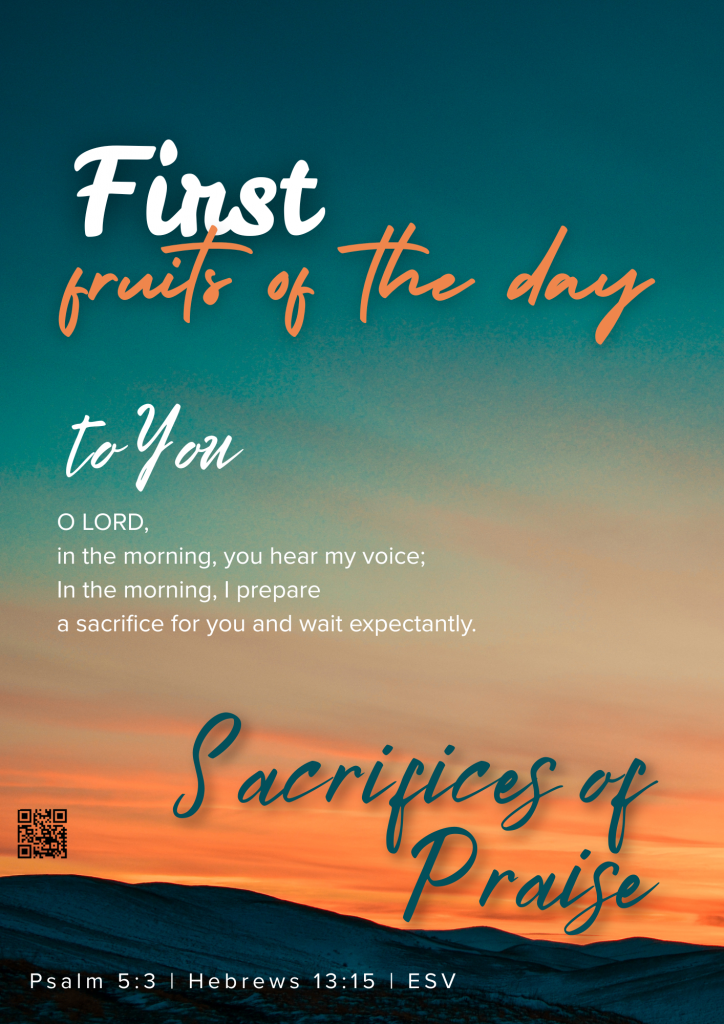
Beatitudes – Profit in Poverty.E1

You might think, “how can one profit from poverty?”. That is ridiculous. But that my friend is precisely, the beauty, about the kingdom of God. Listen to Jesus:

“And He raised His eyes toward His disciples and began saying, ‘Blessed are you who are poor, for yours is the kingdom of God.’” Luke 6:20

This is the opening statement of one of the most profound discourses ever given. Remarkably, Jesus does not begin with themes of earthly glory, wealth, power, or prestige. He begins with poverty. Why? Because there is a unique beauty in recognising our lack before God. Deficiency, inadequacy, humility, brokenness, desperation, and need, place us in a position where we are ready to receive from Him. Poverty, in this sense, becomes a doorway to divine blessing.

The question naturally arises: Is Jesus speaking of physical poverty, spiritual poverty, or both? The whole counsel of God suggests that both are in view. Matthew emphasises spiritual poverty, while Luke’s account appears to include those who are materially poor as well.

Matthew 5:3.“Blessed are the poor in spirit, for theirs is the kingdom of heaven.”
Matthew 11:5. “The blind receive sight and the lame walk, the people with leprosy are cleansed and the deaf hear, the dead are raised up, and the poor have the gospel preached to them.”
Luke 7:22. “Go and report to John what you have seen and heard: people who were blind receive sight, people who limped walk, people with leprosy are cleansed and people who were deaf hear, dead people are raised up, and people who are poor have the gospel preached to them.”

Throughout His ministry, Jesus showed special concern for those who recognised their need. Whether their poverty was material, spiritual, or both, they were often the ones most ready to receive His message.

The Apostle Paul also speaks of a remarkable paradox:

2 Corinthians 6:10. “As sorrowful yet always rejoicing, as poor yet making many rich, as having nothing and yet possessing all things.”

Paul’s words suggest that outward poverty does not prevent inward abundance. Those who may possess little in this world can nevertheless enrich others through the spiritual treasures they have received in Christ. It is therefore worthwhile to consider why such a state is viewed so favourably by God.

Firstly, poverty of spirit: reflects faith. Faith comes to God empty-handed, acknowledging dependence upon Him. Now don’t miss this. Faith pleases God!

Hebrews 11:1-2. “Now faith is the certainty of things hoped for, a proof of things not seen. For by it the people of old gained approval.”
Hebrews 11:6. “And without faith it is impossible to please Him, for the one who comes to God must believe that He exists, and that He proves to be One who rewards those who seek Him.”

A heart that recognises its need is often a heart prepared to trust God. It comes saying, “Lord, I cannot do this without You. I need Your strength, Your wisdom, Your grace, and Your help.”

Second, poverty of spirit: produces humility. It acknowledges our dependence upon God and our inability to save or sustain ourselves apart from Him. Such humility is precious in His sight because it agrees with His verdict that all have sinned and fallen short of His glory. Brokenness creates an awareness of our need. Pride, by contrast, leans toward self-sufficiency and self-reliance, resisting the very help God freely offers.

Scripture also teaches that godly sorrow has great value:

2 Corinthians 7:10 “For the sorrow that is according to the will of God produces a repentance without regret, leading to salvation, but the sorrow of the world produces death.”. 

Only the broken, truly understand their need for forgiveness, grace, and mercy. God has designed us to live in fellowship with Him, to rest in Him, trust Him, commune with Him, confide in Him, and cast our burdens upon Him. Poverty of spirit brings us back to that place of repentance and dependence restoring fellowship with Him.

Thirdly, the brokenhearted: discover God’s proximity.

Psalm 34:18 “The LORD is near to the brokenhearted and saves those who are crushed in spirit.” 

When suffering strips away our illusions of self-sufficiency, we often become more aware of God’s presence and help. The position we are in draws us to a closer and intimate walk with Him, in a way that would not be possible otherwise. That is His methodology.

Fourthly poverty makes room: for the display of His glory. When we are empty, He can fill us. When we are weak, His strength is perfected. Our mourning turns to dancing. Surrender invites His glory. What appears to be weakness becomes the stage upon which His strength is displayed.

Poverty of spirit is not an end in itself. God meets us in our need and fills us with His grace. Mourning gives way to joy, weakness gives way to strength, and despair gives way to hope. Yet this dependence is not merely a one-time experience; it becomes the daily posture of the believer. Every day we come afresh to the Lord, and every day His mercies are new.

Finally, with poverty comes promise: to the poor

Luke 6:20 “Blessed are you who are poor, for yours is the kingdom of God.” 

The reward is not merely relief from poverty but participation in God’s kingdom, His rule, His reign, and His gracious authority over our lives.

Romans 14:17 “For the kingdom of God is not eating and drinking, but righteousness and peace and joy in the Holy Spirit.” 
James 2:5 Listen, my beloved brothers and sisters: did God not choose the poor of this world to be rich in faith and heirs of the kingdom which He promised to those who love Him?

This kingdom is experienced most fully by those who recognise their need for God. The poor in spirit discover that what they lack in themselves is abundantly supplied in Him.

True blessedness is not found in self-sufficiency but in His sufficiency. The one who comes empty-handed to Christ finds a treasure greater than all the riches of this world, the kingdom of God itself!

O mighty One, enthroned above,

I long to remain in this holy place,
The tender ground of godly sorrow,
Where my broken heart beholds Your face.

Each day I come with thankful hands,
Through gates flung wide by sovereign grace.
Into Your courts I lift my praise
And bow within Your sacred space.

Teach me to know You more deeply,
To enjoy You more fully,
To walk with You more faithfully,
And to trust You more completely.

Keep me humble before You,
Dependent upon Your strength,
Rich in Your grace,
And satisfied in Your presence.

Until that day when faith becomes sight
And I behold You face to face forevermore.

Amen.

The happiest soul is not the one that needs nothing, but the one that has learnt it needs Christ for everything.
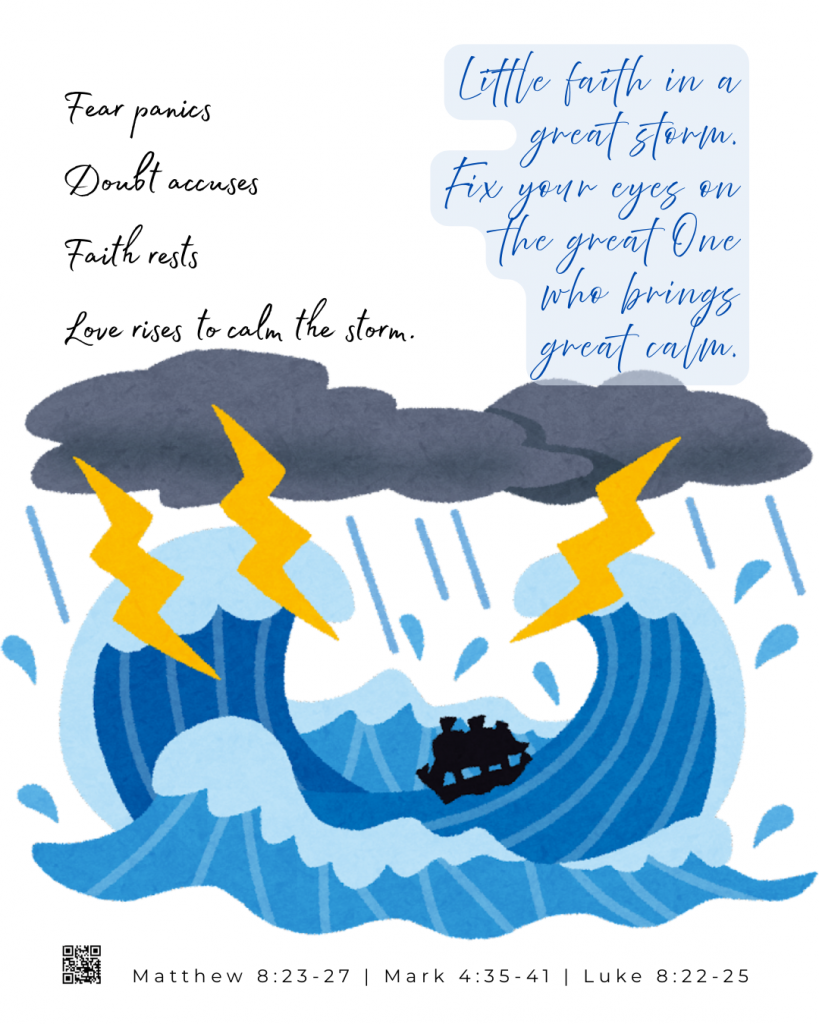
Panic-stricken or Storm-calmer

Matthew 8:23-27 | Mark 4:35-41 | Luke 8:22-25

He said to them, “Why are you afraid, you men of little faith?” Then He got up and rebuked the winds and the sea, and it became perfectly calm. Matthew 8:26

This episode recorded in all the three synoptic gospels (Gr-synoptikos- seeing together) offer a complementary,  and fuller understanding of the whole counsel of God. There is some debate as to whether the 3 accounts talk about 2 different episodes. On closer examination note the uniform response of the disciples across all the 3 gospels as being “who can this be that even the wind and the sea obey Him”. Their amazement and shock is the same, they can’t be shocked a second time, so it is unlikely there are 2 separate occasions.

As the disciples journeyed across the sea with Jesus, a violent storm arose. Within this single episode, Scripture paints for us a picture of four kinds of disciples. Four kinds of responses to life’s storms. Four kinds of faith.

First, The Panicked Sailors. The disciples themselves in that moment were terrified. Overwhelmed by the waves. Convinced they were going to die. Their hearts filled with fear. Their minds with anxiety. Remember they are not new to the sea, in fact some of them had to be out there everyday, day in and day out in these seas, fishing, facing storms. Storms couldn’t have been new to them. But somehow this one in particular was a violent one causing them to panic to such an extent they thought they were going to die. Their cry is desperate: “Lord, save us!” They are afraid. Their fear drives them to cry out. They seek help. They run to Jesus. This is not the deepest faith, but it is not the worst either. 

Then came the Accusing Critics. The gospel of Mark reveals them clearly. They are those who not only fear the storm but turn their fear into accusation. Their cry is not merely “Save us,” but “Don’t You even care? Where are You? Why aren’t You helping?” They question God’s goodness. They doubt His love. They blame Him for the storms that shake their lives. This is the most dangerous place. Because fear has turned to doubt and bitterness. Anxiety has turned to resentment. The storm outside has created a storm inside, a storm of suspicion and doubt, hidden anger uncovered and even resentment toward God. The question is why all this? This is not meant to happen!

In stark contrast stands the Restful Sleeper. Jesus Himself. Asleep in perfect peace in the midst of the chaos. Fully assured of the Father’s love. Utterly secure. Untouched by anxiety. He doesn’t panic. He doesn’t accuse. His heart is anchored in God so deeply that even violent waves cannot shake it. This is the life of genuine faith. Not the absence of storms. But the presence of such deep trust in the Father’s love, that storms cannot disturb the soul’s peace. The kind of peace only He can give, not like the one the world gives which is fragile and temporal we see in John 14:27. It is deeper and beyond our understanding which is what Philippians 4:7 tells us.

And finally, there is the rarest and the smallest group: the Storm-Calmers. These are those who not only rest in God’s love but rise up, like Jesus, and bring calm to others. Their faith is active. Their spirit is empowered. Their lives bring peace, strength, and comfort to those around them. This is what genuine, anointed, God-rooted ministry looks like. Not noise. Not titles. Not impressive words or impressive works. But the ability to still storms in the hearts of others. To bring peace to the anxious. To bring strength to the weak. To bring hope to the despairing. The ones who can feed others, rescue others and build others. Those who live on meat. They are the “spiritual man” we see in 1Corinthians 2:15-16.

Among these four, we must ask: Who are we? Are we the Panicked Sailor? Afraid, yet still calling out to Jesus. This is better than the next category, but we remain enslaved by fear. Always needing but never able to help others. Always need feeding but not feeding others. Always on milk and not moved onto meat. Always child like and never growing. Always being helped but never able to reach out and help others in need. Church is always-“what can I get?” not “what can I give”. Never making disciples, never helping others grow. Always spiritually bankrupt, tired, weary, burdened and  eyes fixed on the storm, never able to see clearly, paralysed, inactive, unable, unproductive, without fruit. Notice this, they cannot help anyone else for they themselves are in a tight spot. They are the “carnal man” in 1 Corinthians 3:1-3 and Hebrews 5:11-14. On milk and not moving on to meat.

Are we the Accusing Critic? Afraid and angry? Doubting God’s goodness? This is the most dangerous place. We have let the storm outside create a storm inside our souls. Or are we the Restful Sleeper? Secure in the Father’s love. At peace in the midst of chaos. This is a great place to be. We have found what many never find, true rest in God. Or even better, are we a Storm-Calmer? Not only resting ourselves, but rising up to bring God’s peace to others. Not only secure, but a source of security. Not only calm, but a calming presence.

So let us ask ourselves: Have we found rest in God’s love? Or are we still panicked, still accusing, still drowning in fear? And if we have found rest, are we content to rest alone? Or are we willing to rise up and calm the storms in others’ lives? Because the world is full of disciples in storms. And they need to see us, resting like Jesus, peaceful like Jesus, bringing calm like Jesus. That is the call. Not to panic. Not to accuse. Not merely to rest. But to rise and calm the storm.

Father, help us to see ourselves clearly in this story. Deliver us from fear, from insecurity, and from any hidden accusation we hold against You. Make us secure in Your love, restful like Jesus in every storm. But don’t let us stop there, make us Storm-Calmers, someone who brings Your peace, comfort, and strength into the lives of others. Transform us from the inside so that our lives reflect Your presence to the world around us. In Jesus’ name, amen.

Fear panics, doubt accuses, faith rests, but love rises to calm the storm.

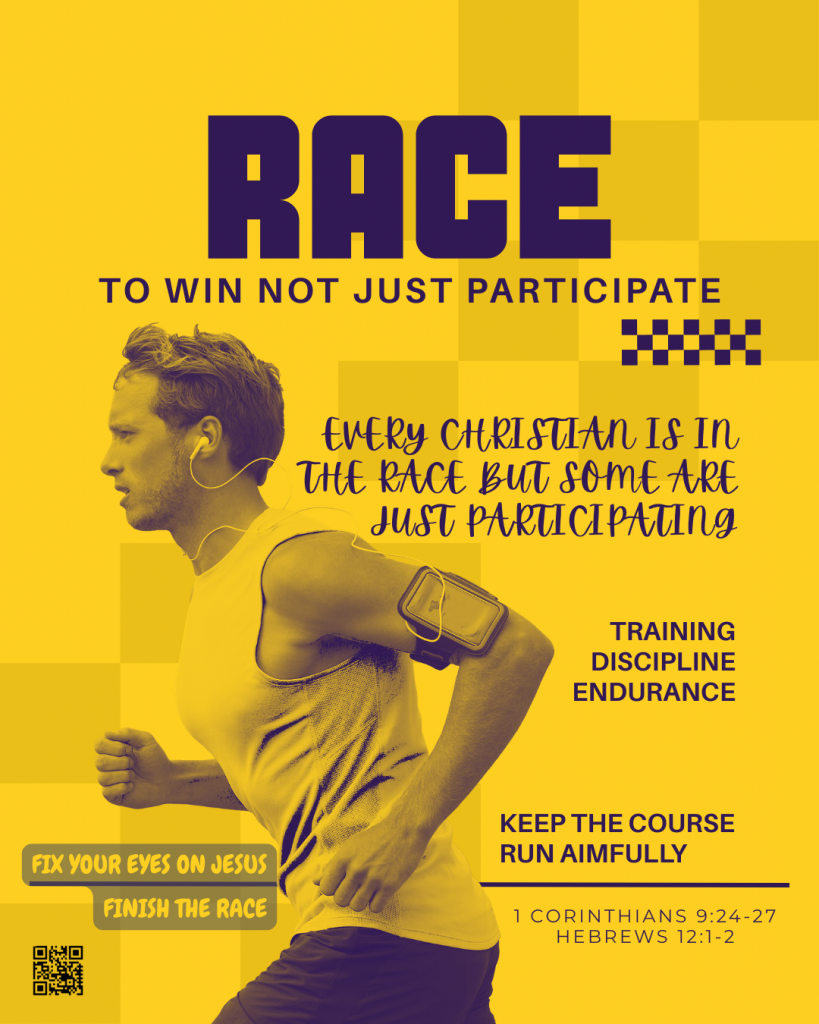
Race to win!

Do you not know that in a race all the runners run, but only one receives the prize? So run that you may obtain it… I discipline my body and keep it under control, lest after preaching to others I myself should be disqualified.                      1 Corinthians 9:24-27

Christian living is not a leisurely walk in the park. It is both a fierce battle and a demanding race. Many believers drift through life as if they are on a casual stroll, unaware of the spiritual realities surrounding them. But Scripture calls us to something far greater: to stand as soldiers in God’s army and to run as disciplined athletes in the race of faith.

The Christian life is a race. Also in Hebrews we see: Therefore, since we are surrounded by so great a cloud of witnesses, let us also lay aside every weight, and sin which clings so closely, and let us run with endurance the race that is set before us, looking to Jesus… Hebrews 12:1-2
A stroll is for pleasure. A race is for a prize, the imperishable wreath of eternal reward. In this race:

  • Only those who run with purpose, win.
  • There are no participation trophies or consolation prizes.
  • Victory demands discipline, self-control, endurance, and single-minded focus on Jesus.

You must lay aside every weight that slows you down: sin, distractions, worldly entanglements, and fix your eyes on Christ, the author and perfecter of our faith.

Are you running to win, or casually strolling through your Christian life? What weights do you need to lay aside today?
Identify one “weight” in your life and take a concrete step to lay it aside. But remember you need the whole armour everyday not just one piece of it. Run today with purpose, your King is watching, encouraging, cheering for you, and the prize is worth it.

Heavenly Father, thank You that You have not called us to a life of comfort, but to a life of purpose. Train me as a runner to lay aside every weight and run with endurance, fixing my eyes on Jesus. Forgive me for the times I have strolled casually. Ignite in me a holy resolve to finish the race. In Jesus’ mighty name, Amen.

Blindfolds and Strongholds: The Strategy of War

In the unseen realms, a fierce battle rages for the hearts, minds, and allegiances of every person. Many believers live unaware of this reality, tuned only to what they can see, hear, and feel. Yet Scripture repeatedly calls us to spiritual alertness. We are not fighting a physical war with human strategies, but a spiritual one against an enemy who never rests.

The Reality of the War

“Be of sober spirit, be on the alert. Your adversary, the devil, prowls around like a roaring lion, seeking someone to devour. So resist him, firm in your faith…” (1 Peter 5:8-9 NASB).

Our struggle “is not against flesh and blood, but against the rulers, against the powers, against the world forces of this darkness, against the spiritual forces of wickedness in the heavenly places” (Ephesians 6:12). The battle is real, constant, and often invisible. The enemy’s primary targets are our minds and our obedience to Christ.

The Enemy’s Strategy: Blindfolds and Strongholds

The devil employs two powerful tactics: blindfolds and strongholds.

Blindfolds: “The god of this world has blinded the minds of the unbelieving so that they will not see the light of the gospel of the glory of Christ, who is the image of God” (2 Corinthians 4:4). Satan veils truth, keeping people from seeing Jesus clearly. In our age of “post-truth,” emotional appeals, slogans, and personal beliefs often override objective reality and biblical truth. Phrases like “Do whatever makes you happy” sound appealing but ignore the deeper design of our souls, created with a God-shaped void that only He can fill.

Strongholds: These are fortified lies, arguments, and lofty opinions that take root in the mind and shape behaviour, lifestyles, and even entire cultures. “For though we walk in the flesh, we are not waging war according to the flesh. For the weapons of our warfare are not of the flesh but have divine power to destroy strongholds. We destroy arguments and every lofty opinion raised against the knowledge of God, and take every thought captive to obey Christ” (2 Corinthians 10:3-5 ESV).

Strongholds hold people captive through repeated exposure to falsehoods, via media, culture, or past wounds, until lies feel like truth.

The Believer’s Strategy and Weapons

We do not fight in our own strength. James 4:7 gives the clear directive: “Submit therefore to God. Resist the devil and he will flee from you.” God equips us with the divine armour and weapons: “Finally, be strong in the Lord and in the strength of His might. Put on the full armour of God…” (Ephesians 6:10-11). They being:

  • Belt of truth
  • Breastplate of righteousness
  • Shoes of the gospel of peace
  • Shield of faith
  • Helmet of salvation
  • Sword of the Spirit, which is the word of God (Ephesians 6:17)

The primary offensive weapon is the living Word of God: “For the word of God is alive and active. Sharper than any double-edged sword…” (Hebrews 4:12 NIV). Jesus modelled this perfectly in the wilderness, meeting every temptation with Scripture. We too overcome by hiding His word in our hearts and renewed in the spirit of our minds, taking every thought captive, and wielding truth against lies.(Ephesians 4:24)

We also carry authority in Christ: “I have given you authority to trample on snakes and scorpions and to overcome all the power of the enemy” (Luke10:19NIV). The battle is won through dependence on God’s strength, daily surrender, and the spread of the gospel, the one piece of armour oriented outward. A powerful daily practice is to prayerfully “put on” the full armour of God each morning, asking the Holy Spirit to renew your mind and make His Word alive in you.

Heavenly Father, thank You that You have not left us defenceless in this spiritual war. Open our eyes to see the blindfolds and strongholds in our own minds and in the culture around us. Help us to be sober and alert, firm in faith. Today we put on the full armour You provide: the belt of Your truth, the breastplate of righteousness, the shoes of the gospel, the shield of faith, the helmet of salvation, and the sword of the Spirit. Renew our minds. Teach us to take every thought captive to the obedience of Christ.

Give us courage to resist the devil, boldness to proclaim the gospel, and discernment to recognise post-truth lies. Fill us with Your strength, for the battle belongs to You. In the mighty name of Jesus Christ, our Captain, we pray. Amen.

“Blindfolds keep people from seeing the light of the gospel, while strongholds keep believers from walking in the freedom of the gospel. Both are dismantled by the same weapon: the living, active Word of God.”

May you walk in victory today—alert, armed, and abiding in Christ. The war is real, but so is His power to overcome.

The Simple Faith of the Simple-Minded

Read Mark 5:25–34

It is striking how Scripture presents the two individuals Jesus responds to in the crowd. One is Jairus, a synagogue official. He has a name. His position is recorded. His role is clear. The other is simply described as “a woman who had been subject to bleeding for twelve years.” She is unnamed, unidentified by status or family, and known only by her condition. A nobody if it weren’t for their infirmity. This is often how we know people, even in the church. Known by their weakness. Defined by their struggle. Remembered by their infirmity. Many of us would identify with this situation. People don’t remember meeting us, don’t  remember our names and often identify us as someone’s wife or brother. We are a nobody. 

Scripture also tells us that Jesus Himself was identified by suffering. “He was despised and rejected by mankind, a man of suffering, and familiar with pain” (Isaiah 53:3). He was also “known by His stripes”, marks of suffering that became the means of healing (Isaiah 53:5). While we often focus on His authority, power, and miracles, we must not forget, Jesus knew suffering from the inside and was also known by it. 

On that very day, many important people were present, officials, leaders, influential voices, educated minds, physicians, and scholars. None of them entered Scripture. None of them are remembered. But this woman is. 

We must however acknowledge that she was remembered not because she suffered, but because of how she responded to suffering. Suffering alone is not the qualification. It becomes significant only because it often produces the right response: reaching out to God in faith. She was suffering from the bleeding disorder long before her encounter with Jesus. Her story is remembered not for her pain, but for her response. Her attitude. Her view of Jesus. Her faith expressed in action. 

This was not refined faith. It was not sophisticated or polished. It was raw, desperate, and unschooled. “If I just touch His clothes, I will be healed” (Mark 5:28). That was her theology. That was her doctrine. And it was enough. She had not studied Scripture. She did not know the Law like the Pharisees. Yet Scripture warns, “Knowledge puffs up while love builds up” (1 Corinthians 8:1). The Pharisees had knowledge, but it did not transform them. This woman had faith, and it changed everything.

Jesus Himself affirmed the principle: “According to your faith let it be done to you” (Matthew 9:29). And it was done to her exactly as she believed. There was no doctrine of garment-touching. No ministry built around it. No conference held to explain it. She simply believed Jesus was who He said He was, and that He could heal.

And He did. She went home healed and whole. Anonymous. Uncelebrated by society. But eternally recorded in Scripture. Her story has taught generations more than volumes of theological debate ever could.

This confronts us uncomfortably. Many of us know Scripture deeply. We analyse, expound, debate, attend conferences, and complete modules. Yet how often are our lives unchanged? Our knowledge has increased, but our transformation has stalled. Meanwhile, a woman with no credentials touched Jesus (literally) and was made whole. The simple faith of the simple-minded puts us to shame. There is a sobering warning from Jesus Himself: “Not everyone who says to Me, ‘Lord, Lord,’ will enter the kingdom of heaven… Then I will tell them plainly, ‘I never knew you’” (Matthew 7:21–23). Knowledge without relationship is empty. Words without faith are hollow. Being touched by his healing hands often requires us to step out of the crowd in faith and shamelessly touch him in faith and desperation. What we need is not more explanation, but more encounter.

Lord Jesus, Strip away my pride in knowledge and position. Give me a simple heart and an undivided faith. Teach me to reach for You without pretence, to believe without complication, and to act without hesitation. I do not want to know about You, I want to know You. Make my faith living, active, and real. Amen.

Close Encounters at the Cross

Luke 23:39-43 (NASB 2020)One of the criminals who were hanged there was hurling abuse at Him, saying, “Are You not the Christ? Save Yourself and us!” But the other answered, and rebuking him said, “Do you not even fear God, since you are under the same sentence of condemnation? And we indeed are suffering justly, for we are receiving what we deserve for our crimes; but this Man has done nothing wrong.” And he was saying, “Jesus, remember me when You come into Your kingdom!” And He said to him, “Truly I say to you, today you will be with Me in Paradise.”

Three men hung on crosses in agony, shame, and death’s shadow. Yet amid their suffering, a conversation took place that reveals the eternal difference between knowing about Christ and truly receiving Him as Saviour.

The First Thief: Knowledge Without Repentance. The first criminal mocked Jesus: “Are You not the Christ? Save Yourself and us!” He recognised Jesus as the Messiah with power to save, but he showed no remorse for his own sins. His only desire was escape from present pain. He addressed Jesus impersonally as “the Christ,” never turning to Him as Saviour. He wanted temporary relief, not eternal salvation. Knowledge alone was not enough.

The Second Thief: Repentance That Saves. The other thief responded very differently. He rebuked his companion and confessed his guilt: “We are suffering justly… but this Man has done nothing wrong.” He accepted his punishment as deserved, acknowledged Jesus’ innocence, and showed reverent fear of God. Then he turned personally to the Lord:“Jesus, remember me when You come into Your kingdom!” He called Him “Jesus”-the personal name meaning “the Lord saves.” He asked for nothing in this life; only to be remembered in the world to come. In simple faith and repentance, he placed his eternity in Jesus’ hands. Jesus answered with grace: “Truly I say to you, today you will be with Me in Paradise.”

Lessons from the Cross. Both thieves knew the Man in the center was the Christ. Only one repented and trusted Him as Saviour.

  • One feared only death.
  • The other feared God.
  • One sought relief from the cross.
  • The other sought salvation from eternal judgment.

The second thief had no time for church, baptism, or good works — yet he was saved instantly because he repented and believed.

A Daily Walk of Repentance. For believers today, repentance does not end at conversion. The Greek word metanoia means a change of mind – a continual turning from sin toward God. Every day we must deal with the lust of the flesh, the lust of the eyes, and the pride of life as God sanctifies us and conforms us to the image of His Son.

God desires truth in the innermost being. Daily repentance keeps our hearts tender and our walk close to Jesus.

Lord Jesus, thank You for the mercy You showed the thief on the cross. Create in me a heart that truly fears You, confesses sin honestly, and turns to You daily in repentance. Help me to know You not just as Christ, but as my personal Saviour and Lord. Amen.

Giving God the First Fruits of Your Day

Like the first morning, fresh and full of promise. Just as the hymn celebrates God’s re-creation of each new day, we are invited to begin ours in worship and surrender. In a way we are His re-creation (new creation) in Christ Jesus too.

In the morning, O LORD, You hear my voice; at daybreak I lay my plea before You and wait in expectation. Psalm 5:3 (BSB)

This verse feels almost like a divine promise, a covenant of attentiveness. The Lord hears our voice first thing in the morning. When we put Him first, making Him our waking thought, everything changes.

The transformative power of morning priority

I can testify that making this a daily norm reshaped my life. Waking under His sovereignty brings peace and joy that become strength for the day ahead. “The joy of the LORD is my strength” (Nehemiah 8:10). Starting with Him sets the tone; His presence infuses the hours that follow.

The morning sacrifice

The psalmist speaks of laying a “plea” (“prepare a sacrifice for you”, ESV) before God at daybreak. This isn’t a guilt offering but a thank offering, a sacrifice of praise and thanksgiving from our lips.

"Through Jesus, therefore, let us continually offer to God a sacrifice of praise—the fruit of lips that openly profess His name. And do not forget to do good and to share with others, for with such sacrifices God is pleased." Hebrews 13:15–16 (NIV).

Begin with gratitude and praise. Let your first words honour Him. Then carry that spirit into the day through acts of goodness and generosity.

Practical ways to cultivate this habit

  • Prioritise your quiet time: the morning mind is fresh, rested, and alert, no competing distractions yet. Set apart, intentional, quiet moments before the world rushes in. Get God in before the world gets to you.
  • Discipline your evening and be intentional: go to bed early, exercise self-control, and practice perseverance. A well-rested body supports a disciplined mind.
  • Prepare through prayer: start by offering praise, confessing dependence, and seeking His guidance. Lay your day before Him, your plans, meetings, and moments.
  • Put on the full armour of God; every day holds spiritual battles. “Put on the full armour of God, so that you can take your stand against the devil’s schemes” (Ephesians 6:11, NIV). Morning is the time to arm yourself with truth, righteousness, peace, faith, salvation, and the Word.

Living expectantly

Approach the day with watchful expectation. Stay aware of His presence. Be sensitive to the Holy Spirit’s leading, divine appointments, opportunities to help, to share the gospel, or gently turn conversations toward Him.

A fruitful day isn’t random; it’s purposeful. We live ready, “for we do not know when [He] comes” (Matthew 24:42–44). Intentionality turns ordinary moments into eternal significance.

The promise of starting well

Anything that begins well has a greater chance of ending well. What better foundation than communion with God? Once you grasp the weight and wonder of this morning priority, it reshapes your routine, your priorities, and ultimately, you.

Lord, in the morning You hear my voice. May I rise to meet You first, offering praise, waiting expectantly, and walking through this day in Your strength and leading. Thank You for new mercies every morning. Amen.

Food for thought:

  1. What are some of the competing priorities in our life?
  2. What are the things that keeps us from our time with God?
  3. Could we change our routine to make time for God first thing?

Response to failure

31 “Simon, Simon, behold, Satan has demanded to sift you men like wheat; 32 but I have prayed for you, that your faith will not fail; and you, when you have turned back, strengthen your brothers.” Luke 22:31-32 (NASB 2020)

Failure always asks a question of the heart. Not whether we have failed, but how we will respond.

There are two paths Scripture lays before us: one that leads to restoration, and one that ends in despair. Both Peter and Judas failed. Both were warned. Both were overcome by guilt. Yet their endings could not be more different.

Peter failed publicly and painfully. He had once confessed that Jesus was the Christ, the Son of the living God. He had been renamed, (Cephas to Peter), commissioned, and spoken over. His confidence grew, perhaps too much. At the table he declared he would die with Jesus. But when the moment came, determination collapsed. He did not pray. He did not lean on grace. And when the pressure rose, he fell. 

Ashamed and broken, Peter returned to fishing. Failure pulled him back to what was familiar, to what felt safe. Like Elijah fleeing from Jezebel, his heart seemed to cry, “I am no better than those before me.” Like Isaiah standing exposed before holiness, he became painfully aware of his weakness and undone by his own failure. He once said in Luke 5:8 “Go away from me, Lord; I am a sinful man,”. This time he appeared to say, not as confession alone, but as resignation. It was as though Peter concluded, I am bound to fail. I will always fall short. I am only a sinner, only a fisherman. I am of no use to You. In his shame, failure tried to redefine his identity. It told him that his calling was cancelled, his future finished, and his place in the story over.

Judas also failed. When Judas, who had betrayed him, saw that Jesus was condemned, he was seized with remorse and returned the thirty pieces of silver to the chief priests and the elders.“I have sinned,” he said, “for I have betrayed innocent blood.” Mathew 27:3-5. When events unfolded differently than he expected, remorse flooded in. He confessed his sin, acknowledged innocent blood, and was overwhelmed by guilt. But his sorrow turned inward, not upward. He could not believe mercy was still possible. He concluded that nothing, not even God, could receive him again. And in despair, he made a final and irreversible decision.

This is the dividing line.

Jesus had already spoken to Peter, “When you have failed, strengthen your brothers.” Not if you fail, but when. Jesus did not pray that Peter would never stumble. He prayed that Peter’s faith would not fail, that Peter would not stop believing in the goodness of God.

Faith is not the absence of failure. Faith is trusting the character of God after failure. “If we confess our sins, He is faithful and just to forgive us and to cleanse us from all unrighteousness” (1 John 1:9).

When Peter wandered back to fishing, Jesus went after him. Peter did not pursue Jesus; Jesus pursued Peter. And when they met, Jesus did not rehearse the failure. He asked one question only: “Do you love Me?”. No interrogation about what he did but about his loyalty. No punishment. No reference to the denial. Love was the qualification. And love was enough. Then came the reinstatement: “Feed My sheep.” No résumé required. No record of achievements. No proof of worthiness. Failure did not disqualify Peter. Unbelief would have.

Lord, I bring You my failures without excuse and without hiding. Where shame tells me I am finished, speak Your restoring truth. Guard my faith when I fall. Teach me to believe in Your mercy more than in my weakness. Restore my calling, realign my heart, and send me forward again not by my strength, but by Your grace. Amen.

What the desperate asked.

20 Then the mother of the sons of Zebedee came to Jesus with her sons, bowing down and making a request of Him. 21 And He said to her, “What do you desire?” She *said to Him, “Say that in Your kingdom these two sons of mine shall sit, one at Your right, and one at Your left.” Matthew 20:20-21 (NASB 2020)

James and John’s mother came to Jesus and asked if her sons could sit at His right and His left in the Kingdom. On other occasions the disciples themselves came asking the same question: “Who will be the greatest in the Kingdom of heaven?” These were not outsiders. These were Jews. Chosen. Selected. Handpicked. They lived with Jesus, walked with Him daily, heard His teaching directly from His mouth, watched His pure and holy life up close, witnessed miracles, healings, signs, wonders, demons being cast out, and even the dead raised, and yet their questions consistently revealed how carnal and fleshly their thinking still was. Proximity to Jesus did not automatically produce spiritual insight. Privilege did not guarantee humility.

Now compare this with what the Gentiles asked.

A paralytic man’s friends tore open a roof and lowered him down to Jesus. They did not ask for status. They asked for healing. A Canaanite woman whose daughter was demon-possessed said she was willing to be treated like a dog if only she could receive the crumbs from the table. She did not ask for a seat. She asked for mercy. A woman with a hemorrhage fought through the crowd, risking shame and public exposure, just to touch the edge of Jesus’ cloak. She did not ask for recognition. She asked for wholeness. Two blind beggars sitting by the roadside were told to keep quiet, maintain decorum, and know their place, but they shouted even louder until Jesus stopped and healed them. They did not ask to be great. They asked to see.

Here is the difference.

The disciples were insiders, educated in Scripture, saturated with teaching, immersed in spiritual activity, yet often blind to what truly mattered. The Gentiles were outsiders, desperate, broken, unqualified, rejected, yet they saw clearly. Scripture says, “A broken and contrite heart God will not despise.” It also says, “God gives grace to the humble.” Every Gentile we just mentioned came the same way: desperate, unashamed, persistent, and full of faith. That is the pattern. That is the secret. And it does not come cheaply. It is forged through pain and suffering.

Not one of them asked for the wrong thing. Not one came asking to be made great in the Kingdom. Their suffering reordered their priorities. Their pain clarified their vision. Their desperation stripped away ambition and replaced it with faith. While the chosen debated greatness, the broken reached for mercy and received it. This should sober us. Religious privilege can dull spiritual hunger. Familiarity can breed blindness. And suffering, painful as it is, often becomes the mercy that teaches us what truly matters.

Lord, strip me of religious pride and insider blindness. Do not let proximity replace humility or knowledge replace desperation. Give me a broken and contrite heart that You will not despise. Teach me to ask for what truly matters, not what elevates me, but what heals me; not what exalts me, but what transforms me. Let suffering purify my desires and re-order my priorities until I want nothing more than You. In Jesus’ name, amen.

The insiders asked for greatness; the broken asked for mercy—and heaven answered the broken.

The 3D’s: Desire, Diligence & Delight

Proverbs 13:4 (ESV): “The soul of the sluggard craves and gets nothing, while the soul of the diligent is richly supplied.”

The Bible contrasts two paths: the sluggard’s empty craving versus the diligent person’s rich satisfaction. Mere desire without action leads to frustration. The lazy soul “craves and gets nothing.” But diligence that is steady and faithful brings fulfilment, supplying the soul abundantly.

This connects deeply to delight in the Lord. When we delight in God finding our greatest joy, pleasure, and contentment in Him, our desires align with His will. Psalm 37:4 promises that as we prioritise enjoying God above all, He shapes and grants the longings of our hearts. True delight transforms desire from selfish craving into God-honoring pursuit.

Diligence bridges these: it is the active response to delight. When we delight in the Lord, we diligently seek Him (Hebrews 11:6), pursue His ways, and labour faithfully in His service. This diligence isn’t burdensome duty but joyful expression of love; cultivating godliness, bearing fruit, and experiencing deeper satisfaction in God and His gifts.

The sluggard’s desire remains unfulfilled because it lacks action rooted in delight. But the diligent heart, anchored in delighting in God, finds its desires richly satisfied, often in ways far better than imagined, as they conform to His perfect purposes.

Dear brother or sister, nothing happens without true desire. Surprisingly it does not originate in us. Of our own will, we have no capacity to seek Him. Desire originates in Him as in Philippians 2:13. “ For it is God who works in you both to desire and work for His good pleasure.” Desire changes perceptions and perceptions transform our lives. What if…. we ask Him for desire, for Him. Now that would certainly be in His will and He will most definitely grant us desire if only we ask. Ask Him and you will be able to test and approve what God’s will is – His good, pleasing and perfect will. Romans 12:2