I recently overheard a Christian who was encouraged by a boxer publicly praising and worshipping Jesus while entering the arena. What troubled me was the dissonance between the worship and the action that followed. In competitive boxing, striking another person is central to the contest, and incapacitating an opponent is an accepted route to victory. This raises a serious moral question about deliberately causing bodily harm, including the possibility of lasting injury.
My point is that public declarations of faith cannot be treated as an endorsement of the activity itself. Praising Jesus does not establish that an action is consistent with His teaching. Hard work, skill and discipline do not settle its morality either. These qualities must serve a worthy purpose. A person’s faith may be sincere, but people can be sincerely wrong. We however need not judge their motives to examine their actions.
Paul’s reference to boxing and running in 1 Corinthians 9:24–27 might appear to provide biblical validation for these sports. Before reaching that conclusion, however, we need to distinguish description from prescription and, more precisely here, illustration from endorsement. What is Paul using the sporting imagery to teach?
The passage emphasises purposeful effort, self-control and discipline. The runner runs towards a goal; the boxer directs his blows rather than striking the air. Paul draws on these images to explain the seriousness with which he pursues his calling. His concern is faithful participation in the gospel and the exercise of self-discipline, lest he himself be disqualified after preaching to others.
The analogy does not require every feature of the sport to receive moral approval. We should carry across the lesson Paul identifies, rather than assume that the illustration endorses the whole activity. His reference to boxing therefore does not settle the ethical question of deliberately injuring an opponent. That question still needs to be examined through the wider teaching of Scripture.
Moving from boxing to a broader principle: our speech cannot justify our actions. Our declarations of faith and our conduct should be congruent, both accountable to the Lord we worship.
Romans 12:1–2 thus becomes the central passage. Offering our bodies as living sacrifices means that worship includes what we physically do. The renewal of our minds calls us to examine even activities that are familiar, admired or rewarded. Romans 6:13 reinforces this by calling us to offer our bodily members to God as instruments of righteousness. James 3:9–10 exposes the inconsistency of blessing God while cursing people made in His likeness.
Our actions should be examined carefully through the two greatest commandments:
Love God wholeheartedly: Does this action honour His character and obey His teaching? Am I willing to let His Word correct what I enjoy or defend?
Love our neighbour as ourselves: What does this action actually do to another person? Does it respect their dignity and seek their good?
These passages do not explicitly address modern boxing, but they establish the ethical questions that examine our understanding. The thought for the day, applies that examination to ourselves, inviting repentance and renewed obedience in response to God’s mercy.
If we removed the religious words surrounding an action, would the action itself express love for God and our neighbour?
Thought for the day
Expressive dissonance is the disharmony between the faith we express and the actions we practise: our conduct contradicts the worship we offer.
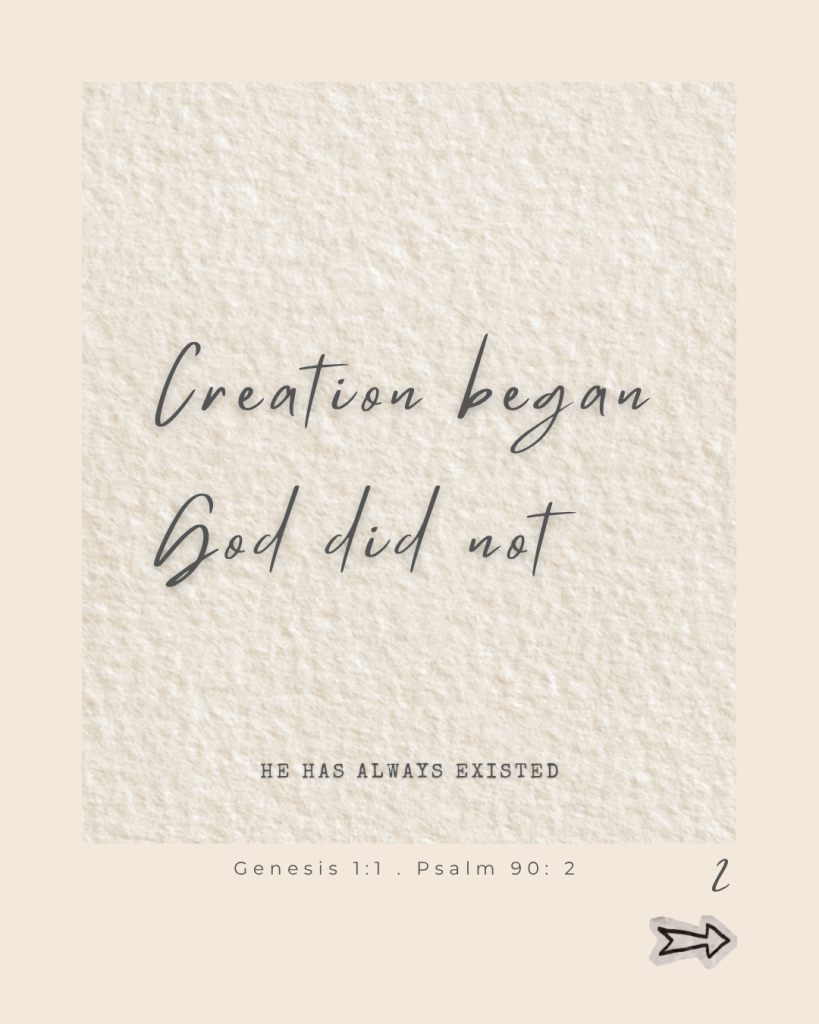
Creation had a beginning. God did not. Before the created order came into being, God already was (Genesis 1:1; Psalm 90:2).
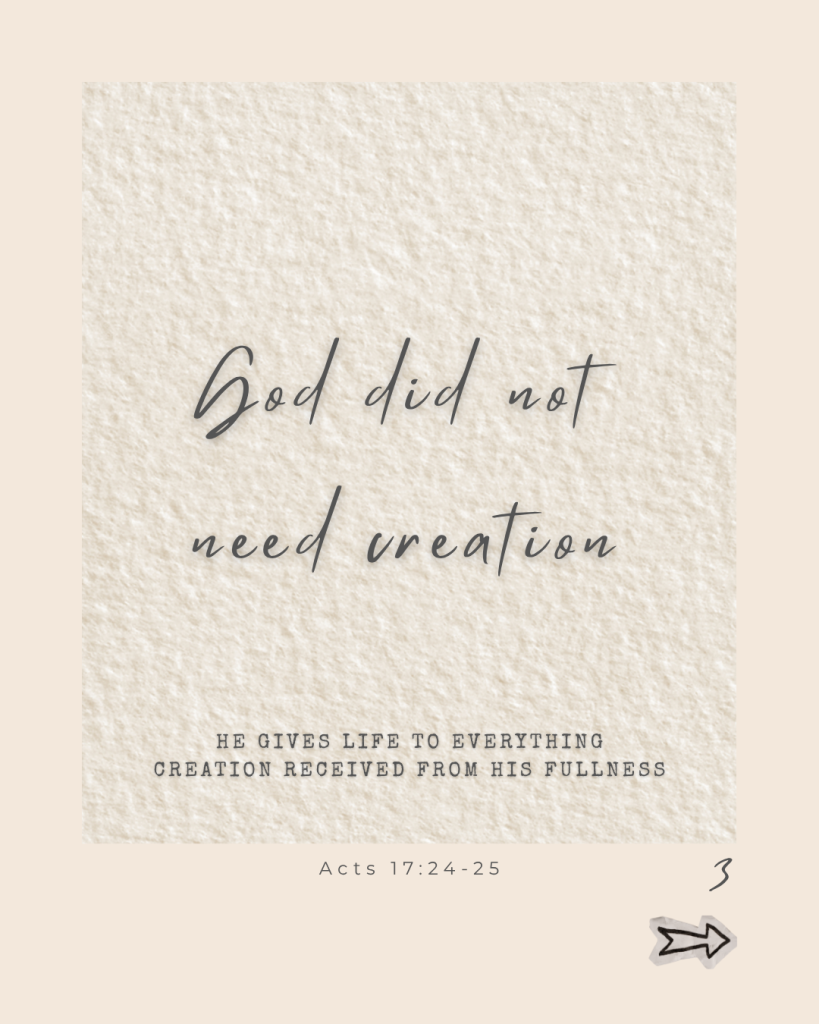
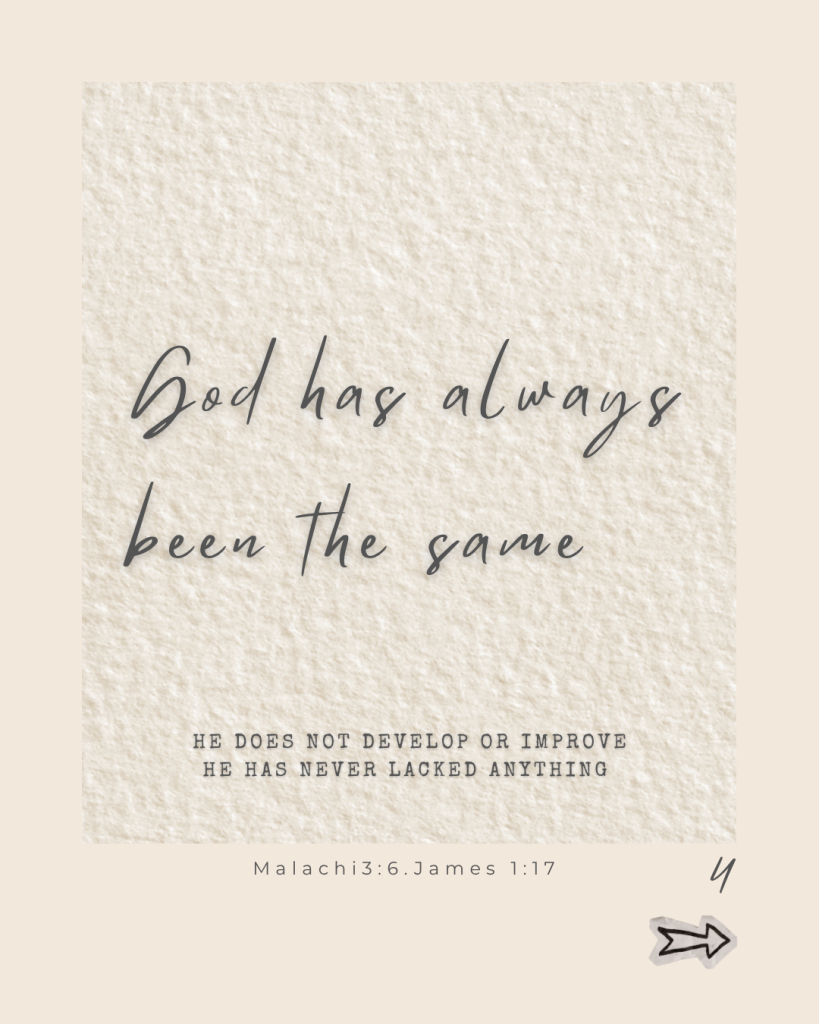
God did not create from need. He is complete, gives life to everything and never changes. He has never lacked anything (Acts 17:24–25; Malachi 3:6; James 1:17).
Scripture also declares:
God is love.
If God is complete and unchanging, He did not become loving when He created us. God has always loved.
So whom did He love before creation?
Jesus answers:
“You loved Me before the foundation of the world.” —John 17:24
The Father eternally loved the Son. The Son did not begin with creation: the Word was with God, was God, and everything created came into being through Him (John 1:1–3).
The Holy Spirit was not a later addition. He was present at creation, is called the eternal Spirit, and knows the depths of God. Created beings know God only through what He reveals; the Spirit knows those depths and reveals them to us (Genesis 1:2; Hebrews 9:14; 1 Corinthians 2:10–12).
The logic leads us to ask, but Scripture supplies the revelation:
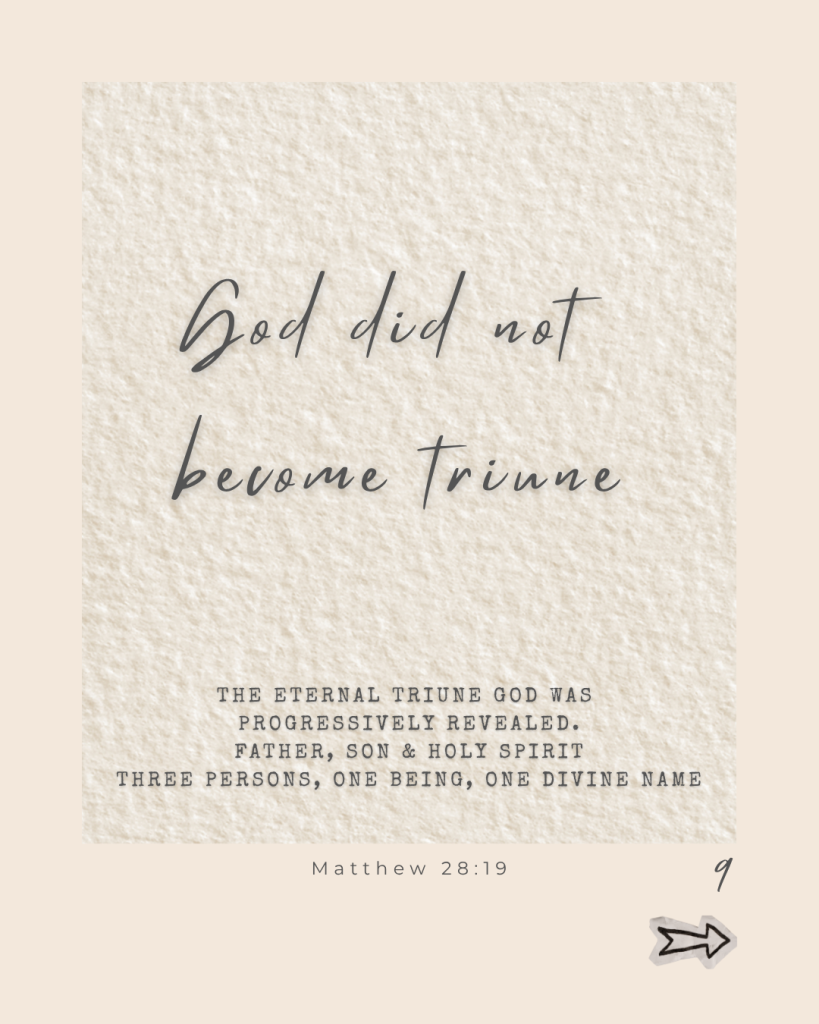
Father, Son and Holy Spirit. Three Persons. One divine Being. One God.
Jesus names all three under one divine name in Matthew 28:19.
God did not become triune. The eternally triune God progressively revealed who He has always been.
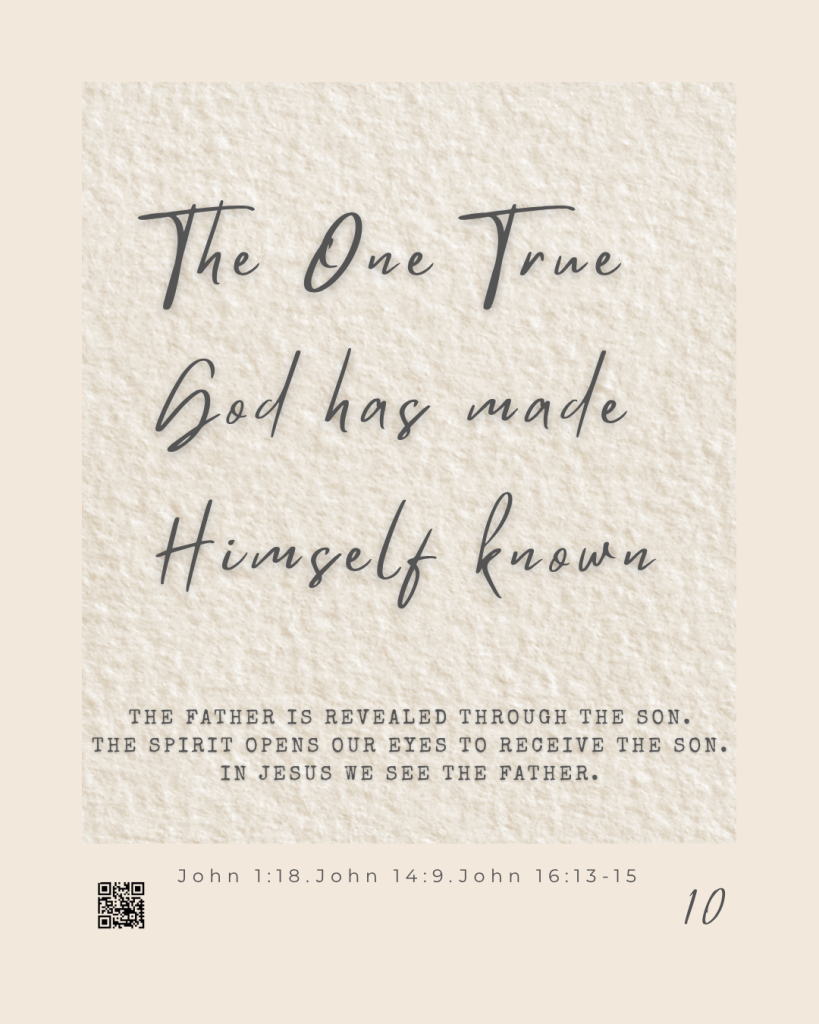
The Father is revealed through the Son. The Spirit opens our eyes to receive the Son. In Jesus, we see the Father.
The logic leads us to ask. Scripture supplies the revelation. The Spirit opens our eyes. The Son makes the Father known.
John 1:3 | Genesis 1:26-27 | Colossians 1:15-16 | Romans 8:29 | John 5:24-25 | 1 Corinthians 15:3-4
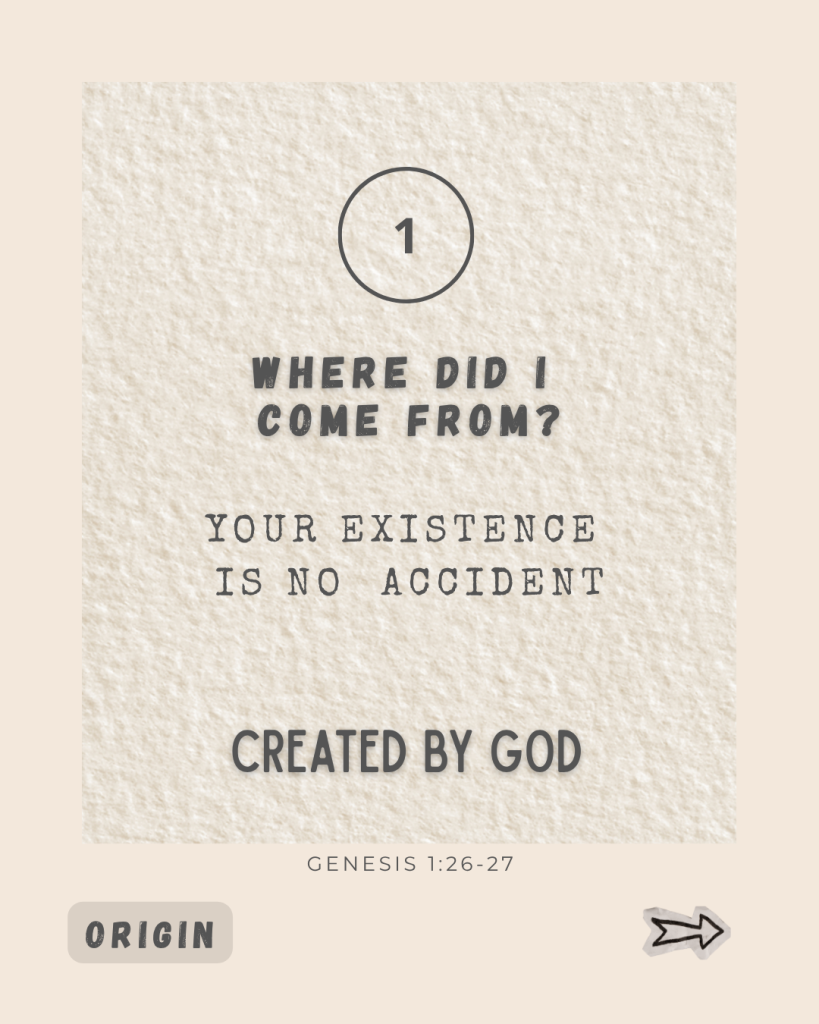
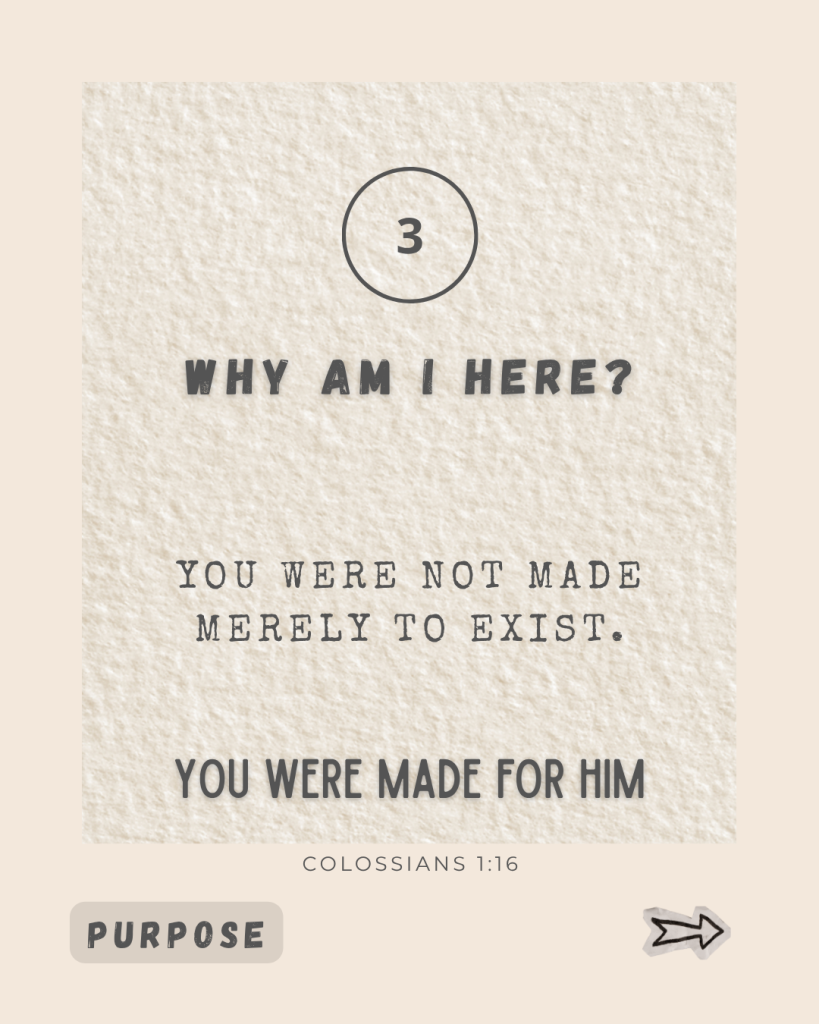
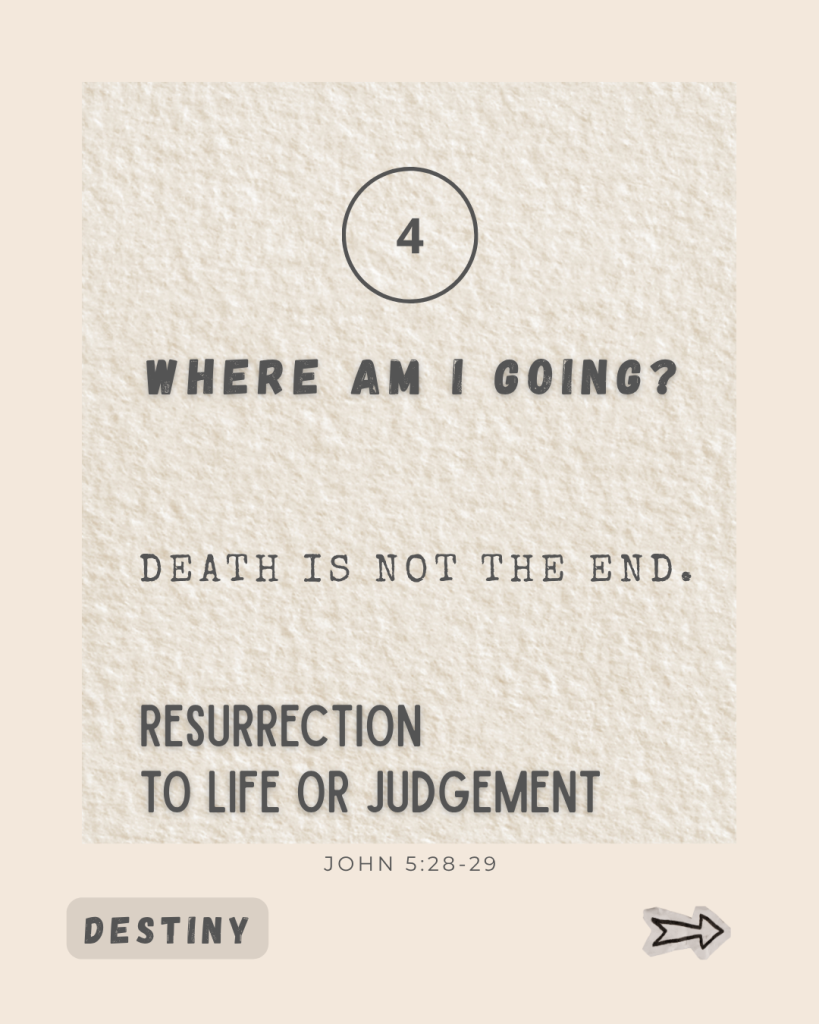
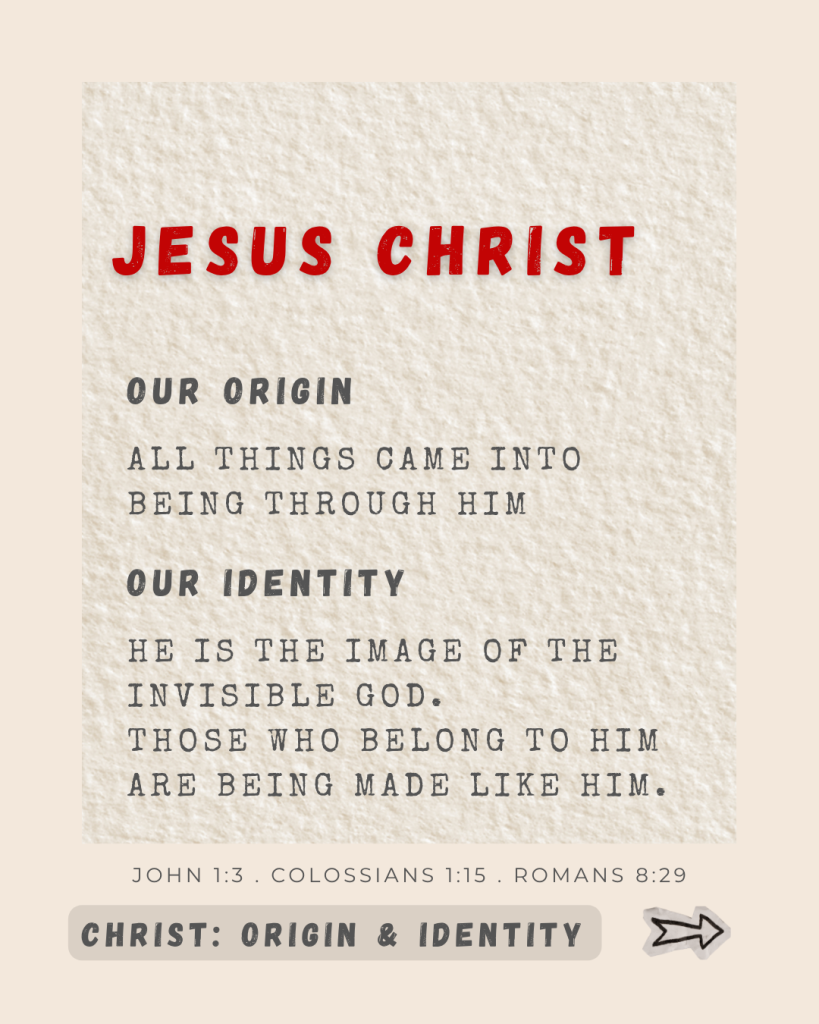
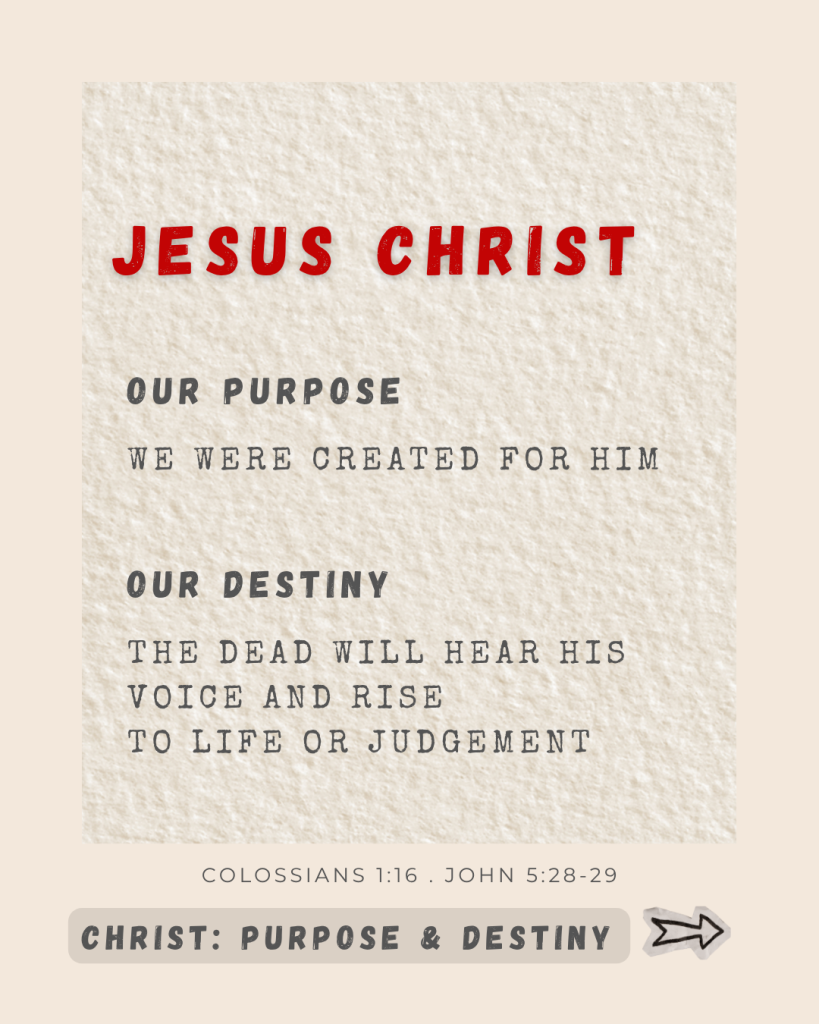
Christianity connects our origin, identity, purpose, and destiny: we are created by God, made in His image, made for Him, and accountable to Him beyond death.
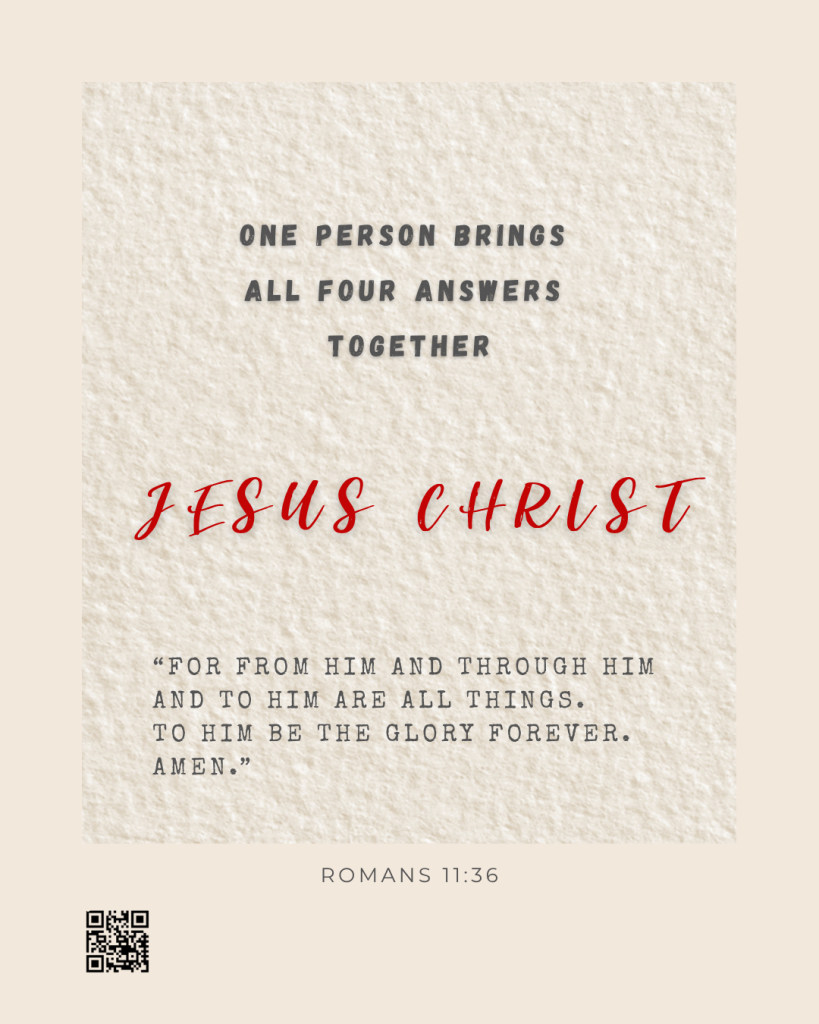
These answers come together in Jesus Christ.
All things came into being through Him. He is the image of the invisible God, and those who belong to Him are being made like Him. We were created for Him. And the dead will hear His voice and rise.
The One who made us also came to save us. Jesus died for our sins and rose again, so that through repentance and faith in Him we may receive forgiveness and eternal life.
These four questions lead us to a personal response: Will you trust the One who made you, died for you, and calls you to Himself?
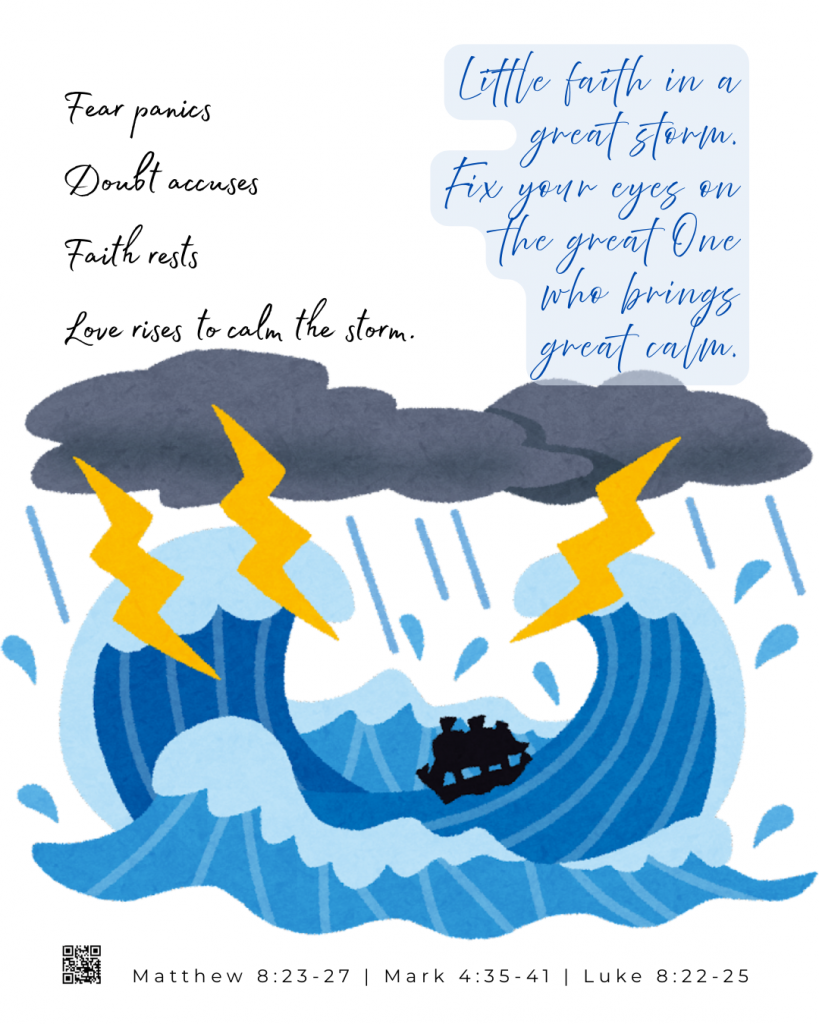
He said to them, “Why are you afraid, you men of little faith?” Then He got up and rebuked the winds and the sea, and it became perfectly calm. Matthew 8:26
This episode recorded in all the three synoptic gospels (Gr-synoptikos- seeing together) offer a complementary, and fuller understanding of the whole counsel of God. There is some debate as to whether the 3 accounts talk about 2 different episodes. On closer examination note the uniform response of the disciples across all the 3 gospels as being “who can this be that even the wind and the sea obey Him”. Their amazement and shock is the same, they can’t be shocked a second time, so it is unlikely there are 2 separate occasions.
As the disciples journeyed across the sea with Jesus, a violent storm arose. Within this single episode, Scripture paints for us a picture of four kinds of disciples. Four kinds of responses to life’s storms. Four kinds of faith.
First, The Panicked Sailors. The disciples themselves in that moment were terrified. Overwhelmed by the waves. Convinced they were going to die. Their hearts filled with fear. Their minds with anxiety. Remember they are not new to the sea, in fact some of them had to be out there everyday, day in and day out in these seas, fishing, facing storms. Storms couldn’t have been new to them. But somehow this one in particular was a violent one causing them to panic to such an extent they thought they were going to die. Their cry is desperate: “Lord, save us!” They are afraid. Their fear drives them to cry out. They seek help. They run to Jesus. This is not the deepest faith, but it is not the worst either.
Then came the Accusing Critics. The gospel of Mark reveals them clearly. They are those who not only fear the storm but turn their fear into accusation. Their cry is not merely “Save us,” but “Don’t You even care? Where are You? Why aren’t You helping?” They question God’s goodness. They doubt His love. They blame Him for the storms that shake their lives. This is the most dangerous place. Because fear has turned to doubt and bitterness. Anxiety has turned to resentment. The storm outside has created a storm inside, a storm of suspicion and doubt, hidden anger uncovered and even resentment toward God. The question is why all this? This is not meant to happen!
In stark contrast stands the Restful Sleeper. Jesus Himself. Asleep in perfect peace in the midst of the chaos. Fully assured of the Father’s love. Utterly secure. Untouched by anxiety. He doesn’t panic. He doesn’t accuse. His heart is anchored in God so deeply that even violent waves cannot shake it. This is the life of genuine faith. Not the absence of storms. But the presence of such deep trust in the Father’s love, that storms cannot disturb the soul’s peace. The kind of peace only He can give, not like the one the world gives which is fragile and temporal we see in John 14:27. It is deeper and beyond our understanding which is what Philippians 4:7 tells us.
And finally, there is the rarest and the smallest group: the Storm-Calmers. These are those who not only rest in God’s love but rise up, like Jesus, and bring calm to others. Their faith is active. Their spirit is empowered. Their lives bring peace, strength, and comfort to those around them. This is what genuine, anointed, God-rooted ministry looks like. Not noise. Not titles. Not impressive words or impressive works. But the ability to still storms in the hearts of others. To bring peace to the anxious. To bring strength to the weak. To bring hope to the despairing. The ones who can feed others, rescue others and build others. Those who live on meat. They are the “spiritual man” we see in 1Corinthians 2:15-16.
Among these four, we must ask: Who are we? Are we the Panicked Sailor? Afraid, yet still calling out to Jesus. This is better than the next category, but we remain enslaved by fear. Always needing but never able to help others. Always need feeding but not feeding others. Always on milk and not moved onto meat. Always child like and never growing. Always being helped but never able to reach out and help others in need. Church is always-“what can I get?” not “what can I give”. Never making disciples, never helping others grow. Always spiritually bankrupt, tired, weary, burdened and eyes fixed on the storm, never able to see clearly, paralysed, inactive, unable, unproductive, without fruit. Notice this, they cannot help anyone else for they themselves are in a tight spot. They are the “carnal man” in 1 Corinthians 3:1-3 and Hebrews 5:11-14. On milk and not moving on to meat.
Are we the Accusing Critic? Afraid and angry? Doubting God’s goodness? This is the most dangerous place. We have let the storm outside create a storm inside our souls. Or are we the Restful Sleeper? Secure in the Father’s love. At peace in the midst of chaos. This is a great place to be. We have found what many never find, true rest in God. Or even better, are we a Storm-Calmer? Not only resting ourselves, but rising up to bring God’s peace to others. Not only secure, but a source of security. Not only calm, but a calming presence.
So let us ask ourselves: Have we found rest in God’s love? Or are we still panicked, still accusing, still drowning in fear? And if we have found rest, are we content to rest alone? Or are we willing to rise up and calm the storms in others’ lives? Because the world is full of disciples in storms. And they need to see us, resting like Jesus, peaceful like Jesus, bringing calm like Jesus. That is the call. Not to panic. Not to accuse. Not merely to rest. But to rise and calm the storm.
Prayer
Father, help us to see ourselves clearly in this story. Deliver us from fear, from insecurity, and from any hidden accusation we hold against You. Make us secure in Your love, restful like Jesus in every storm. But don’t let us stop there, make us Storm-Calmers, someone who brings Your peace, comfort, and strength into the lives of others. Transform us from the inside so that our lives reflect Your presence to the world around us. In Jesus’ name, amen.
Quote
Fear panics, doubt accuses, faith rests, but love rises to calm the storm.
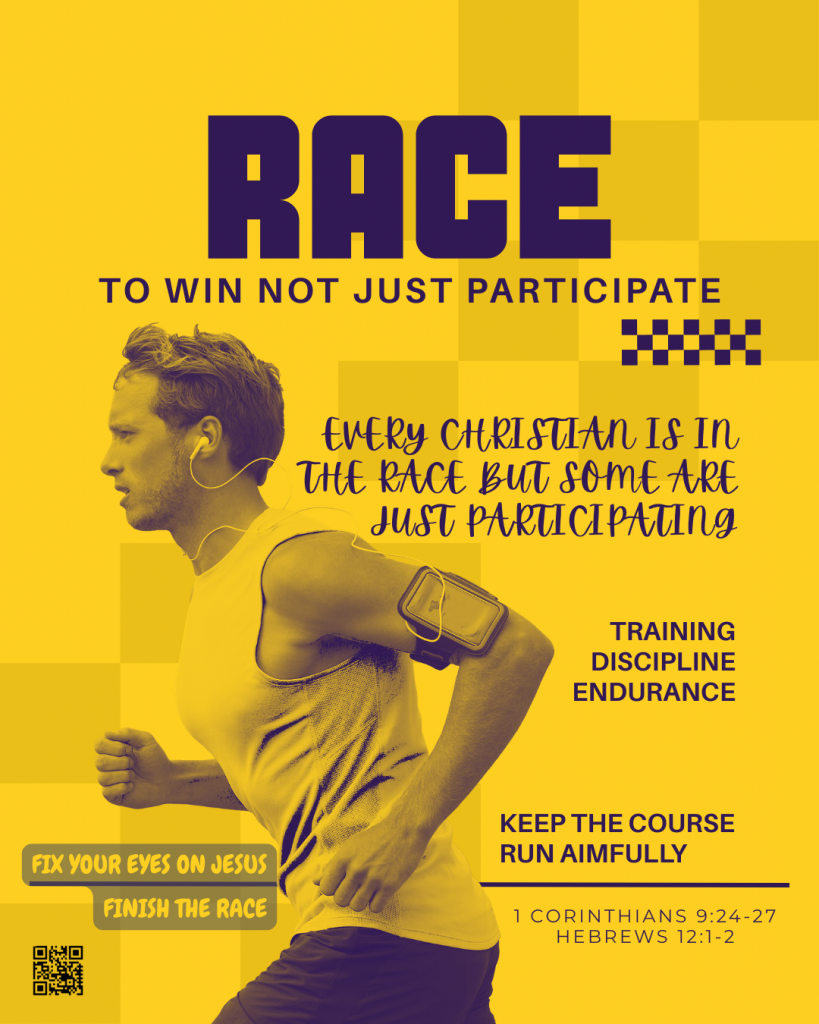
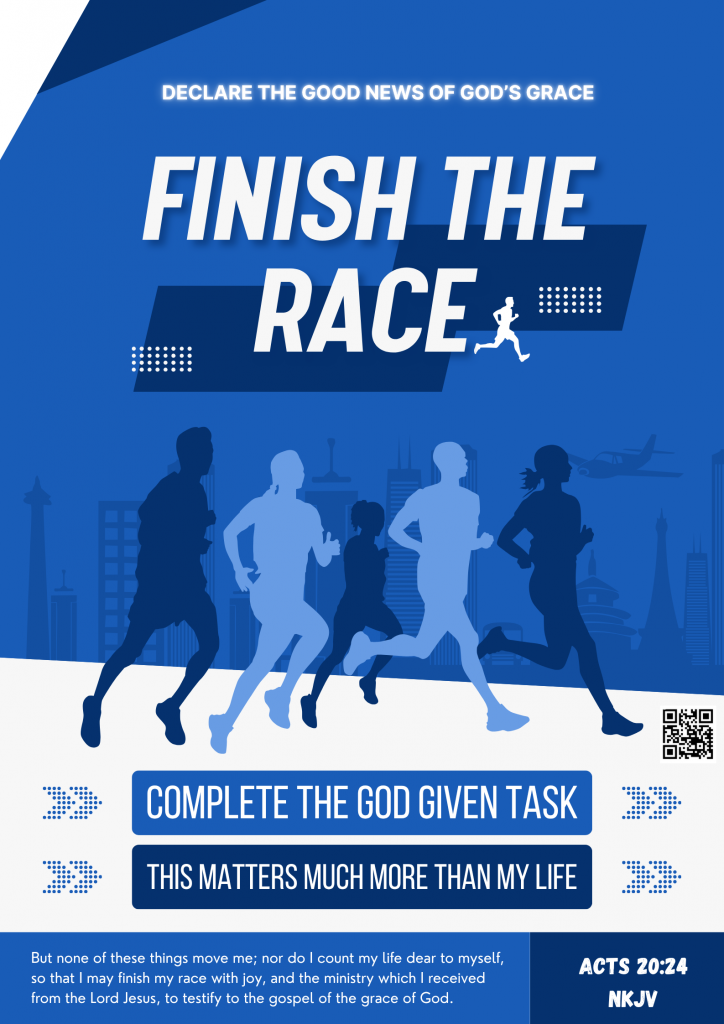
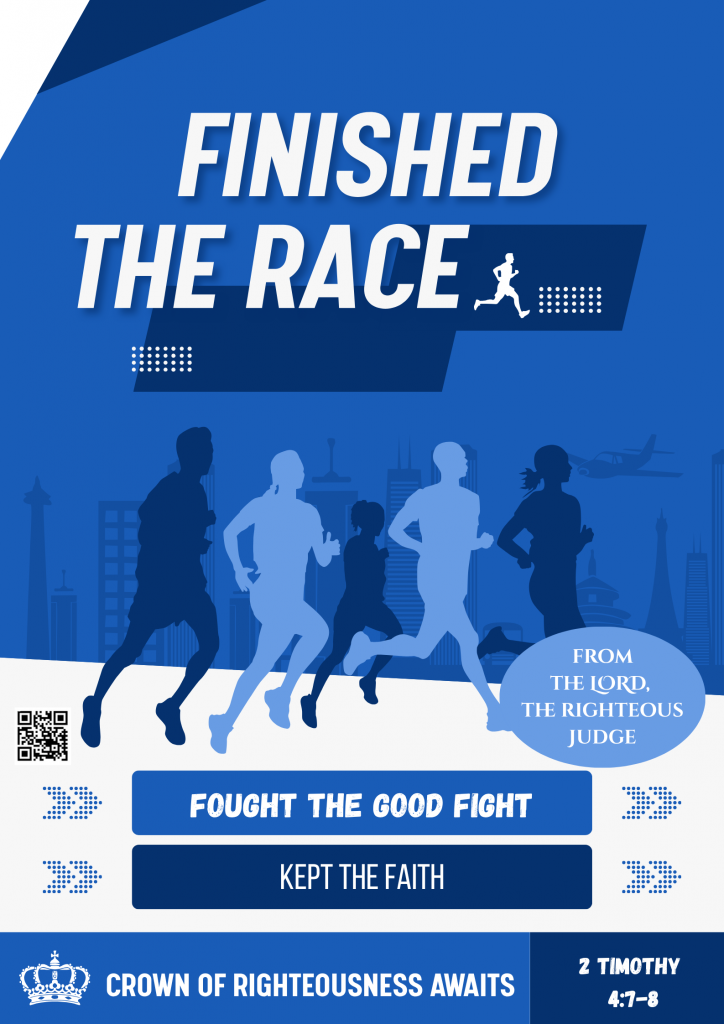
Do you not know that in a race all the runners run, but only one receives the prize? So run that you may obtain it… I discipline my body and keep it under control, lest after preaching to others I myself should be disqualified. 1 Corinthians 9:24-27
Christian living is not a leisurely walk in the park. It is both a fierce battle and a demanding race. Many believers drift through life as if they are on a casual stroll, unaware of the spiritual realities surrounding them. But Scripture calls us to something far greater: to stand as soldiers in God’s army and to run as disciplined athletes in the race of faith.
The Christian life is a race. Also in Hebrews we see: Therefore, since we are surrounded by so great a cloud of witnesses, let us also lay aside every weight, and sin which clings so closely, and let us run with endurance the race that is set before us, looking to Jesus… Hebrews 12:1-2 A stroll is for pleasure. A race is for a prize, the imperishable wreath of eternal reward. In this race:
Only those who run with purpose, win.
There are no participation trophies or consolation prizes.
Victory demands discipline, self-control, endurance, and single-minded focus on Jesus.
You must lay aside every weight that slows you down: sin, distractions, worldly entanglements, and fix your eyes on Christ, the author and perfecter of our faith.
Are you running to win, or casually strolling through your Christian life? What weights do you need to lay aside today? Identify one “weight” in your life and take a concrete step to lay it aside. But remember you need the whole armour everyday not just one piece of it. Run today with purpose, your King is watching, encouraging, cheering for you, and the prize is worth it.
Prayer
Heavenly Father, thank You that You have not called us to a life of comfort, but to a life of purpose. Train me as a runner to lay aside every weight and run with endurance, fixing my eyes on Jesus. Forgive me for the times I have strolled casually. Ignite in me a holy resolve to finish the race. In Jesus’ mighty name, Amen.
Quote : We are not called to merely participate but to win the race
In the unseen realms, a fierce battle rages for the hearts, minds, and allegiances of every person. Many believers live unaware of this reality, tuned only to what they can see, hear, and feel. Yet Scripture repeatedly calls us to spiritual alertness. We are not fighting a physical war with human strategies, but a spiritual one against an enemy who never rests.
The Reality of the War
“Be of sober spirit, be on the alert. Your adversary, the devil, prowls around like a roaring lion, seeking someone to devour. So resist him, firm in your faith…” (1 Peter 5:8-9 NASB).
Our struggle “is not against flesh and blood, but against the rulers, against the powers, against the world forces of this darkness, against the spiritual forces of wickedness in the heavenly places” (Ephesians 6:12). The battle is real, constant, and often invisible. The enemy’s primary targets are our minds and our obedience to Christ.
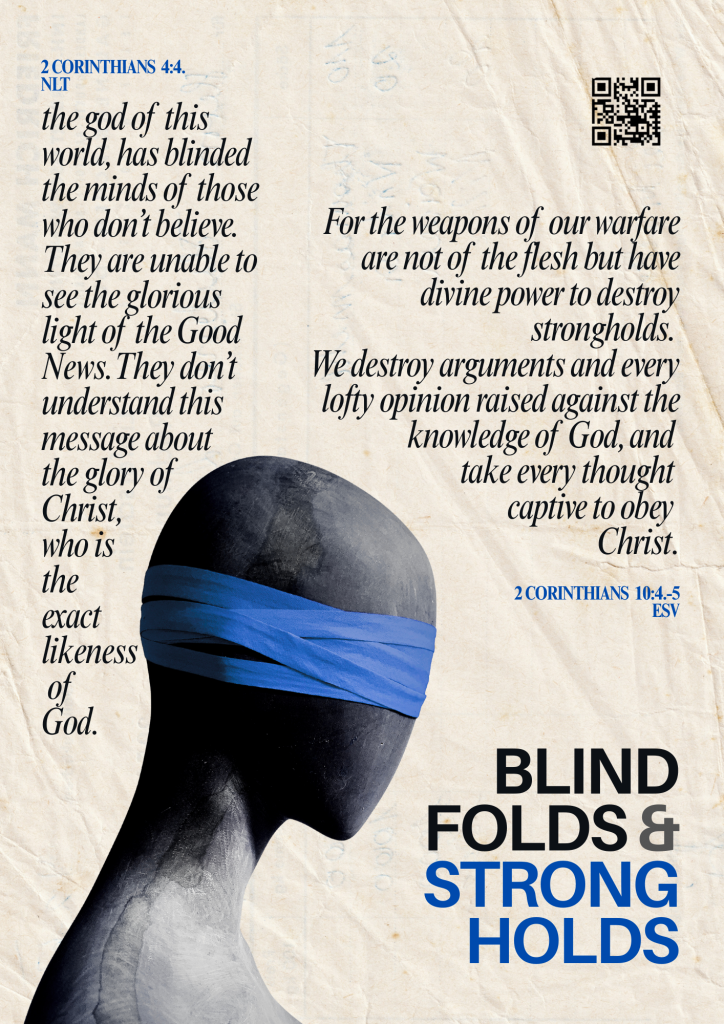
The Enemy’s Strategy: Blindfolds and Strongholds
The devil employs two powerful tactics: blindfolds and strongholds.
Blindfolds:“The god of this world has blinded the minds of the unbelieving so that they will not see the light of the gospel of the glory of Christ, who is the image of God” (2 Corinthians 4:4). Satan veils truth, keeping people from seeing Jesus clearly. In our age of “post-truth,” emotional appeals, slogans, and personal beliefs often override objective reality and biblical truth. Phrases like “Do whatever makes you happy” sound appealing but ignore the deeper design of our souls, created with a God-shaped void that only He can fill.
Strongholds: These are fortified lies, arguments, and lofty opinions that take root in the mind and shape behaviour, lifestyles, and even entire cultures. “For though we walk in the flesh, we are not waging war according to the flesh. For the weapons of our warfare are not of the flesh but have divine power to destroy strongholds. We destroy arguments and every lofty opinion raised against the knowledge of God, and take every thought captive to obey Christ” (2 Corinthians 10:3-5 ESV).
Strongholds hold people captive through repeated exposure to falsehoods, via media, culture, or past wounds, until lies feel like truth.
The Believer’s Strategy and Weapons
We do not fight in our own strength. James 4:7 gives the clear directive: “Submit therefore to God. Resist the devil and he will flee from you.” God equips us with the divine armour and weapons: “Finally, be strong in the Lord and in the strength of His might. Put on the full armour of God…” (Ephesians 6:10-11). They being:
Belt of truth
Breastplate of righteousness
Shoes of the gospel of peace
Shield of faith
Helmet of salvation
Sword of the Spirit, which is the word of God (Ephesians 6:17)
The primary offensive weapon is the living Word of God: “For the word of God is alive and active. Sharper than any double-edged sword…” (Hebrews 4:12 NIV). Jesus modelled this perfectly in the wilderness, meeting every temptation with Scripture. We too overcome by hiding His word in our hearts and renewed in the spirit of our minds, taking every thought captive, and wielding truth against lies.(Ephesians 4:24)
We also carry authority in Christ: “I have given you authority to trample on snakes and scorpions and to overcome all the power of the enemy” (Luke10:19NIV). The battle is won through dependence on God’s strength, daily surrender, and the spread of the gospel, the one piece of armour oriented outward. A powerful daily practice is to prayerfully “put on” the full armour of God each morning, asking the Holy Spirit to renew your mind and make His Word alive in you.
Prayer
Heavenly Father, thank You that You have not left us defenceless in this spiritual war. Open our eyes to see the blindfolds and strongholds in our own minds and in the culture around us. Help us to be sober and alert, firm in faith. Today we put on the full armour You provide: the belt of Your truth, the breastplate of righteousness, the shoes of the gospel, the shield of faith, the helmet of salvation, and the sword of the Spirit. Renew our minds. Teach us to take every thought captive to the obedience of Christ.
Give us courage to resist the devil, boldness to proclaim the gospel, and discernment to recognise post-truth lies. Fill us with Your strength, for the battle belongs to You. In the mighty name of Jesus Christ, our Captain, we pray. Amen.
Quote
“Blindfolds keep people from seeing the light of the gospel, while strongholds keep believers from walking in the freedom of the gospel. Both are dismantled by the same weapon: the living, active Word of God.”
May you walk in victory today—alert, armed, and abiding in Christ. The war is real, but so is His power to overcome.
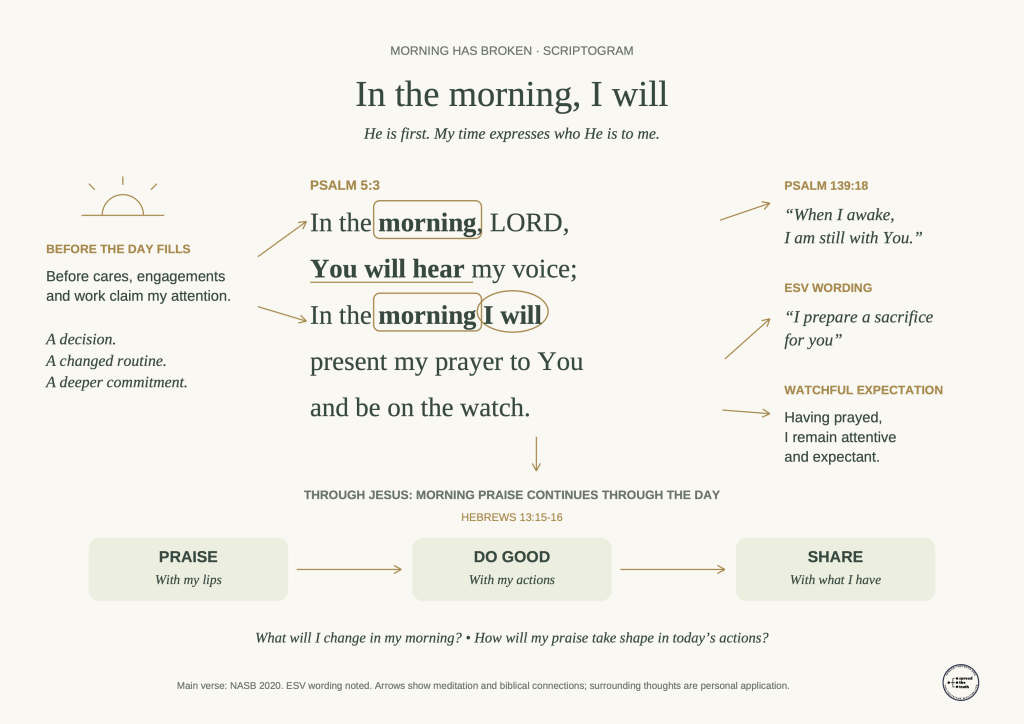
Well, no defined usage or synonym exists and does not appear in any major dictionaries, so I will take the initiative to assign at least one usage of the term. It is a blend or fusion of “scripture” (the Bible) and “diagram”. It is a visual or diagrammatic presentation of Biblical scripture – a verse or verses, passage or passages or a theme rooted in the WORD of God. You will find many examples of this, here on this website. Some have been included below.
To clarify the concept, take for example the first scriptogram below connecting John 15 and Philippians 4:13. Jesus relates to us in John 15 that to bear fruit we have to be in Him, obeying Him and following Him, without which we cannot do anything of value in His Kingdom. It contrasts with Paul’s writing and confidence in Jesus that he can do all things in the midst of life’s challenges. The illustration draws forth both truths together to remind us about the “whole counsel of God”.
Simply put:
A scriptogram is a visual or diagrammatic presentation of Biblical scripture.
A scriptogram is a visual diagram that brings Biblical verses or themes to life
Scriptograms connect scripture so one can see and remember God’s truth more clearly.
Scriptogram= Scripture + Diagram.
Most readings of the Bible are linear but scriptograms make it relational.
In Luke 1:78, part of Zechariah’s prophetic song (the Benedictus) captures the essence of divine visitation: after centuries of spiritual darkness—sin, oppression, and the shadow of death—the promised Savior arrives like the first light of dawn breaking over the horizon. Not a harsh glare, but a gentle, warming, life-giving radiance from heaven itself that illuminates those sitting in gloom, scatters the night, and guides feet into the path of peace (v. 79).
The “Sunrise from on high” is Jesus, the Light of the world (John 1:4–9), descending in mercy to visit and redeem. Zechariah’s words blend Old Testament hopes (like Malachi 4:2’s “Sun of Righteousness”) with the wonder of incarnation: God Himself draws near, dawn personified, to end the long night and usher in eternal day.
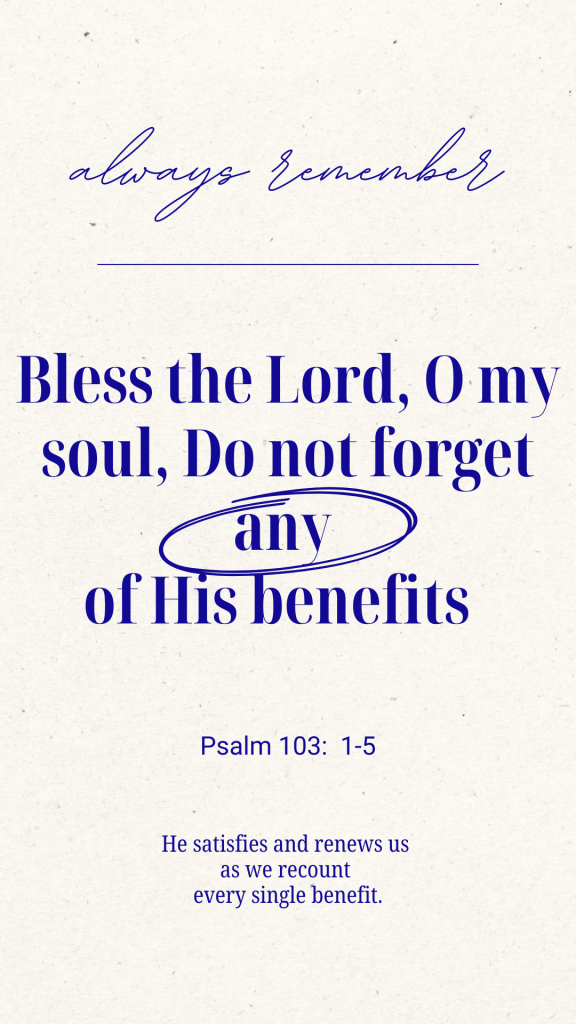
1 Bless the Lord, my soul,
And all that is within me, bless His holy name.
2 Bless the Lord, my soul,
And do not forget any of His benefits;
3 Who pardons all your guilt [iniquities],
Who heals all your diseases;
4 Who redeems your life from the pit,
Who crowns you with favour [steadfast love] and compassion [mercy];
5 Who satisfies your [desires] years with good things,
So that your youth is renewed like the eagle.
He pardons
He heals
He redeems
He crowns
He loves
He satisfies
He renews
He satisfies and renews us as we recount every single benefit; big and small.
God is most glorified in us when we are most satisfied in Him – John Piper