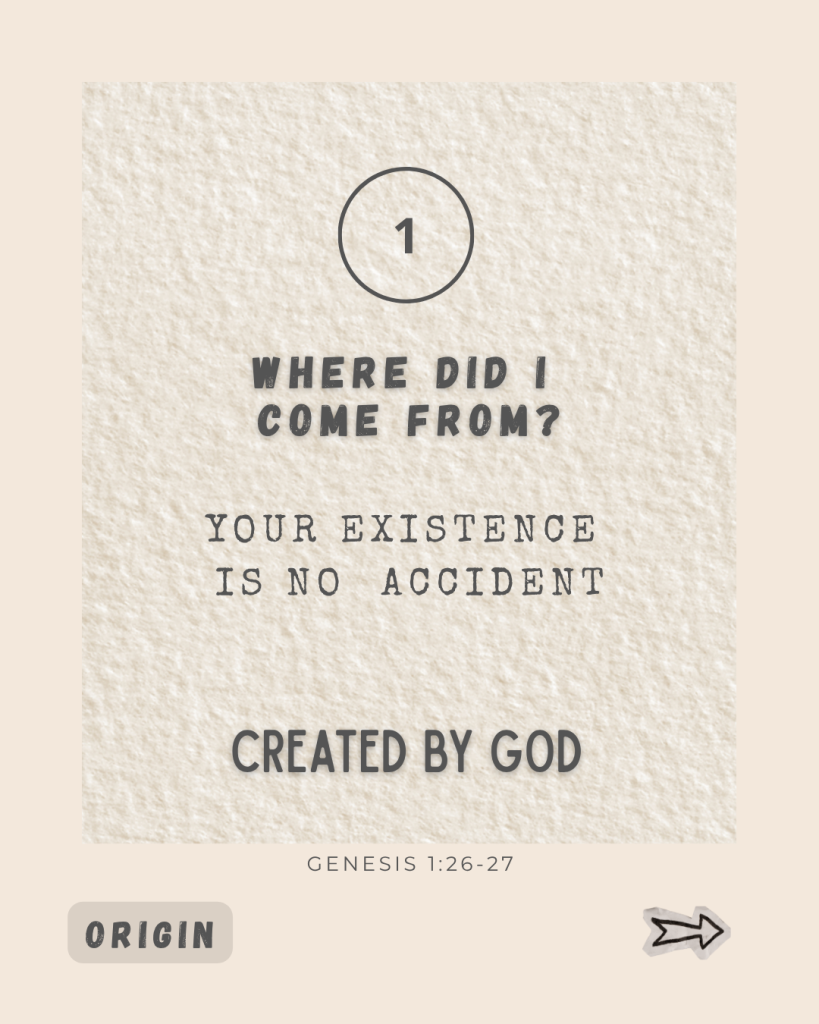
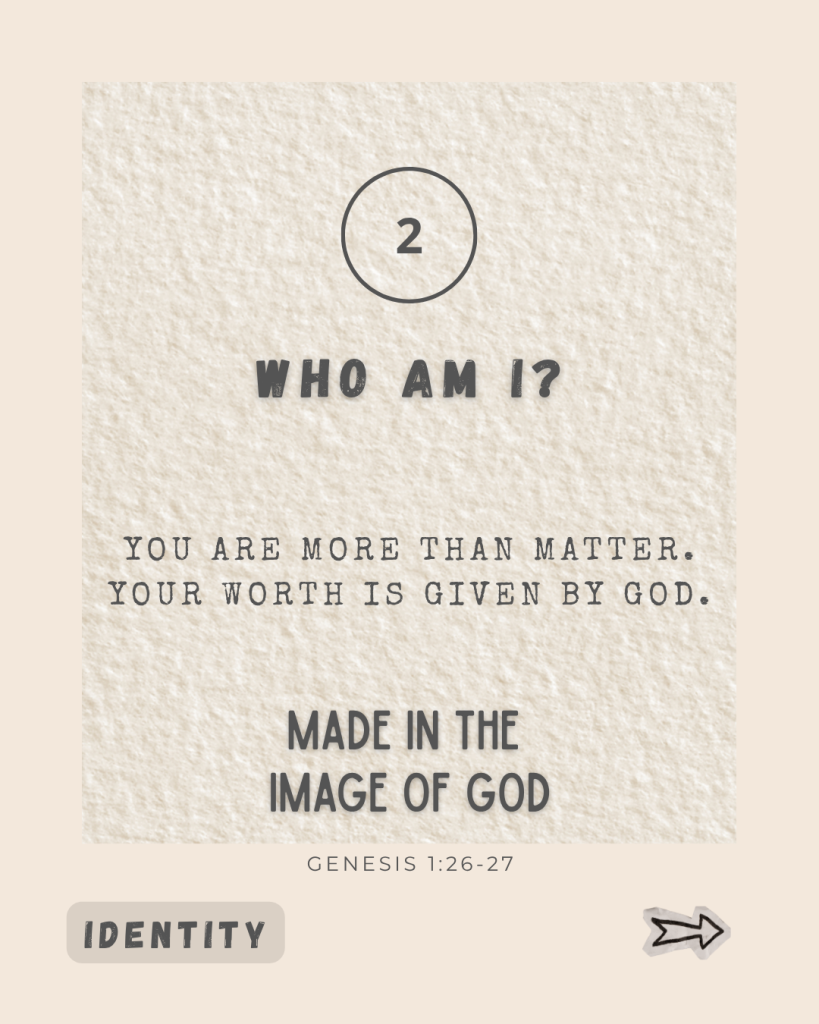
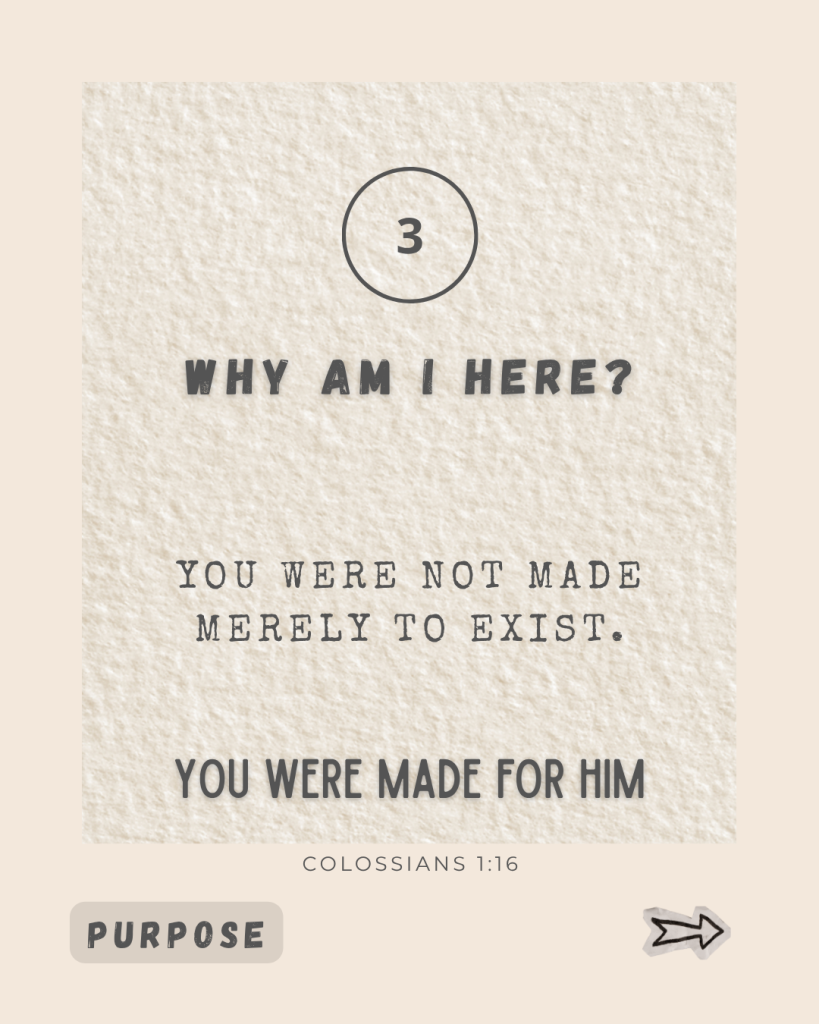
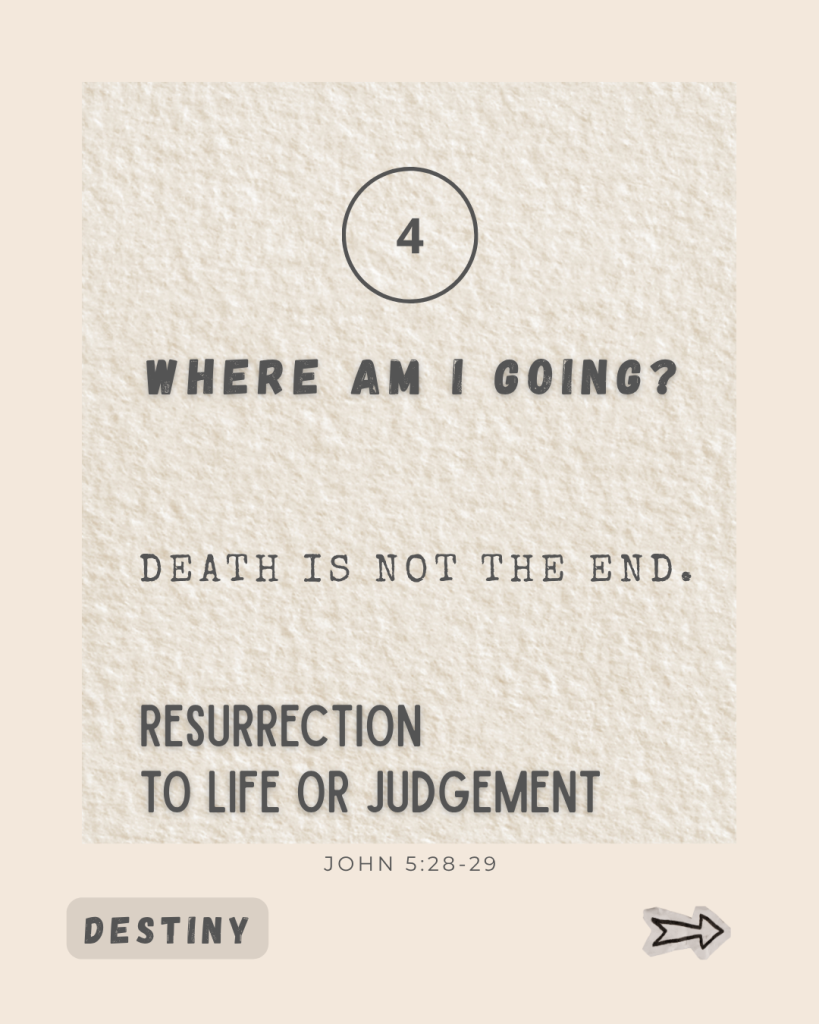
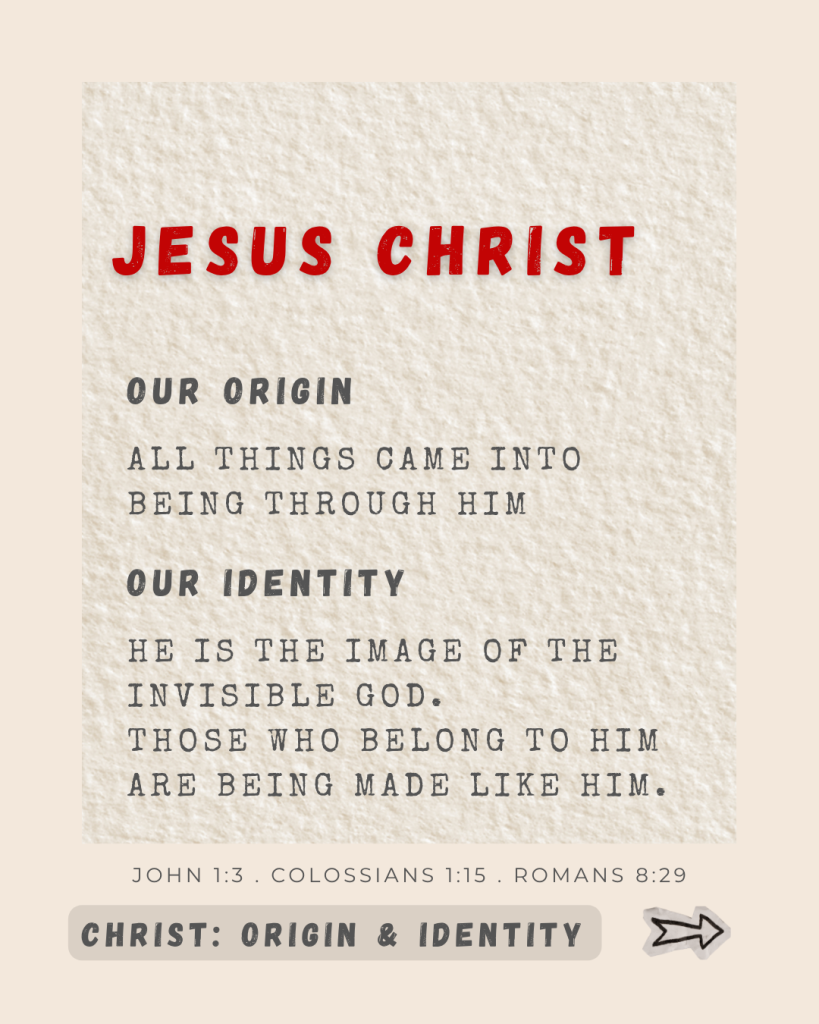
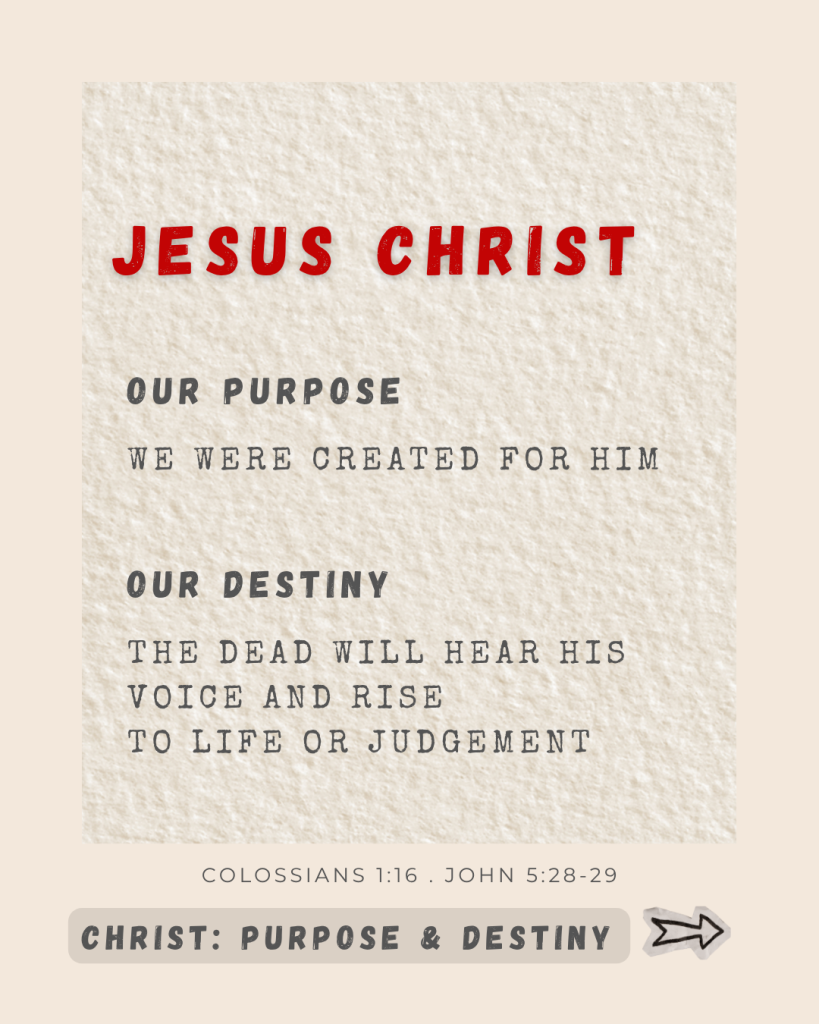
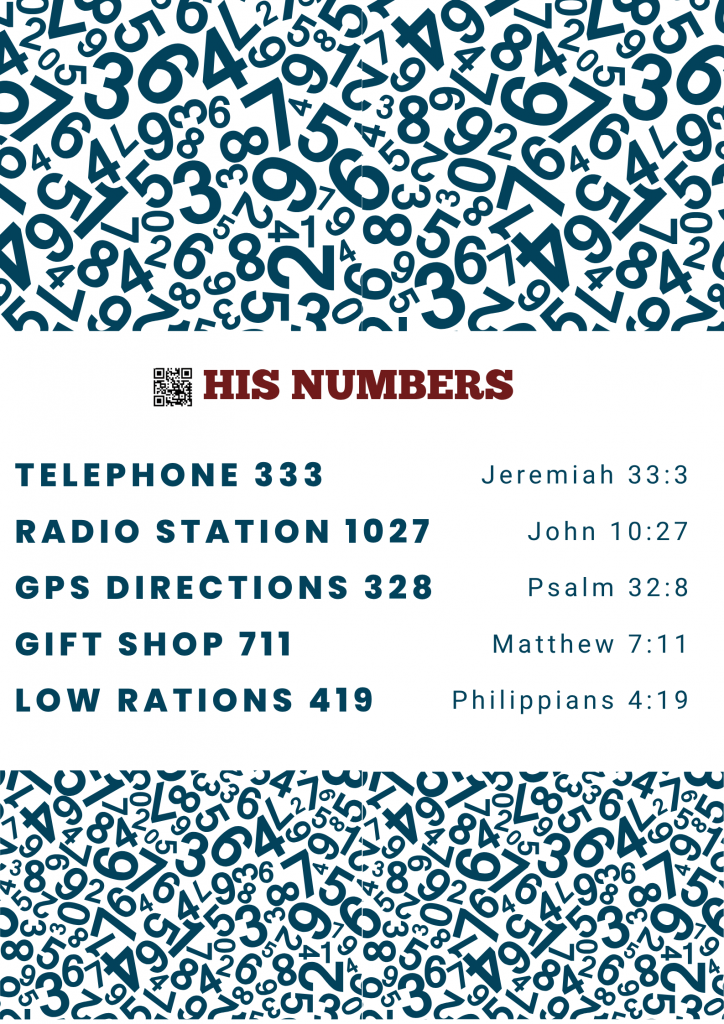
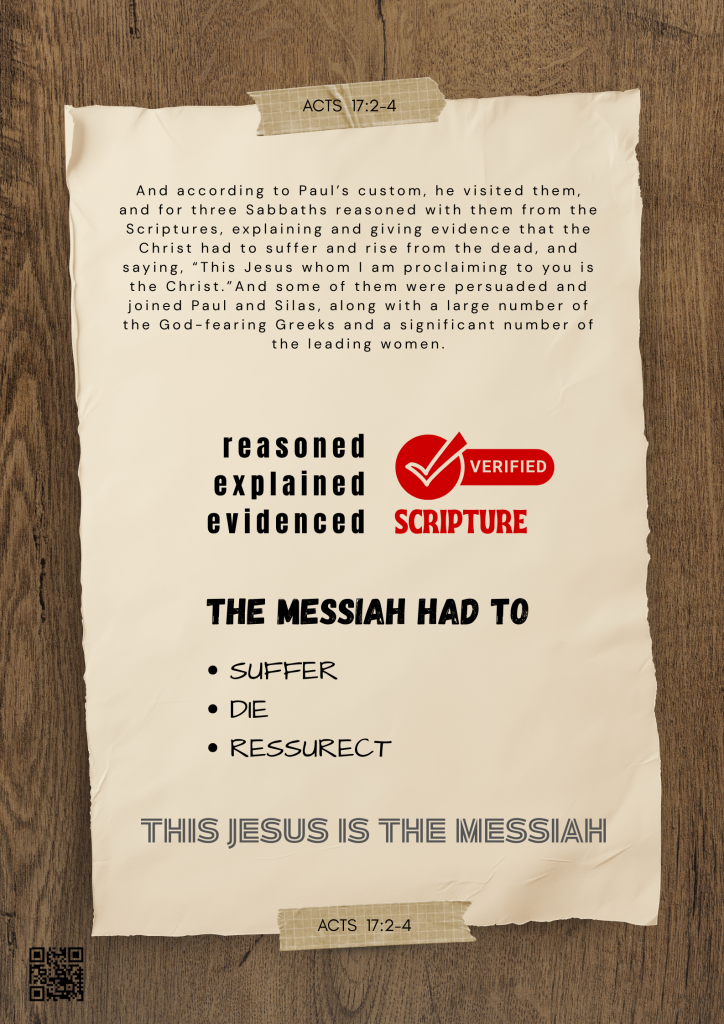
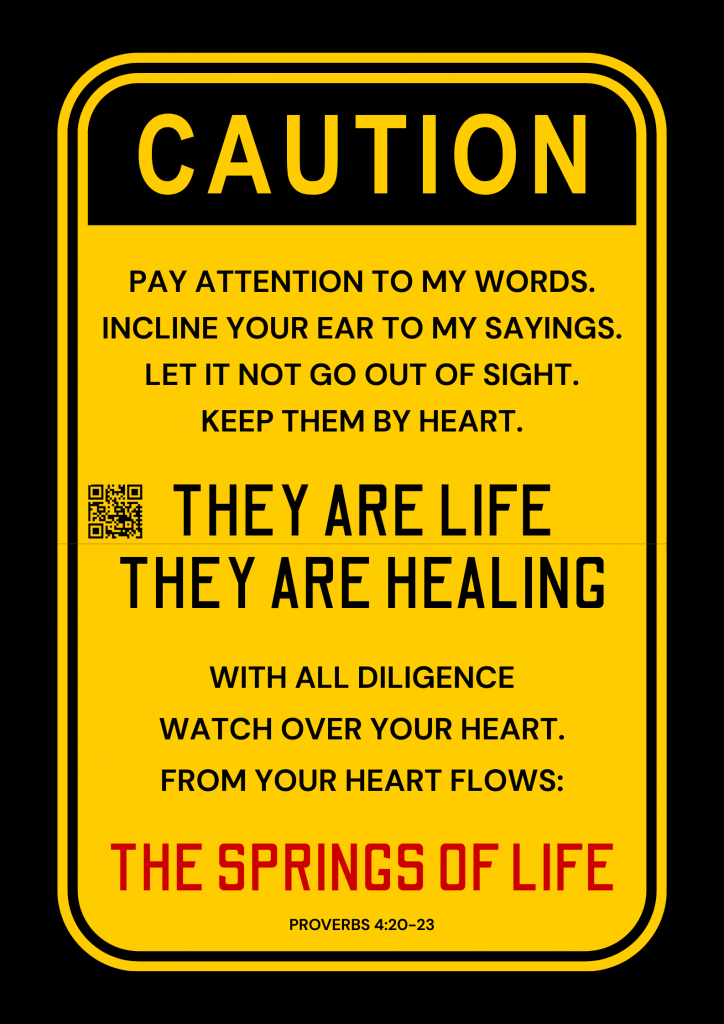
John 1:3 | Genesis 1:26-27 | Colossians 1:15-16 | Romans 8:29 | John 5:24-25 | 1 Corinthians 15:3-4
Christianity connects our origin, identity, purpose, and destiny: we are created by God, made in His image, made for Him, and accountable to Him beyond death.
These answers come together in Jesus Christ.
All things came into being through Him. He is the image of the invisible God, and those who belong to Him are being made like Him. We were created for Him. And the dead will hear His voice and rise.
The One who made us also came to save us. Jesus died for our sins and rose again, so that through repentance and faith in Him we may receive forgiveness and eternal life.
These four questions lead us to a personal response: Will you trust the One who made you, died for you, and calls you to Himself?
Every religion, philosophy and worldview offers an answer.
The Bible also answers this question, but not by asking us to imagine what God might be like. Instead, it tells us that God has revealed Himself.
One of the beautiful truths Christians have recognised throughout history is called “divine simplicity”. Despite its name, it is a wonderfully practical truth because it helps us understand the God revealed in Scripture.
What Is Divine Simplicity?
Divine simplicity teaches that God is one, undivided, and not made up of separate or competing qualities. When the Bible tells us that God is love, holy, just, merciful, wise, faithful and true, it is not describing different parts of God. Rather, these are different ways God has revealed His one perfect and undivided being.
Therefore,
God’s attributes are not ranked in importance because they are not separate qualities competing for prominence. They are the one, undivided perfection of God’s being.
God’s love is always holy love.
His holiness is always loving holiness.
His justice is always righteous justice.
His mercy is always holy mercy.
Everything God does expresses everything God is.
God never acts from only one attribute.
He always acts according to His whole being.
A Wrong Question
People sometimes ask,
“Which attribute of God is His most important one?”
It sounds like a reasonable question. But it assumes God’s attributes are separate and can be ranked. The Bible never presents God this way.
Common Misconceptions
Once we ask the wrong question, misunderstandings naturally follow.
For example:
“God is love, so He won’t judge.”
“God is holy, so He couldn’t forgive.”
“God is just, so mercy is impossible.”
Each conclusion separates what God has perfectly united.
The Truth
The God of the Bible never acts from one attribute alone. He always acts according to His whole being.
His love never compromises His holiness.
His holiness never diminishes His mercy.
His justice never opposes His grace.
Everything God does perfectly reflects everything God is.
Where Do We See This Most Clearly?
The answer is Jesus Christ. Jesus did not simply come to teach us about God.
He came to reveal God.
Jesus said,
“The one who has seen Me has seen the Father.” (John 14:9)
The writer of Hebrews declares,
“He is the radiance of His glory and the exact representation of His nature.” (Hebrews 1:3)
Paul writes,
“For in Him all the fullness of Deity dwells in bodily form.” (Colossians 2:9)
When we look at Jesus, we are not seeing one aspect of God. We are seeing God perfectly revealed.
The Cross
The cross is where the beauty of God’s character shines most clearly.
At Calvary, God’s holiness, justice, love, mercy, wisdom and faithfulness are not competing with one another. They shine together in perfect harmony.
The cross is not where one attribute triumphs over another.
It is where the one, undivided God reveals the perfection of His character.
Why This Matters
Divine simplicity is not merely a theological idea.
It answers the question,
“What is God really like?”
And it leads us to an even greater answer: Look to Jesus.
Because Jesus perfectly reveals the Father.
As Jesus Himself said,
“The one who has seen Me has seen the Father.” (John 14:9)
[ The written Word faithfully leads us to the living Word. ]
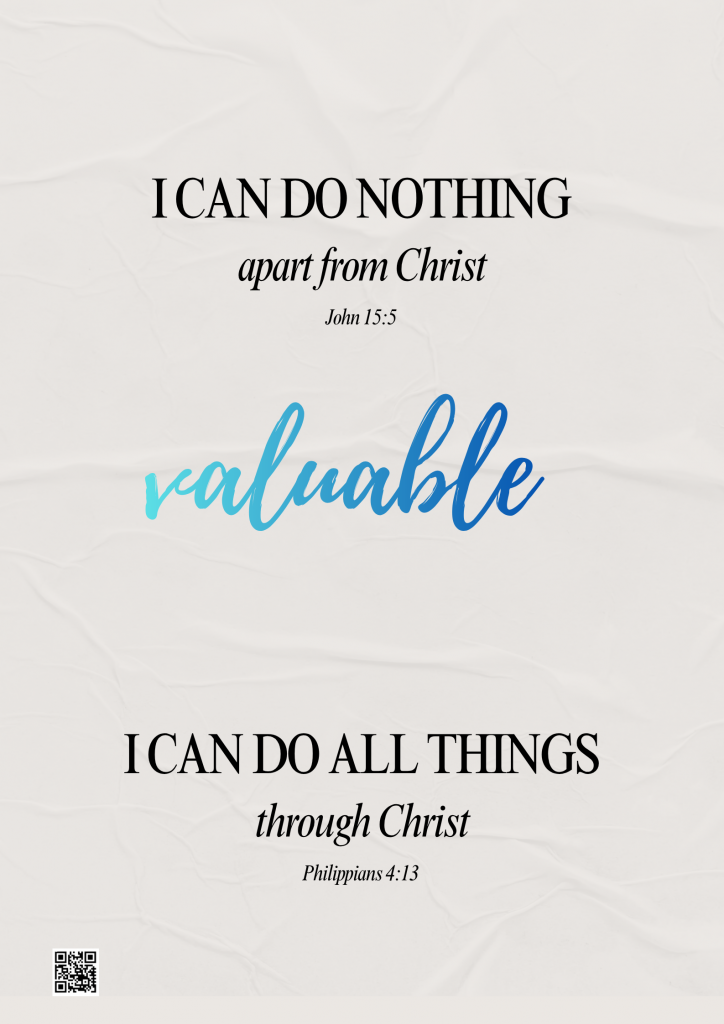
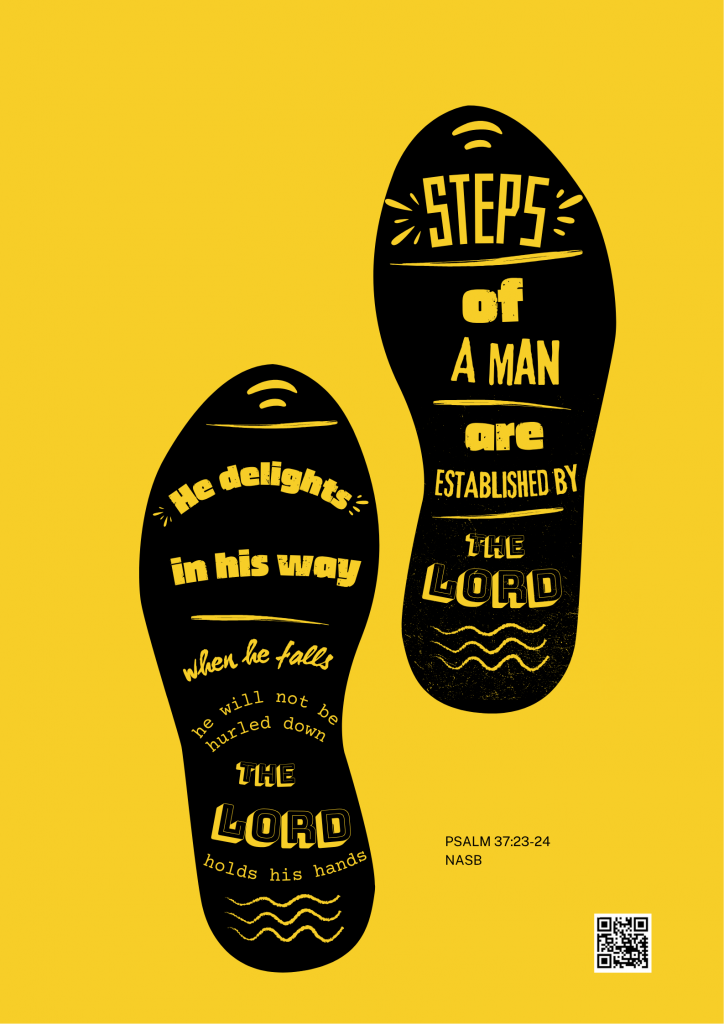
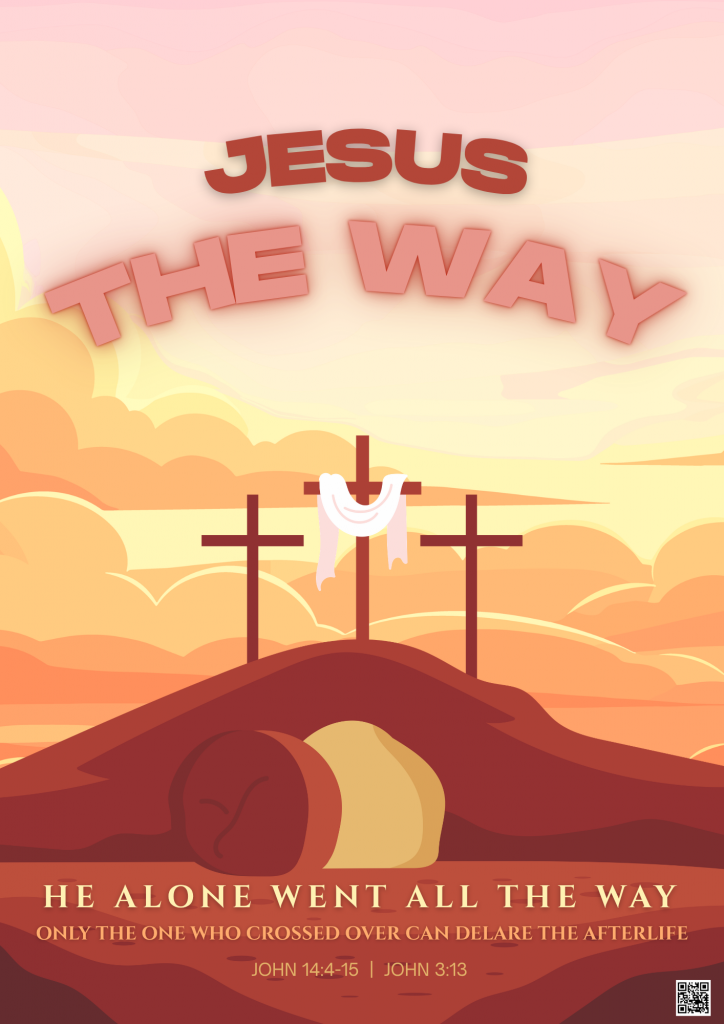
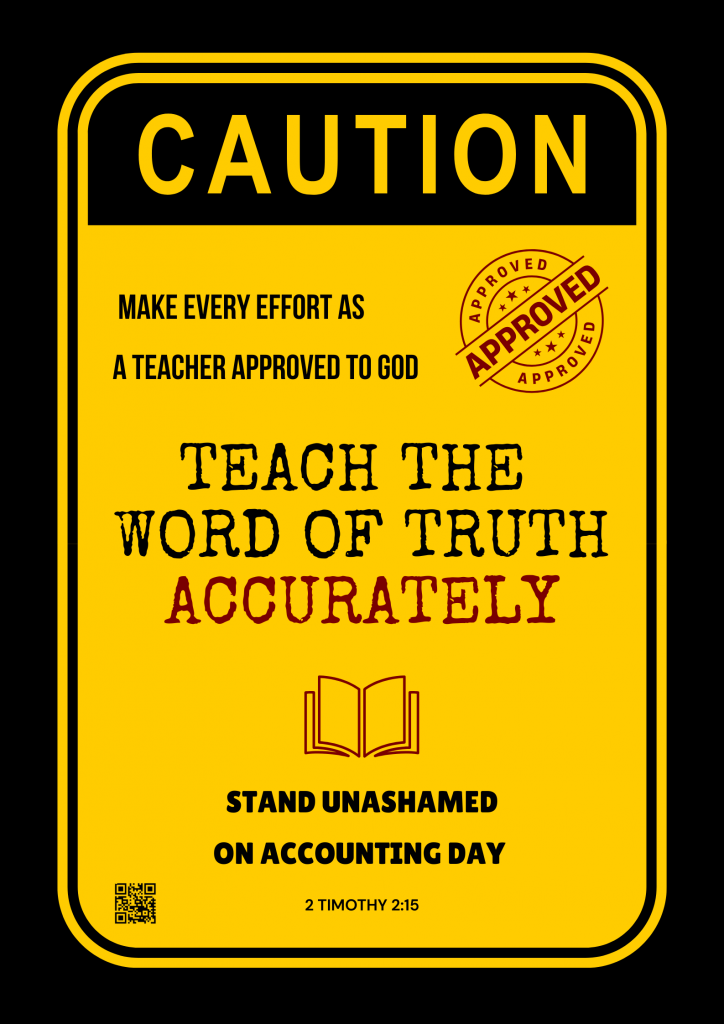
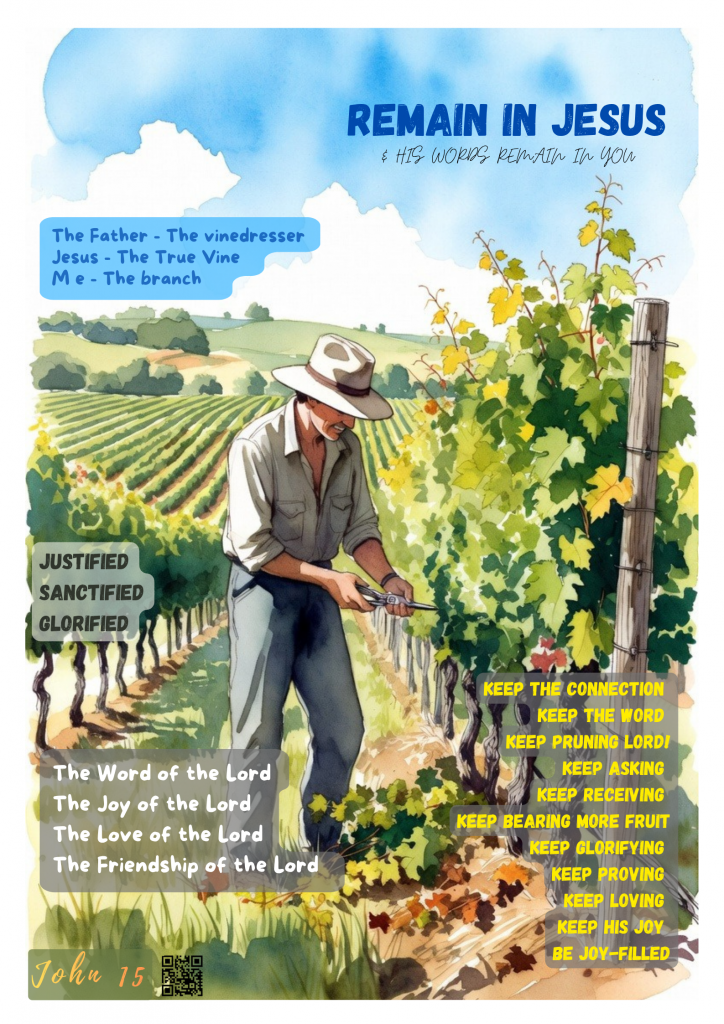
Well, no defined usage or synonym exists and does not appear in any major dictionaries, so I will take the initiative to assign at least one usage of the term. It is a blend or fusion of “scripture” (the Bible) and “diagram”. It is a visual or diagrammatic presentation of Biblical scripture – a verse or verses, passage or passages or a theme rooted in the WORD of God. You will find many examples of this, here on this website. Some have been included below.
To clarify the concept, take for example the first scriptogram below connecting John 15 and Philippians 4:13. Jesus relates to us in John 15 that to bear fruit we have to be in Him, obeying Him and following Him, without which we cannot do anything of value in His Kingdom. It contrasts with Paul’s writing and confidence in Jesus that he can do all things in the midst of life’s challenges. The illustration draws forth both truths together to remind us about the “whole counsel of God”.
Simply put:
A scriptogram is a visual or diagrammatic presentation of Biblical scripture.
A scriptogram is a visual diagram that brings Biblical verses or themes to life
Scriptograms connect scripture so one can see and remember God’s truth more clearly.
Scriptogram= Scripture + Diagram.
Most readings of the Bible are linear but scriptograms make it relational.
The Pharisees, who loved money, heard all this and were sneering at Jesus. He said to them, “You are the ones who justify yourselves in the eyes of others, but God knows your hearts. What people value highly is detestable in God’s sight. Luke 16:14-15 (NASB 2020)
Reflection
When Adam and Eve ate from the tree God had clearly forbidden, they immediately realized they were naked and became ashamed. Their first response was not repentance, coming before God honestly in their nakedness, but self-justification, an attempt to cover their shame. Adam blamed Eve. Eve blamed the serpent. Neither simply said, “I was wrong.” This instinct to explain ourselves, defend our actions, and shift responsibility is deeply rooted in human nature. Scripture shows us that this impulse did not come from God; it entered through sin.
Adam and Eve used fig leaves to “solve” their problem. This is the spirit of the fig leaf. Instead of coming honestly before God, we try to cover ourselves. Instead of humility, we reach for excuses. Instead of confession, we offer explanations. And Jesus makes it unmistakably clear how God views this, He finds it detestable.
In Luke 16:15, Jesus confronts the Pharisees, men who appeared righteous, convincing, and respected. He exposes their hearts by saying, “You are those who justify yourselves.” What is admired and applauded among people, He says, is detestable in the sight of God. Self-justification may look reasonable, intelligent, and even spiritual in human eyes, but God sees it as repulsive.
We often assume the main issue is the mistake itself. But Scripture reveals something deeper: God is far more offended by our defensiveness than by our failure. True humility is not found in proving we were right; it is found in admitting we were wrong. God is not impressed by explanations; He is drawn to repentance.
This is a work of the Devil that we must identify, acknowledge, and destroy. Humility is key to negotiate this. Jesus came to destroy the works of the devil: the instinct to defend ourselves instead of surrendering. The moment we stop justifying ourselves before people and begin humbling ourselves before God, freedom begins. God already knows our hearts. Nothing is gained by hiding, but everything is restored through honest repentance.
Prayer
Lord, deliver me from the need to justify myself. Remove every trace of defensiveness from my heart. Teach me to respond to correction with humility, not excuses. Give me the grace to say, “I was wrong,” and to trust Your mercy more than my own explanations. Help me to live uncovered before You, rather than covering myself before people. Amen.
Quote: Defending yourself may save face; repentance saves your soul
I took my first step into studying God, which is the essence of theology. Initially, I thought theology was reserved for scholars, but I soon realized every Christian needs it. Theology isn’t just about filling our minds with correct ideas; its purpose is far greater. My perspective shifted when I understood it serves three vital aspects of the Christian life:
Knowing God more deeply
Enjoying Him more fully
Walking with Him more obediently
We undertake the rigorous, intellectually demanding work of theology to behold and savour the glory of God revealed in Christ.
How can we study theology?
Biblically: We must not conform Scripture to our feelings or lifestyles. Every belief and conclusion must be tested against the Biblical truth. Rationally: Reason isn’t the foundation of faith but its instrument (Acts 26:25, Acts 19:9, Acts 24:24). While the Bible’s truths may transcend human understanding, they are never irrational or nonsensical. Humbly: We approach theology mindful of our finite and fallen nature, fully dependent on God, eager to learn, and free from pride when studying such a majestic God. Doxologically: Theology leads to worship, expressed in celebratory praise. God reveals Himself to us, and He alone is worthy of our complete devotion.
How did it change my perspective?
– It clarified my purpose for studying theology, making it tangible and meaningful.
– It reoriented my desires toward God, relegating all else to the periphery.
– It provided a practical framework for studying theology.
– It affirmed the eternal value of this pursuit.
– It prepared me for my ultimate calling in God’s kingdom: worship.
This perspective draws from Kevin DeYoung’s “Daily Doctrine”, where he writes, “The overarching goal in all this learning is to understand what the Bible teaches, defend what the Bible teaches, and enjoy the God whom the Bible reveals.”
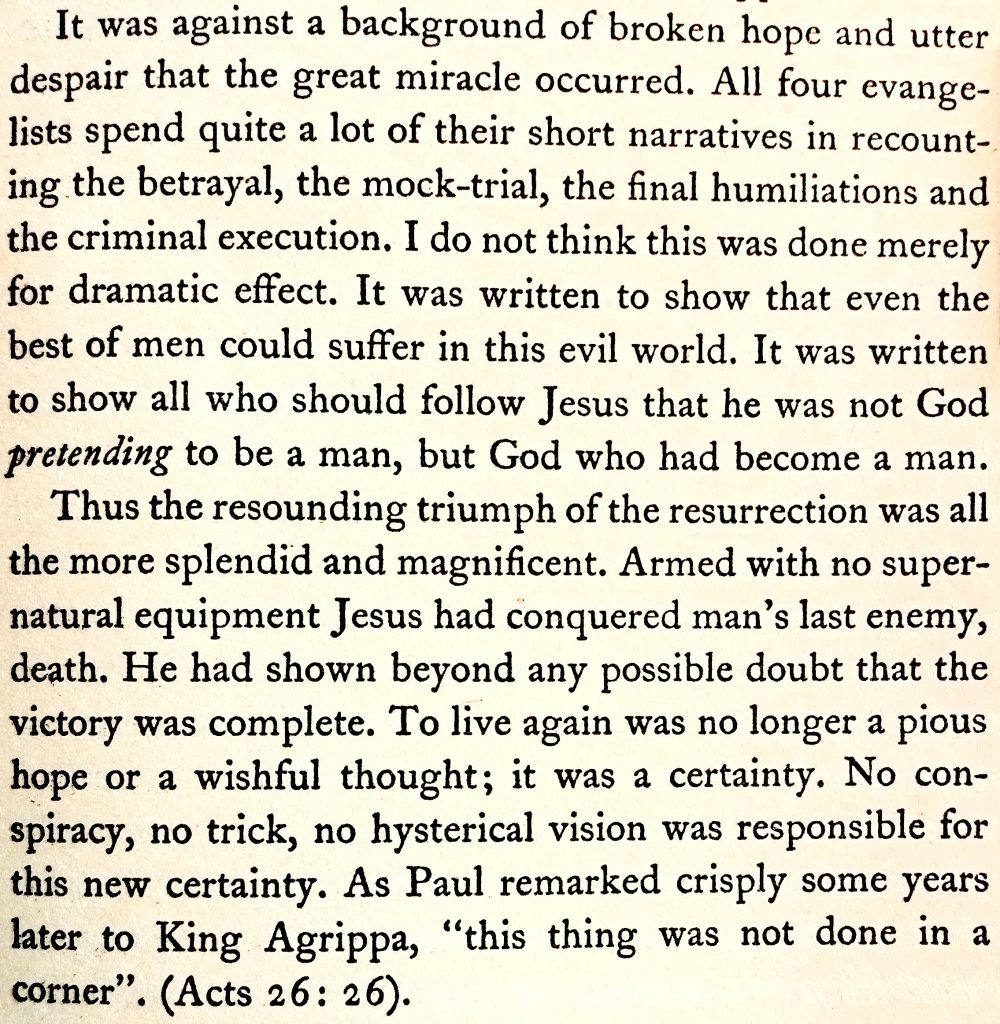
I was fascinated by this passage which is an extract from a book I was reading – JB Phillips’ “Ring of Truth” and it stopped me. Made me read it again and again. The wonder and amazement grew with each read. The resurrection was the breakthrough, and with the coming of the Holy Spirt, together, completely changed the disciples and other followers, empowered them with boldness, confidence and certainty. It was not a covert operation! Is it not enough for us ?