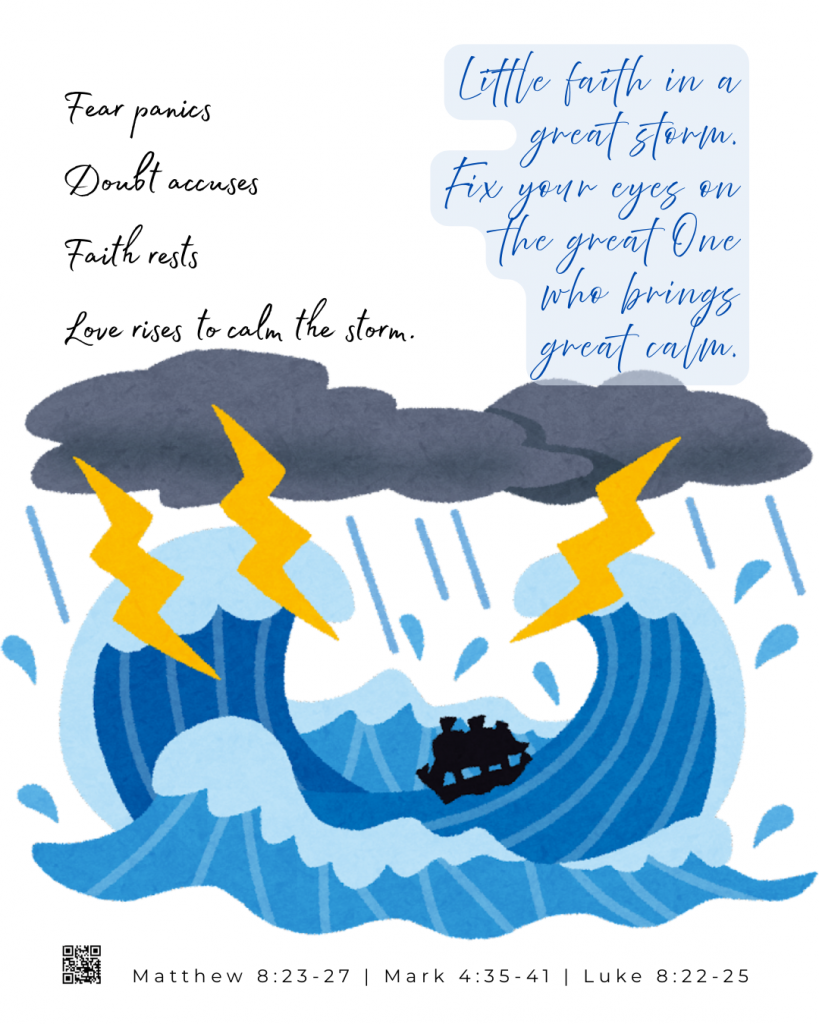
What is my food?

My food is to do the will of Him who sent Me. (John 4:34),
Blessed are those who hunger and thirst for righteousness. (Matthew 5:6)

As human beings, we all understand appetite. Hunger and thirst are universal instincts. When we are hungry, everything else becomes secondary. We look for food. We pursue it. And when we finally eat, there is satisfaction, relief, even pleasure, especially when the food is good. At times, hunger becomes so strong that we pause everything else until it is satisfied. There is a kind of urgency, even desperation, to meet that need.

Now consider our Christian walk. We often hear believers say, “I feed on the Word of God.” They speak of waking up early, reading Scripture, memorising it, meditating on it, and drawing strength from it. This is deeply commendable. A genuine hunger for God’s Word is a gift, and not every Christian experiences it the same way. Jesus Himself constantly referred to Scripture. He quoted it, explained it, and used it to correct misunderstanding. Even at a young age, He was engaging with scholars in the temple.

There is no doubt that He knew the Word intimately. But when Jesus described His food, He did not say it was the Word of God. He said His food was doing the will of God. That should stop us! It suggests that His hunger did not end with knowing the Word. It went beyond reading, beyond studying, beyond teaching. His deepest satisfaction came from obeying it, living it out, fulfilling it in real life. And that is where the challenge lies. We can read about forgiveness. We can study it, discuss it, even preach it. We can move others emotionally, bring them to tears, and feel a sense of spiritual fulfilment from that experience. But ask yourself honestly, when you read about forgiveness, what is your first instinct? Do you think about applying it? Do you immediately recall a person you need to forgive? Do you feel an urgency to act? Or do you simply move on, content with understanding it? If physical hunger worked the same way, we would read a recipe and feel satisfied without eating. But that is not how hunger works. Hunger demands action that leads to fulfilment.

Yet spiritually, we often stop at consumption without obedience. We engage in discussions, debates, and reflections that give us a spiritual “high.” We feel satisfied because we have understood something, shared something, or even impacted others. But Jesus points to a deeper level of satisfaction. His joy, His fulfilment, His “food”, was found in obedience. He found it delicious to do the will of the Father. He found it satisfying to obey.

Now think about the Lord’s Prayer: “Give us this day our daily bread.” We often understand this as God meeting our physical needs. And rightly so. But it also invites a deeper reflection—what is the daily bread of our spirit? It is not just hearing the Word. It is not just meditating on the Word. It is living it. Jesus once stood in the synagogue and declared, “Today this Scripture is fulfilled in your hearing.” (Luke 4:21) What if we lived like that? What if each day, after reading God’s Word, we could say: “Today, this was fulfilled in my life.” That is where true satisfaction lies. Not just in knowing the Word, but in seeing it take flesh in our actions and in our life.

So yes, let us love the Word of God. Let us read it, meditate on it, and treasure it. It brings comfort, gives direction, lifts our hearts, and fills us with peace. But let us not stop there. Let us move from consumption to obedience. From understanding to action. From hearing to doing. Let us hunger not only for the Word, but for the will of God. And let that hunger drive us until His Word is fulfilled in our lives, daily.

Lord, give me a deeper hunger, not just for Your Word, but for Your will. Forgive me for the times I have been satisfied with understanding without obedience. Stir in me a holy urgency to live out what I read. Let Your Word not stop at my mind but reach my actions. Teach me to find true satisfaction in obeying You. May Your Word be fulfilled in my life each day. May your will be done, today, in me, in Jesus’ name, amen.

You have not truly fed on the Word of God until you have obeyed it.
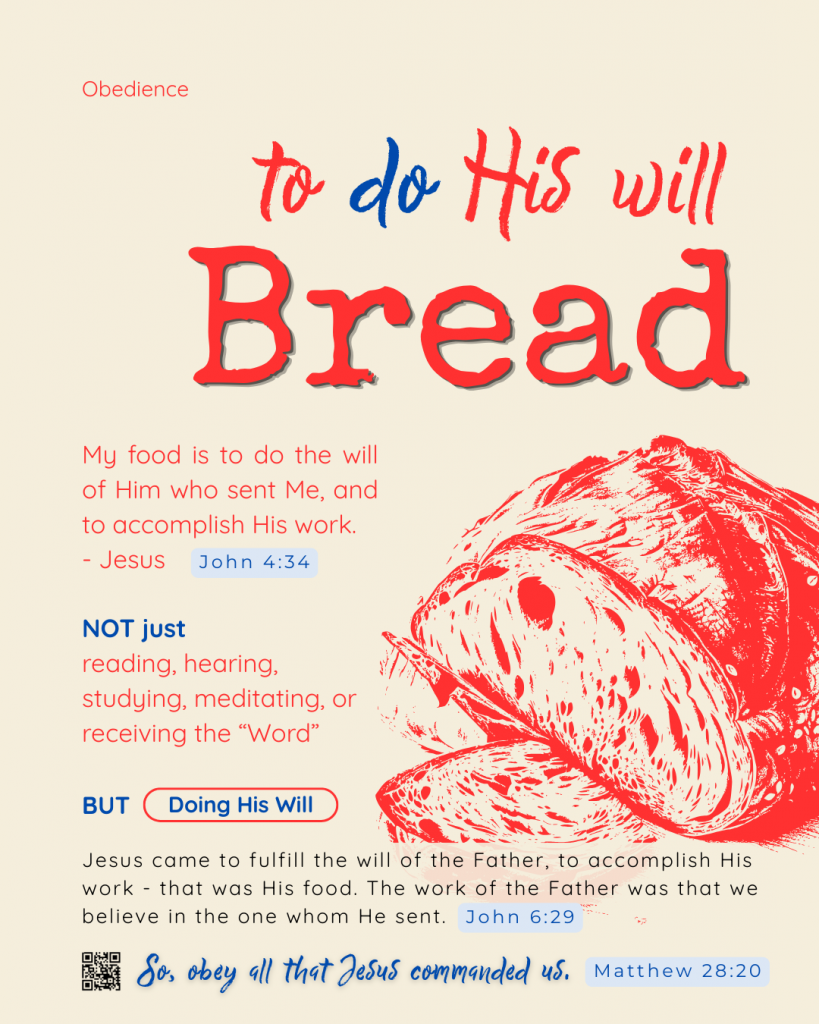
Panic-stricken or Storm-calmer

Matthew 8:23-27 | Mark 4:35-41 | Luke 8:22-25

He said to them, “Why are you afraid, you men of little faith?” Then He got up and rebuked the winds and the sea, and it became perfectly calm. Matthew 8:26

This episode recorded in all the three synoptic gospels (Gr-synoptikos- seeing together) offer a complementary,  and fuller understanding of the whole counsel of God. There is some debate as to whether the 3 accounts talk about 2 different episodes. On closer examination note the uniform response of the disciples across all the 3 gospels as being “who can this be that even the wind and the sea obey Him”. Their amazement and shock is the same, they can’t be shocked a second time, so it is unlikely there are 2 separate occasions.

As the disciples journeyed across the sea with Jesus, a violent storm arose. Within this single episode, Scripture paints for us a picture of four kinds of disciples. Four kinds of responses to life’s storms. Four kinds of faith.

First, The Panicked Sailors. The disciples themselves in that moment were terrified. Overwhelmed by the waves. Convinced they were going to die. Their hearts filled with fear. Their minds with anxiety. Remember they are not new to the sea, in fact some of them had to be out there everyday, day in and day out in these seas, fishing, facing storms. Storms couldn’t have been new to them. But somehow this one in particular was a violent one causing them to panic to such an extent they thought they were going to die. Their cry is desperate: “Lord, save us!” They are afraid. Their fear drives them to cry out. They seek help. They run to Jesus. This is not the deepest faith, but it is not the worst either. 

Then came the Accusing Critics. The gospel of Mark reveals them clearly. They are those who not only fear the storm but turn their fear into accusation. Their cry is not merely “Save us,” but “Don’t You even care? Where are You? Why aren’t You helping?” They question God’s goodness. They doubt His love. They blame Him for the storms that shake their lives. This is the most dangerous place. Because fear has turned to doubt and bitterness. Anxiety has turned to resentment. The storm outside has created a storm inside, a storm of suspicion and doubt, hidden anger uncovered and even resentment toward God. The question is why all this? This is not meant to happen!

In stark contrast stands the Restful Sleeper. Jesus Himself. Asleep in perfect peace in the midst of the chaos. Fully assured of the Father’s love. Utterly secure. Untouched by anxiety. He doesn’t panic. He doesn’t accuse. His heart is anchored in God so deeply that even violent waves cannot shake it. This is the life of genuine faith. Not the absence of storms. But the presence of such deep trust in the Father’s love, that storms cannot disturb the soul’s peace. The kind of peace only He can give, not like the one the world gives which is fragile and temporal we see in John 14:27. It is deeper and beyond our understanding which is what Philippians 4:7 tells us.

And finally, there is the rarest and the smallest group: the Storm-Calmers. These are those who not only rest in God’s love but rise up, like Jesus, and bring calm to others. Their faith is active. Their spirit is empowered. Their lives bring peace, strength, and comfort to those around them. This is what genuine, anointed, God-rooted ministry looks like. Not noise. Not titles. Not impressive words or impressive works. But the ability to still storms in the hearts of others. To bring peace to the anxious. To bring strength to the weak. To bring hope to the despairing. The ones who can feed others, rescue others and build others. Those who live on meat. They are the “spiritual man” we see in 1Corinthians 2:15-16.

Among these four, we must ask: Who are we? Are we the Panicked Sailor? Afraid, yet still calling out to Jesus. This is better than the next category, but we remain enslaved by fear. Always needing but never able to help others. Always need feeding but not feeding others. Always on milk and not moved onto meat. Always child like and never growing. Always being helped but never able to reach out and help others in need. Church is always-“what can I get?” not “what can I give”. Never making disciples, never helping others grow. Always spiritually bankrupt, tired, weary, burdened and  eyes fixed on the storm, never able to see clearly, paralysed, inactive, unable, unproductive, without fruit. Notice this, they cannot help anyone else for they themselves are in a tight spot. They are the “carnal man” in 1 Corinthians 3:1-3 and Hebrews 5:11-14. On milk and not moving on to meat.

Are we the Accusing Critic? Afraid and angry? Doubting God’s goodness? This is the most dangerous place. We have let the storm outside create a storm inside our souls. Or are we the Restful Sleeper? Secure in the Father’s love. At peace in the midst of chaos. This is a great place to be. We have found what many never find, true rest in God. Or even better, are we a Storm-Calmer? Not only resting ourselves, but rising up to bring God’s peace to others. Not only secure, but a source of security. Not only calm, but a calming presence.

So let us ask ourselves: Have we found rest in God’s love? Or are we still panicked, still accusing, still drowning in fear? And if we have found rest, are we content to rest alone? Or are we willing to rise up and calm the storms in others’ lives? Because the world is full of disciples in storms. And they need to see us, resting like Jesus, peaceful like Jesus, bringing calm like Jesus. That is the call. Not to panic. Not to accuse. Not merely to rest. But to rise and calm the storm.

Father, help us to see ourselves clearly in this story. Deliver us from fear, from insecurity, and from any hidden accusation we hold against You. Make us secure in Your love, restful like Jesus in every storm. But don’t let us stop there, make us Storm-Calmers, someone who brings Your peace, comfort, and strength into the lives of others. Transform us from the inside so that our lives reflect Your presence to the world around us. In Jesus’ name, amen.

Fear panics, doubt accuses, faith rests, but love rises to calm the storm.

The Simple Faith of the Simple-Minded

Read Mark 5:25–34

It is striking how Scripture presents the two individuals Jesus responds to in the crowd. One is Jairus, a synagogue official. He has a name. His position is recorded. His role is clear. The other is simply described as “a woman who had been subject to bleeding for twelve years.” She is unnamed, unidentified by status or family, and known only by her condition. A nobody if it weren’t for their infirmity. This is often how we know people, even in the church. Known by their weakness. Defined by their struggle. Remembered by their infirmity. Many of us would identify with this situation. People don’t remember meeting us, don’t  remember our names and often identify us as someone’s wife or brother. We are a nobody. 

Scripture also tells us that Jesus Himself was identified by suffering. “He was despised and rejected by mankind, a man of suffering, and familiar with pain” (Isaiah 53:3). He was also “known by His stripes”, marks of suffering that became the means of healing (Isaiah 53:5). While we often focus on His authority, power, and miracles, we must not forget, Jesus knew suffering from the inside and was also known by it. 

On that very day, many important people were present, officials, leaders, influential voices, educated minds, physicians, and scholars. None of them entered Scripture. None of them are remembered. But this woman is. 

We must however acknowledge that she was remembered not because she suffered, but because of how she responded to suffering. Suffering alone is not the qualification. It becomes significant only because it often produces the right response: reaching out to God in faith. She was suffering from the bleeding disorder long before her encounter with Jesus. Her story is remembered not for her pain, but for her response. Her attitude. Her view of Jesus. Her faith expressed in action. 

This was not refined faith. It was not sophisticated or polished. It was raw, desperate, and unschooled. “If I just touch His clothes, I will be healed” (Mark 5:28). That was her theology. That was her doctrine. And it was enough. She had not studied Scripture. She did not know the Law like the Pharisees. Yet Scripture warns, “Knowledge puffs up while love builds up” (1 Corinthians 8:1). The Pharisees had knowledge, but it did not transform them. This woman had faith, and it changed everything.

Jesus Himself affirmed the principle: “According to your faith let it be done to you” (Matthew 9:29). And it was done to her exactly as she believed. There was no doctrine of garment-touching. No ministry built around it. No conference held to explain it. She simply believed Jesus was who He said He was, and that He could heal.

And He did. She went home healed and whole. Anonymous. Uncelebrated by society. But eternally recorded in Scripture. Her story has taught generations more than volumes of theological debate ever could.

This confronts us uncomfortably. Many of us know Scripture deeply. We analyse, expound, debate, attend conferences, and complete modules. Yet how often are our lives unchanged? Our knowledge has increased, but our transformation has stalled. Meanwhile, a woman with no credentials touched Jesus (literally) and was made whole. The simple faith of the simple-minded puts us to shame. There is a sobering warning from Jesus Himself: “Not everyone who says to Me, ‘Lord, Lord,’ will enter the kingdom of heaven… Then I will tell them plainly, ‘I never knew you’” (Matthew 7:21–23). Knowledge without relationship is empty. Words without faith are hollow. Being touched by his healing hands often requires us to step out of the crowd in faith and shamelessly touch him in faith and desperation. What we need is not more explanation, but more encounter.

Lord Jesus, Strip away my pride in knowledge and position. Give me a simple heart and an undivided faith. Teach me to reach for You without pretence, to believe without complication, and to act without hesitation. I do not want to know about You, I want to know You. Make my faith living, active, and real. Amen.

Response to failure

31 “Simon, Simon, behold, Satan has demanded to sift you men like wheat; 32 but I have prayed for you, that your faith will not fail; and you, when you have turned back, strengthen your brothers.” Luke 22:31-32 (NASB 2020)

Failure always asks a question of the heart. Not whether we have failed, but how we will respond.

There are two paths Scripture lays before us: one that leads to restoration, and one that ends in despair. Both Peter and Judas failed. Both were warned. Both were overcome by guilt. Yet their endings could not be more different.

Peter failed publicly and painfully. He had once confessed that Jesus was the Christ, the Son of the living God. He had been renamed, (Cephas to Peter), commissioned, and spoken over. His confidence grew, perhaps too much. At the table he declared he would die with Jesus. But when the moment came, determination collapsed. He did not pray. He did not lean on grace. And when the pressure rose, he fell. 

Ashamed and broken, Peter returned to fishing. Failure pulled him back to what was familiar, to what felt safe. Like Elijah fleeing from Jezebel, his heart seemed to cry, “I am no better than those before me.” Like Isaiah standing exposed before holiness, he became painfully aware of his weakness and undone by his own failure. He once said in Luke 5:8 “Go away from me, Lord; I am a sinful man,”. This time he appeared to say, not as confession alone, but as resignation. It was as though Peter concluded, I am bound to fail. I will always fall short. I am only a sinner, only a fisherman. I am of no use to You. In his shame, failure tried to redefine his identity. It told him that his calling was cancelled, his future finished, and his place in the story over.

Judas also failed. When Judas, who had betrayed him, saw that Jesus was condemned, he was seized with remorse and returned the thirty pieces of silver to the chief priests and the elders.“I have sinned,” he said, “for I have betrayed innocent blood.” Mathew 27:3-5. When events unfolded differently than he expected, remorse flooded in. He confessed his sin, acknowledged innocent blood, and was overwhelmed by guilt. But his sorrow turned inward, not upward. He could not believe mercy was still possible. He concluded that nothing, not even God, could receive him again. And in despair, he made a final and irreversible decision.

This is the dividing line.

Jesus had already spoken to Peter, “When you have failed, strengthen your brothers.” Not if you fail, but when. Jesus did not pray that Peter would never stumble. He prayed that Peter’s faith would not fail, that Peter would not stop believing in the goodness of God.

Faith is not the absence of failure. Faith is trusting the character of God after failure. “If we confess our sins, He is faithful and just to forgive us and to cleanse us from all unrighteousness” (1 John 1:9).

When Peter wandered back to fishing, Jesus went after him. Peter did not pursue Jesus; Jesus pursued Peter. And when they met, Jesus did not rehearse the failure. He asked one question only: “Do you love Me?”. No interrogation about what he did but about his loyalty. No punishment. No reference to the denial. Love was the qualification. And love was enough. Then came the reinstatement: “Feed My sheep.” No résumé required. No record of achievements. No proof of worthiness. Failure did not disqualify Peter. Unbelief would have.

Lord, I bring You my failures without excuse and without hiding. Where shame tells me I am finished, speak Your restoring truth. Guard my faith when I fall. Teach me to believe in Your mercy more than in my weakness. Restore my calling, realign my heart, and send me forward again not by my strength, but by Your grace. Amen.

What the desperate asked.

20 Then the mother of the sons of Zebedee came to Jesus with her sons, bowing down and making a request of Him. 21 And He said to her, “What do you desire?” She *said to Him, “Say that in Your kingdom these two sons of mine shall sit, one at Your right, and one at Your left.” Matthew 20:20-21 (NASB 2020)

James and John’s mother came to Jesus and asked if her sons could sit at His right and His left in the Kingdom. On other occasions the disciples themselves came asking the same question: “Who will be the greatest in the Kingdom of heaven?” These were not outsiders. These were Jews. Chosen. Selected. Handpicked. They lived with Jesus, walked with Him daily, heard His teaching directly from His mouth, watched His pure and holy life up close, witnessed miracles, healings, signs, wonders, demons being cast out, and even the dead raised, and yet their questions consistently revealed how carnal and fleshly their thinking still was. Proximity to Jesus did not automatically produce spiritual insight. Privilege did not guarantee humility.

Now compare this with what the Gentiles asked.

A paralytic man’s friends tore open a roof and lowered him down to Jesus. They did not ask for status. They asked for healing. A Canaanite woman whose daughter was demon-possessed said she was willing to be treated like a dog if only she could receive the crumbs from the table. She did not ask for a seat. She asked for mercy. A woman with a hemorrhage fought through the crowd, risking shame and public exposure, just to touch the edge of Jesus’ cloak. She did not ask for recognition. She asked for wholeness. Two blind beggars sitting by the roadside were told to keep quiet, maintain decorum, and know their place, but they shouted even louder until Jesus stopped and healed them. They did not ask to be great. They asked to see.

Here is the difference.

The disciples were insiders, educated in Scripture, saturated with teaching, immersed in spiritual activity, yet often blind to what truly mattered. The Gentiles were outsiders, desperate, broken, unqualified, rejected, yet they saw clearly. Scripture says, “A broken and contrite heart God will not despise.” It also says, “God gives grace to the humble.” Every Gentile we just mentioned came the same way: desperate, unashamed, persistent, and full of faith. That is the pattern. That is the secret. And it does not come cheaply. It is forged through pain and suffering.

Not one of them asked for the wrong thing. Not one came asking to be made great in the Kingdom. Their suffering reordered their priorities. Their pain clarified their vision. Their desperation stripped away ambition and replaced it with faith. While the chosen debated greatness, the broken reached for mercy and received it. This should sober us. Religious privilege can dull spiritual hunger. Familiarity can breed blindness. And suffering, painful as it is, often becomes the mercy that teaches us what truly matters.

Lord, strip me of religious pride and insider blindness. Do not let proximity replace humility or knowledge replace desperation. Give me a broken and contrite heart that You will not despise. Teach me to ask for what truly matters, not what elevates me, but what heals me; not what exalts me, but what transforms me. Let suffering purify my desires and re-order my priorities until I want nothing more than You. In Jesus’ name, amen.

The insiders asked for greatness; the broken asked for mercy—and heaven answered the broken.

God opposes the proud

“Who then is the greatest in the kingdom of heaven?” Jesus answered by calling a little child and placing him among them. “Truly I tell you, unless you change and become like little children, you will never enter the kingdom of heaven.” Matthew 18:1–3

Notice the shock of His answer. The disciples asked about greatness in the Kingdom, and Jesus responded by stating the entry criteria into the kingdom . In effect, He said: forget about who is greatest, you may not even make it in. This was not spoken to pagans, idol worshippers, or outsiders. This was spoken to disciples. Men who walked with Jesus, served Him, heard His teaching daily, and were actively involved in ministry. The warning is unmistakable: Unchecked pride can disqualify you from the Kingdom, proximity to Jesus does not guarantee entry into the Kingdom. Activity does not replace humility. Service does not cancel pride.

This was not an isolated moment. On another occasion, when the disciples returned rejoicing that demons submitted to them, Jesus shut down their celebration. “Do not rejoice that the spirits submit to you but rejoice that your names are written in heaven.” In other words: Get your priorities right!

We often speak of salvation when evangelising the world, but rarely do we turn the lens inward. Yet Scripture forces us to. Judas walked with the Twelve, heard Jesus teach day and night, handled ministry finances, and kissed the Son of God, yet never belonged to Him. (Jesus answered them, “Did I not choose you, the twelve? And yet one of you is a devil.” He spoke of Judas the son of Simon Iscariot, for he, one of the twelve, was going to betray him). That alone should terrify comfortable Christianity. It is entirely possible to be deeply involved in church, active in ministry, fluent in Scripture, admired by others, and be full of ourselves; traveling confidently down the ‘broad road’ toward the wrong destination.

Jesus Himself redefines salvation in sobering terms. “Many will say to Me, ‘Lord, Lord, did we not prophesy, cast out demons, and perform miracles in Your name?’ And I will say to them plainly, ‘Depart from Me. I never knew you.’” Power is not proof of salvation. Ministry success is not evidence of intimacy. Spiritual activity can coexist with spiritual deception. Salvation is not defined by what we do for God, but by whether God knows us. And pride is one of the clearest roadblocks to intimacy. Peter confirms it plainly: “God opposes the proud.” Not ignores. Not tolerates. Opposes. God actively resists the proud, even when they are religious.

Jesus drives this point home in the parable of the Pharisee and the tax collector. The Pharisee is moral, disciplined, doctrinally sound, and visibly religious. The tax collector is an outcast—grouped by Jesus elsewhere with pagans and sinners. Yet the Pharisee prays with pride, and the tax collector prays with brokenness. One goes home rejected. The other goes home justified. Heaven closes its door to the religious man and opens it to the humble sinner. Humility changes everything. This should shake us. Jesus embraces the broken, the sinful, the ashamed, when they come low. And He may reject those we admire as godly when pride rules their hearts. God sees what we do not. He does not evaluate by visibility, reputation, or ministry output. He judges the heart.

I believe we still have Pharisees in our churches. And I believe we also have liars, manipulators, sexually broken people, addicts, and deeply flawed sinners sitting beside them. The difference is not the sin, it is the posture. One comes justified because he knows he is unworthy. The other is rejected because he assumes he is. The tax collector went home justified. The Pharisee went home deceived.

That reality should not make us debate theology. It should drive us to our knees.

Lord, expose every trace of pride in my heart—especially the kind dressed in religion, knowledge, and service. Deliver me from trusting my activity instead of my humility, my obedience instead of Your mercy, my reputation instead of Your grace. Make me low before You. Teach me to tremble more than I perform, to repent more than I impress, and to depend more than I boast. Do not let me be near Your Kingdom yet barred from entering it. Search me, break me, and keep me small, that You alone may be great in me. In Jesus’ name, amen.

What Is It That You Want?

Matthew 20:17–34. 21 “What is it you want?” he asked. She said, “Grant that one of these two sons of mine may sit at your right and the other at your left in your kingdom.” 32 Jesus stopped and called them. “What do you want me to do for you?” he asked. 33 “Lord,” they answered, “we want our sight.”

When Jesus asked, “What is it you want?” He asked it twice in the same chapter, but to very different people. In Matthew 20:21, the mother of James and John came to Jesus and asked that one of her sons would sit at His right hand and the other at His left in His Kingdom. This request came from a place of closeness, familiarity, and ambition for greatness. Later in the same chapter, two blind beggars sat by the roadside crying out desperately for mercy. Though the crowd tried to silence them, they continued to shout. Jesus stopped and asked them the same question: “What do you want Me to do for you?” Their answer was simple and honest: “Lord, we want our sight.” At first glance, the question may seem unnecessary because their need was obvious. Yet Jesus asked it anyway, because what we ask reveals what we truly desire.

When James and John’s mother made her request, Jesus responded, “You do not know what you are asking.” She was seeking position and honour without understanding the cost. Immediately after this encounter, Jesus reminded His disciples that the Son of Man did not come to be served, but to serve, and to give His life as a ransom for many. Greatness in God’s Kingdom is not about status but about sacrifice. The blind beggars could have asked for many things. They could have asked to sit near Jesus or to be recognised by Him. Instead, they asked for mercy and for sight. Their request came from desperation, humility, and clarity of need. Though blind, they saw more clearly than those who walked closely with Jesus.

All of us are at different stages of life and carry different needs and burdens. Because of this, we ask for different things. Some seek healing, others provision, others direction. Yet it is worth pausing to ask whether our prayers are shaped more by ambition than by surrender.

Jesus Himself did not seek position at the right or left of the Father. He sought the strength and grace to fulfil His purpose, which was to serve and to give His life for others. His prayer was not for elevation but for obedience. So we must ask ourselves: What are we asking God for? Is it promotion, a bigger salary, a better home, or greater recognition? Do we ever ask God for the grace to serve others? Do we ask Him to humble us, to help us put others before ourselves, to forgive when we have been wronged, to love those who despise or humiliate us? Do we ask Him to remove bitterness, grudges, and the desire for revenge? Do we ask Him for compassion to weep with those who suffer, even when they have hurt us?

This is service. This is what Jesus meant when He spoke of greatness. When the disciples asked about sitting at His right and left, He pointed them toward humility. In the Kingdom of God, the greatest are not those who seek position, but those who are lowly and humble in heart.

Lord, search my heart and reveal what I truly want. Purify my desires and renew my mind. Teach me to ask not for position, but for grace; not for recognition, but for humility; not to be served, but to serve. Give me the strength to forgive, the courage to love when it is costly, and the humility to place others before myself. Shape my heart to desire what pleases You above all else. In Jesus’ name, amen.

God’s purpose

“You are not setting your mind on God’s purposes, but on man’s.” Jesus said to Peter in Matthew 16:23

When Jesus declared that the Son of Man must suffer, must go to Jerusalem, and must be killed, Peter stepped in to stop Him. What sounded like loyalty was actually resistance. What felt loving was, in truth, rebellion. Peter did not oppose Jesus out of hatred but out of misplaced affection. He loved Jesus, but he hated the path. He wanted the Kingdom without the cross that gives birth to it. But small is the gate and narrow the road that leads to life. (Matt 7:13, NIV).

Jesus’ response was not gentle. “Get behind Me, Satan.” “You are not setting your mind on God’s purposes, but on man’s.” That rebuke exposes something deeply uncomfortable: Peter was sincere but sincerely wrong, emotionally devoted but spiritually misaligned, close to Jesus yet opposing the will of God.

Six days later Peter stands on another mountain, this time not facing suffering but glory; the transfiguration, radiance, Moses, Elijah, heaven touching earth, and Peter speaks again. “Lord, it is good for us to be here. Let us stay. Let us build tents. Let us settle.” The irony cuts deep. Earlier Peter tried to prevent the suffering; now he tries to preserve the comfort. Two examples, same mindset. Jesus does not rebuke him this time, but could have said the same thing,’ you are not setting your mind on God’s purposes, but on man’s’. God never intended the mountain to be a destination. It was a revelation, not a residence. The glory was meant to strengthen them for obedience, not distract them from it. God’s purpose was never the mountain; it was the cross waiting below.

Jesus was possessed with purpose, and purpose shaped His perspective. Romans 12 tells us that transformation comes through the renewing of the mind so that we may discern the will of God, and Jesus lived this perfectly. His ministry was not emotional, impulsive, or reactionary; it was resolute. He knew where He was going and He refused to be distracted by comfort, fear, or spiritual spectacle.

None of us will ever carry a purpose as cosmic as Christ’s, but that does not mean our days are purposeless. At the very least every Christian shares this calling: to glorify God, to live a life that pleases Him, to walk daily in victory over sin, to witness the steady, sometimes painful transforming work of the Holy Spirit changing us from one degree of glory to another. Purpose is not always dramatic, but it is always directional. Once purpose is clear, perspective follows, and when perspective is right, excuses collapse. Perspective reshapes choices, governs reactions, dictates how we speak at home, how we behave at work, how we respond to suffering, and how we handle moments of pleasure and glory. Without purpose we chase comfort, without perspective we resist suffering and idolise experiences, we rebuke the cross and cling to the mountain, and then we wonder why we are spiritually stagnant. The problem is not lack of revelation; it is misaligned minds. Jesus’ words still stand: “You are not setting your mind on God’s purposes, but on man’s.” That sentence should haunt us until it renews and realigns our mind.

Lord, search me and expose every place where my mind is set on comfort instead of calling, on experience instead of obedience, on glory instead of the cross. Strip away false spirituality, misplaced affection, and every subtle resistance to Your will that I have dressed up as love. Renew my mind until I no longer interpret life through fear, ease, or emotion, but through Your eternal purpose. Give me the courage to follow You when the gate is small and the road is narrow. When the path leads downward rather than upward. To embrace obedience when it costs me, and to choose Your will over my preferences. Align my perspective with Your purpose, that my life would not be impressive, but submissive. In Jesus’ name, amen.

What the dogs understood

Matthew 15:21–28

Jesus withdraws into the region of Tyre and Sidon, Gentile territory. Outsider land. And from that place comes a woman with no pedigree, no covenant, no invitation. A Canaanite woman. She cries out, desperate, loud, unfiltered: “Have mercy on me, Lord, Son of David!”

And Jesus answers her with silence. No reassurance. No explanation. No religious courtesy. ‘How rude’ one could have thought!

The disciples are irritated. “Send her away.” Jesus speaks the truth without padding: “I was sent only to the lost sheep of Israel.” She does not leave. She bows lower. Then comes the statement that would have sent most of us home offended, wounded, and spiritually offended for life: “It is not right to take the children’s bread and throw it to the dogs.”

And here is the dividing line between offended pride (or we dress it up as self-respect) and desperate faith. She does not argue. She does not reframe the truth to protect her dignity. She does not demand her rights. She accepts reality and reaches anyway. “Yes, Lord. I know my place. But even the dogs live because crumbs fall from the table.” This woman had no reputation to protect. No seat to secure. No image to manage. Only hunger. Dogs don’t care about the table arrangement. They don’t care who is seated where. They don’t care who is speaking. They care about survival. They believe the table is full. They believe the abundance is real. They believe enough will fall to live. She ‘believed that He is, and that He is a rewarder of those who diligently seek Him (Heb 11:6, NKJV). And Jesus stops everything. “O woman, great is your faith.” Not great theology. Not great position. Great faith. Her daughter is healed instantly.

Now pause and let this confront us. She was an outsider begging for crumbs. We are sons and daughters invited to the table. She had no covenant.  We have the promise; New Covenant sealed in blood. She stood outside the house. God who raised Christ from the dead, lives in us. The power that opened graves abides in us. The fullness of the table is ours. And yet, how many of us reject the table and actually live like dogs! What a tragedy. She believed crumbs were enough to change her life. We doubt the feast is enough to transform ours. We sit at the table and live hungry. Empty. Powerless. Defeated. Still enslaved to sin. Still shaped by the flesh. Still spiritually malnourished. Not because the table is empty. Not because the invitation was unclear. But because we do not believe.

What a tragedy: Dogs fought for crumbs—and were satisfied. Sons refuse the feast—and go home starving. The table is full. The Spirit is present. The power is available. The question is no longer “Is there enough?” The question is “Do you believe?”. We are invited and live powerless. We are filled and still choose deprivation. The problem is not access. The problem is appetite. She came desperate. We come casual. She would not leave without an answer. We leave unchanged and call it Christianity.

Jesus did not commend her status. He commended her faith-born hunger. And the question hangs in the air for us: Will we live like dogs grateful for crumbs (even that would be commendable), or like sons who finally believe the table is ours?

Lord, forgive us for living beneath our inheritance. Forgive us for sitting at Your table and still choosing hunger. Awaken in us a holy desperation—not for reputation, but for transformation. Teach us to believe again. Let us not leave Your presence empty when fullness is offered. In Jesus’ name, Amen.

Take your pump

Matthew 14:13–16 · 2 Corinthians 10:3–5

John the Baptist was beheaded. Jesus Himself said there was no one born of women greater than John. He was righteous. He was faithful. And yet he was imprisoned, silenced, and murdered, not on a battlefield, but in a prison cell, at the request of a young dancer, as part of a calculated attempt to hide sin within a king’s household. John was not just a prophet. He was Jesus’ family.

And when Jesus heard the news, Scripture says He withdrew to a secluded place. Most of us instinctively know why. Jesus withdrew to pray. This was not avoidance. This was not weakness. This was wisdom. Jesus often withdrew to lonely places to pray, but this moment was different. This was grief. This was injustice. This was personal. And if Jesus was fully human, as Scripture declares, then this moment would have carried a storm of emotions: sorrow, anger, confusion, even questions that pressed hard against the soul. The battle was not external. The battle was in the mind.

And Jesus knew something we often forget: Battles of the mind must be fought before God, not before people.

I suffer from asthma. It came later in life. There are triggers, laughter, exertion, sudden strain. My wife often checks “take your pump with you “.  When an attack comes, I don’t argue with it. I don’t power through it. I withdraw, take out my blue pump, take a deep breath, pause and only when my breathing is restored do I return to what I was doing. The relief is immediate. Order is restored in my body. I can function again.

Jesus models the same principle for prayer. When the pressure surged, when the emotions threatened to cloud the mind and disturb the heart, He withdrew. He knew that “the weapons of our warfare are not of the flesh, but divinely powerful for the destruction of strongholds.” He took every thought captive to the obedience of God before it could take Him captive. Prayer was not optional, it was oxygen.

After that time alone with the Father, Scripture tells us something remarkable: When Jesus came back, He saw the crowd and He felt compassion. After prayer, Jesus felt the correct emotion and made the correct decision. The disciples wanted to send the people away. After prayer, Jesus fed them. Prayer reset His heart. Prayer recalibrated His emotions. Prayer realigned Him with the will of God. Prayer was medicine and treatment for the soul. It is essential.

We too have such “asthmatic attacks” of the flesh. Surges of anger. Waves of discouragement. Impulses of lust. Floods of self-pity, pride, resentment, fear. If left untreated, these attacks will drag us away. If indulged, they will end in sin. The problem is not that the attack comes. The problem is when we refuse to take the medicine, prayer. Instead of praying, we react. Instead of withdrawing, we vent.

Instead of kneeling, we justify. And then we wonder how we fell.

Like chronic illness, the flesh may not be cured overnight, but it can be managed. Scripture does not just diagnose the condition; it provides the treatment. Prayer is not a religious activity, it is survival. So, take your pump with you. Withdraw early. Pray honestly. Bring thoughts and emotions captive before they become actions. Because when we return from prayer, we return able to feel rightly, decide wisely, and act obediently. Prayer is the reset button that restores sanity to the soul.

Father God, teach us to withdraw before we react. Forgive us for fighting spiritual battles with carnal strength. When emotions rise and thoughts rage, draw us into Your presence. Train us to take every thought captive before it takes us captive. Restore our breath through prayer. Reset our hearts through Your Spirit. And send us back into life aligned with Your will, Your compassion, and Your wisdom. In Jesus’ name, Amen.