Who is the one true God?

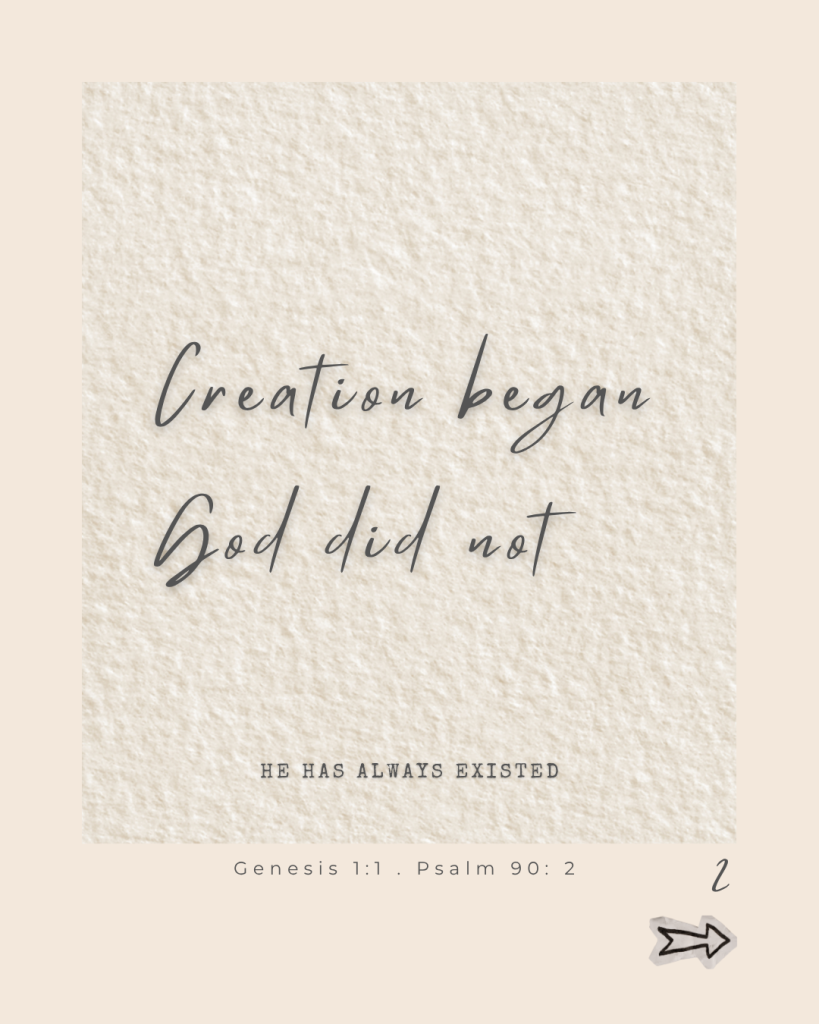
Creation had a beginning. God did not. Before the created order came into being, God already was (Genesis 1:1; Psalm 90:2).

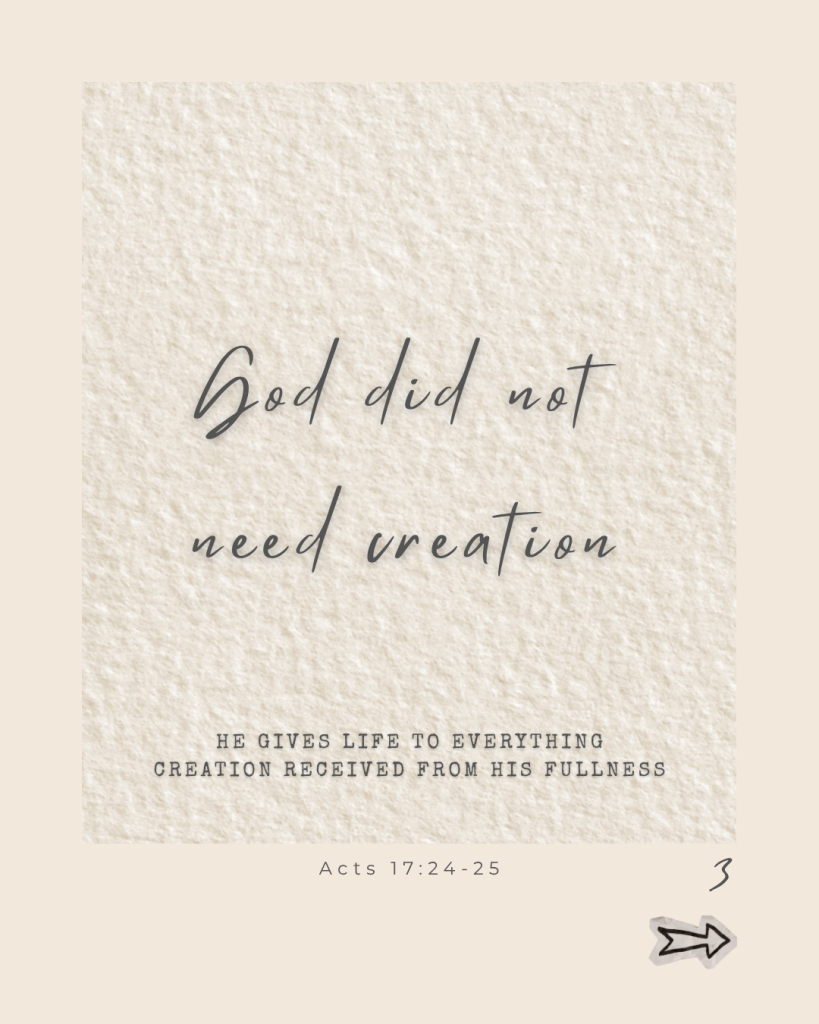
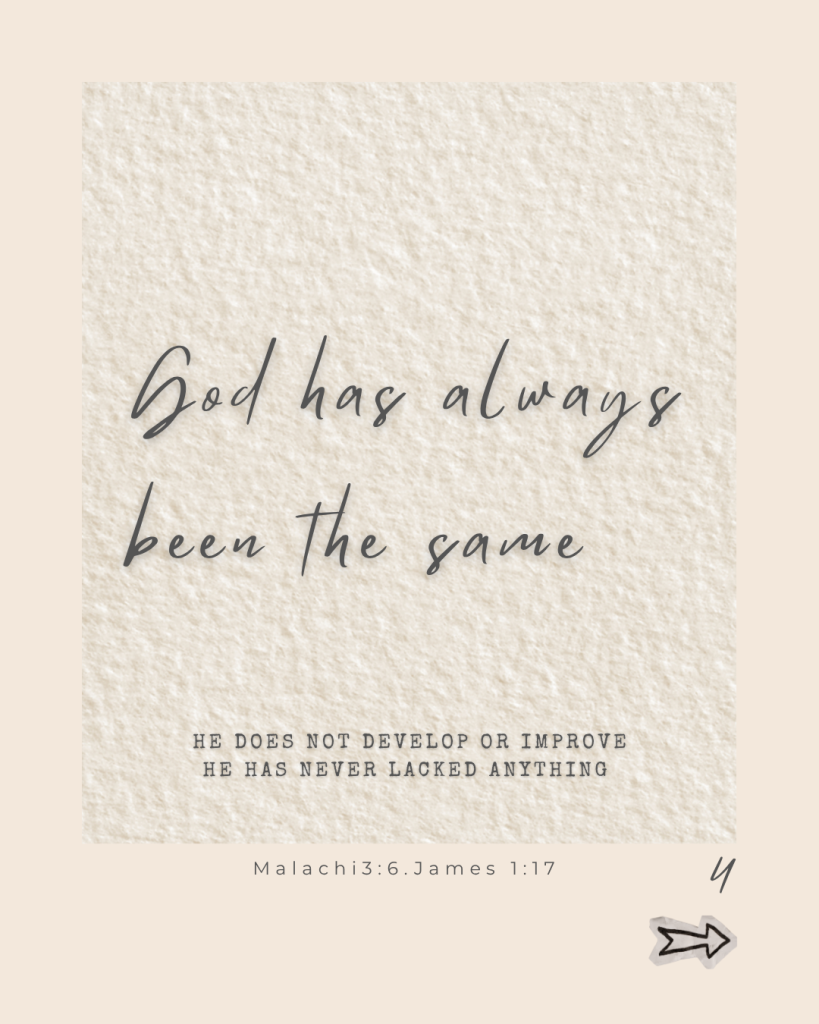
God did not create from need. He is complete, gives life to everything and never changes. He has never lacked anything (Acts 17:24–25; Malachi 3:6; James 1:17).

Scripture also declares:

God is love.

If God is complete and unchanging, He did not become loving when He created us. God has always loved.

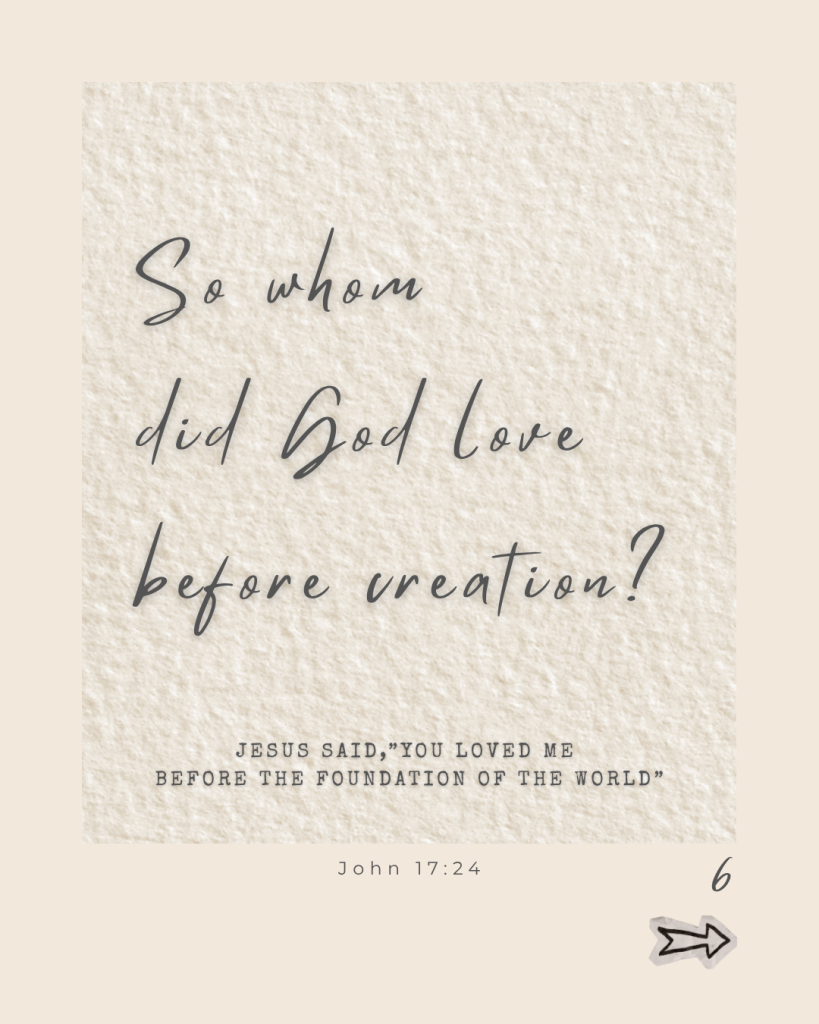
So whom did He love before creation?

Jesus answers:

“You loved Me before the foundation of the world.”
—John 17:24

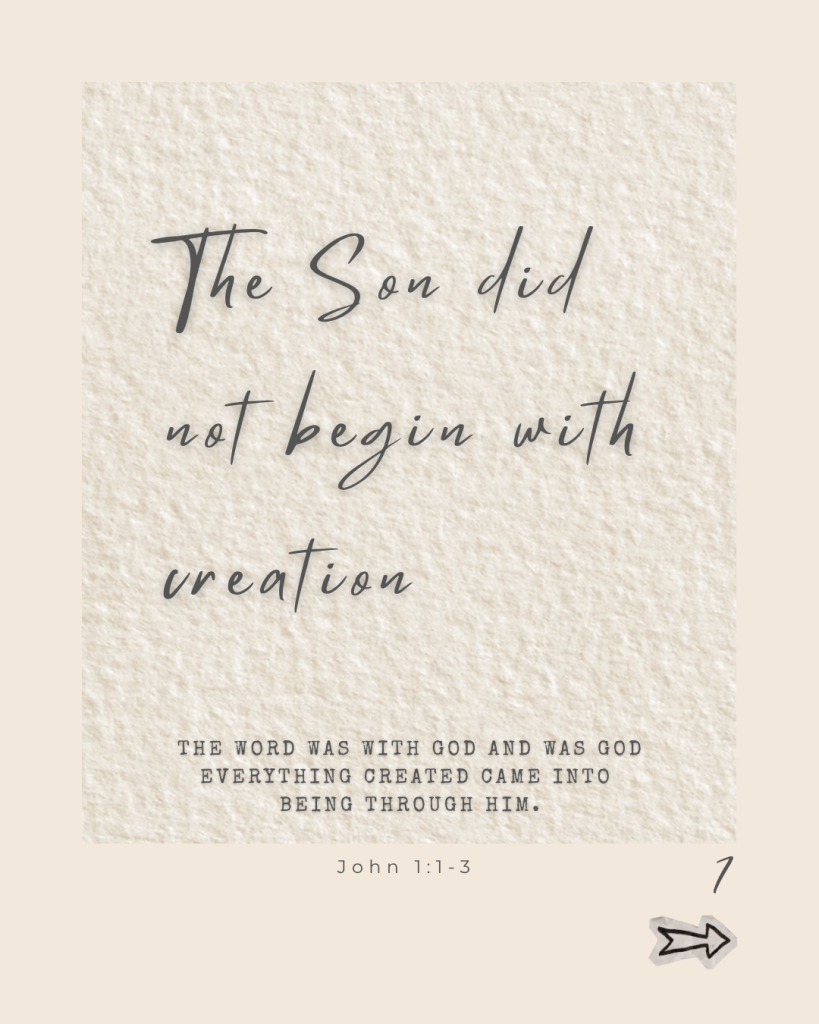
The Father eternally loved the Son. The Son did not begin with creation: the Word was with God, was God, and everything created came into being through Him (John 1:1–3).

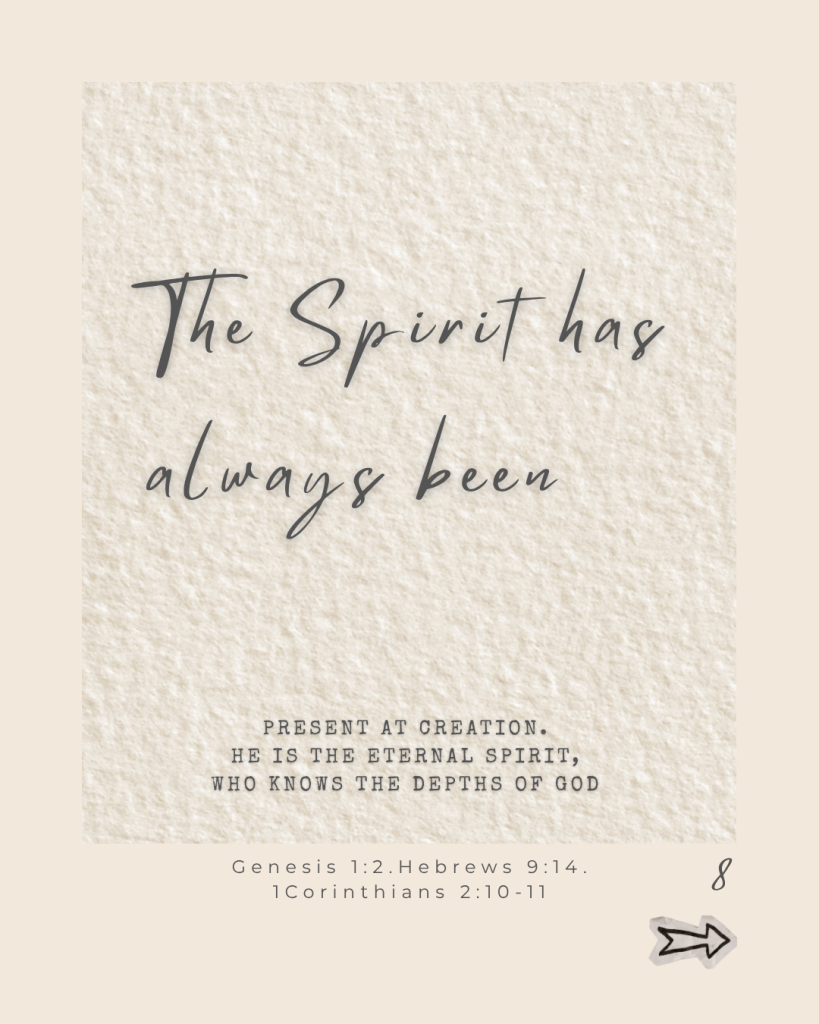
The Holy Spirit was not a later addition. He was present at creation, is called the eternal Spirit, and knows the depths of God. Created beings know God only through what He reveals; the Spirit knows those depths and reveals them to us (Genesis 1:2; Hebrews 9:14; 1 Corinthians 2:10–12).

The logic leads us to ask, but Scripture supplies the revelation:

Father, Son and Holy Spirit.
Three Persons. One divine Being. One God.

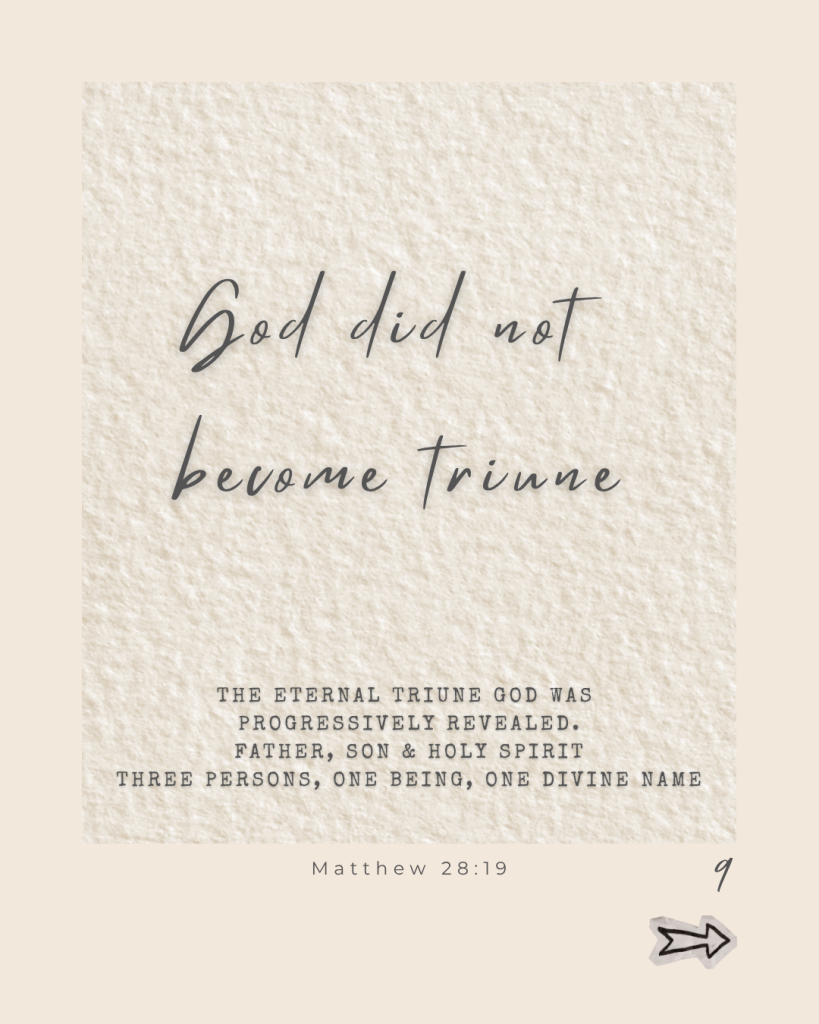
Jesus names all three under one divine name in Matthew 28:19.

God did not become triune. The eternally triune God progressively revealed who He has always been.

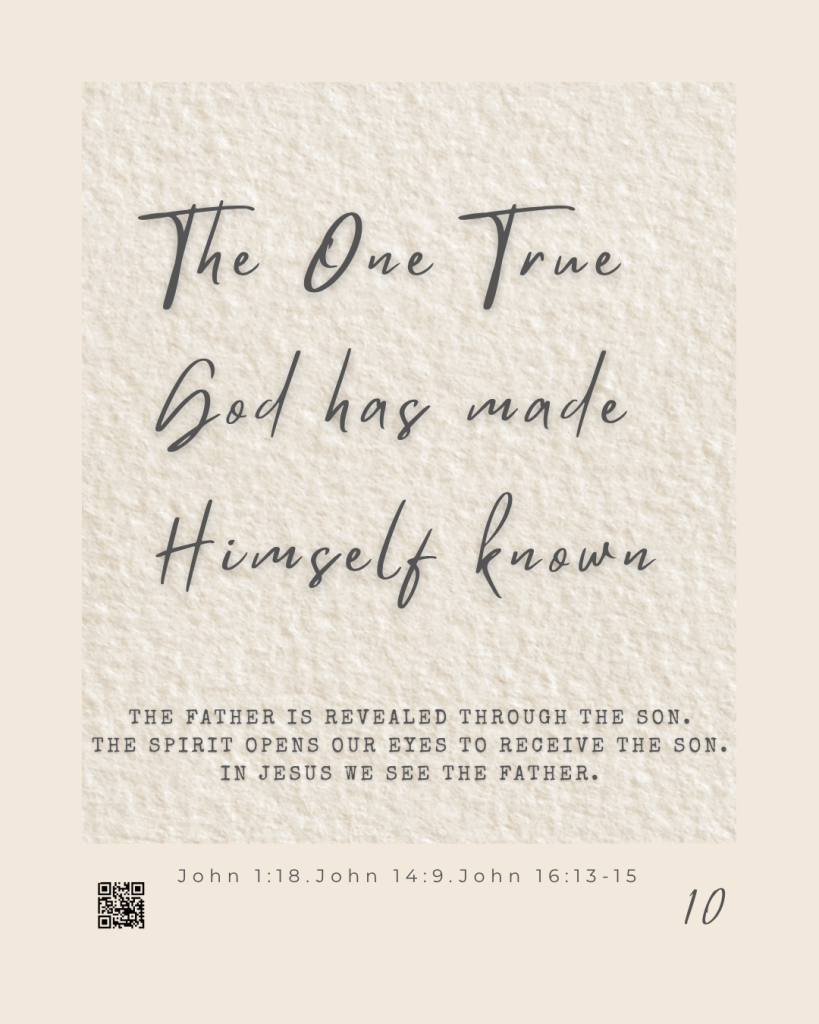
The Father is revealed through the Son. The Spirit opens our eyes to receive the Son. In Jesus, we see the Father.

The logic leads us to ask.
Scripture supplies the revelation.
The Spirit opens our eyes.
The Son makes the Father known.

Amen

Another Jesus?

An Undivided Heart for Christ

Read: 2 Corinthians 11:1–4; Genesis 3:1–6; 2 Corinthians 10:3–5

Key verse

“I am afraid, however, that just as Eve was deceived by the serpent’s cunning, your minds may be led astray from the simplicity that is in Christ.”
2 Corinthians 11:3, MSB

Pruning focus: Surrendering ideas and desires that distort our understanding of Christ and divide our devotion to Him.

God has graciously made Himself known. Through His Word, He reveals His character, His purposes, and His Son. What a precious gift: we may know the One who made us and loves us.

Yet from the garden onward, another voice has challenged what God has revealed.

God had given Adam a clear command. The serpent questioned it, denied its consequence, and suggested that God was withholding something desirable. Eve saw that the tree was desirable for gaining wisdom. A competing word became credible, and disobedience became attractive.

The temptation offered wisdom while leading away from the God who gives it.

Paul draws directly on this account when he expresses his fear for the Corinthians. He has promised them to one husband and longs to present them as a pure virgin to Christ. His concern is deeply personal. They belong to Christ, and their devotion to Him is endangered.

Here, simplicity carries the sense of sincerity and singleness of heart. The marriage picture brings purity into view: love that is faithful, undivided, and free from rival allegiance.

Then Paul names the danger. Someone comes preaching another Jesus. The church receives a different spirit or accepts a different gospel. They accommodate it readily.

The name of Jesus is still being spoken, but the message no longer faithfully represents the One whom the apostles proclaimed.

This is what makes deception so searching. It can sound familiar. It can retain Christian vocabulary while changing what those words mean. It may appeal to desires we have never brought honestly before God.

We may welcome a message because it promises the success we crave, excuses a sin we cherish, or leaves our pride undisturbed. Gradually, our preferences begin to shape the Jesus we are willing to receive.

Paul’s warning invites us to examine what we are accommodating.

What captures our attention? What feeds our appetites? What directs our affections? As an influence is welcomed, it can shape our thinking, speech, and conduct. We need the Holy Spirit’s discernment to test what we hear against the Christ revealed in Scripture.

This calls for humble examination. Paul’s concern reaches beyond identifying error elsewhere. It asks whether our own minds are being drawn away from faithful devotion.

In the preceding chapter, he speaks of demolishing arguments and every lofty claim raised against the knowledge of God, taking every thought captive to obey Christ. Our ideas, however persuasive or comforting, must submit to what God has made known.

The Father’s pruning may reach here. He may expose an understanding we have defended because it serves our desires. He may uncover an affection that has become a rival, or a teaching we have accepted without examining it.

We can yield to His searching work because He loves us. His correction calls us back to truth, communion, and fruitful obedience.

The Christ revealed in Scripture is glorious: the eternal Son who became flesh, gave Himself for our sins, rose from the dead, and reigns as Lord. We receive salvation by His grace. We can trust Him when His words challenge us, and depend on His Spirit as we learn to obey.

As we abide in Him and His words abide in us, our understanding and affections are renewed.

God has revealed Himself so that we may know Him. Let that gracious gift lead us into gratitude, faithful devotion, and worship.

Read 2 Corinthians 11:1–4 slowly. Ask the Lord to show you one idea, teaching, or desire you have welcomed that needs examination in the light of Scripture.

Bring it honestly before Him. Receive His correction, and take one concrete step of obedience to the truth He has made known.

Father, thank You for graciously revealing Yourself through Your Word and Your Son. Forgive me for welcoming ideas that serve my desires while drawing me away from Your truth. By Your Spirit, expose what distorts my understanding of Jesus. Prune away rival affections and renew my mind. Keep my devotion sincere and undivided. Let knowing You deepen my trust, obedience, and worship. You are glorious, and I thank You for making Yourself known. In Jesus’ name, amen.

A heart devoted to Christ allows His Word to correct even its cherished ideas.

  • Am I allowing Scripture to shape my understanding of Jesus, or allowing my desires to reshape Him?
  • What have I become willing to accommodate that competes with wholehearted devotion to Christ?

the Big 4

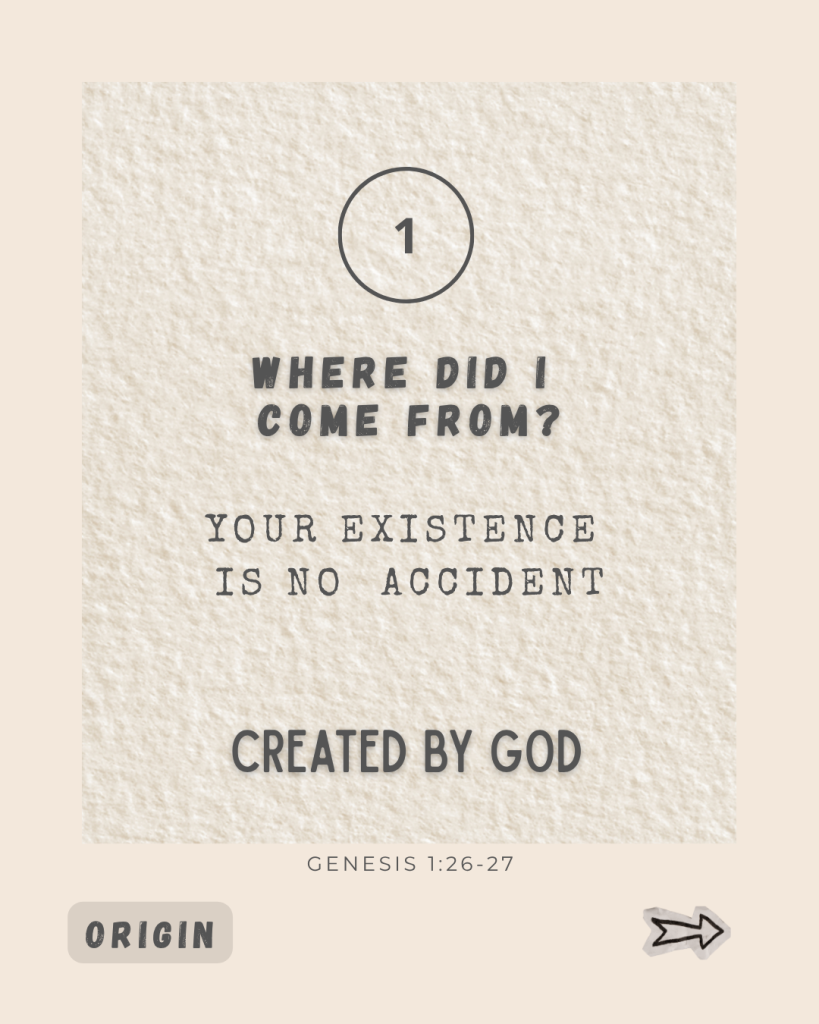
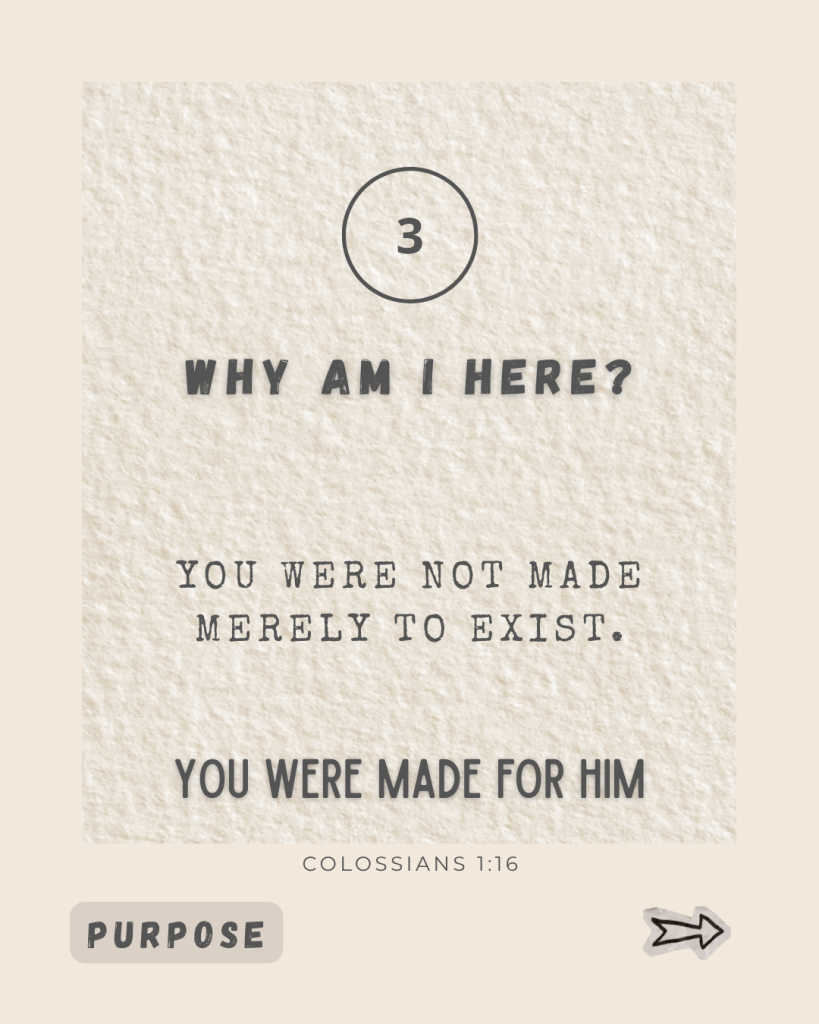
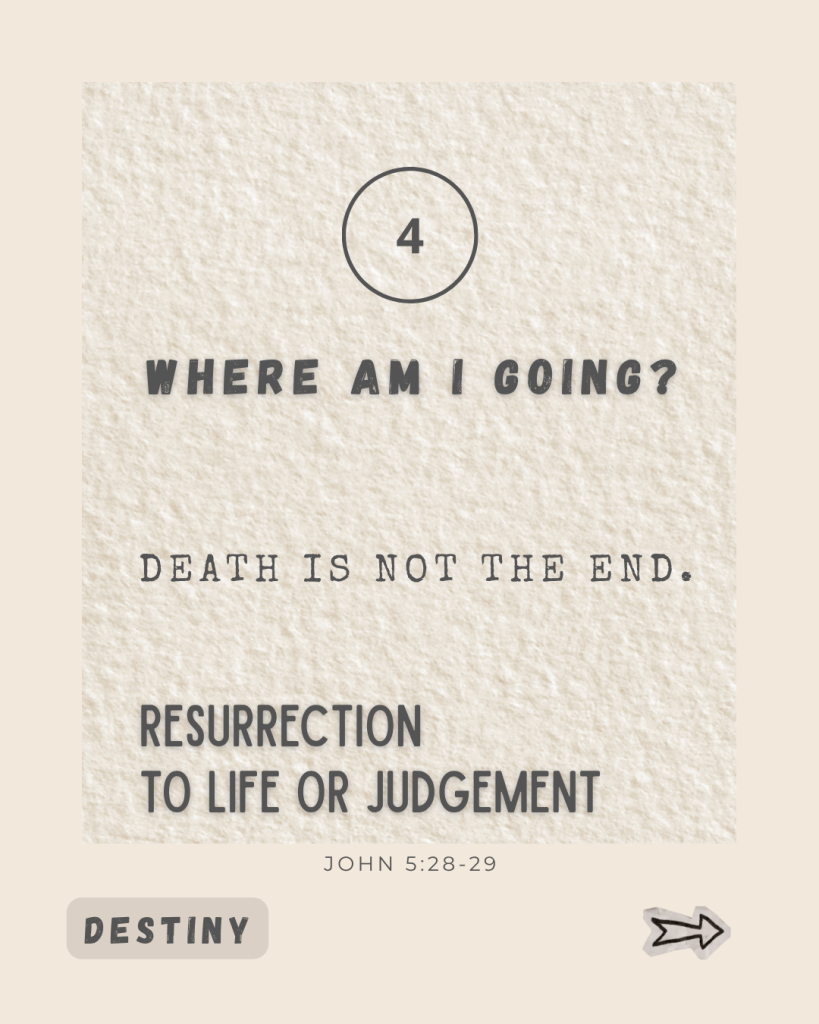
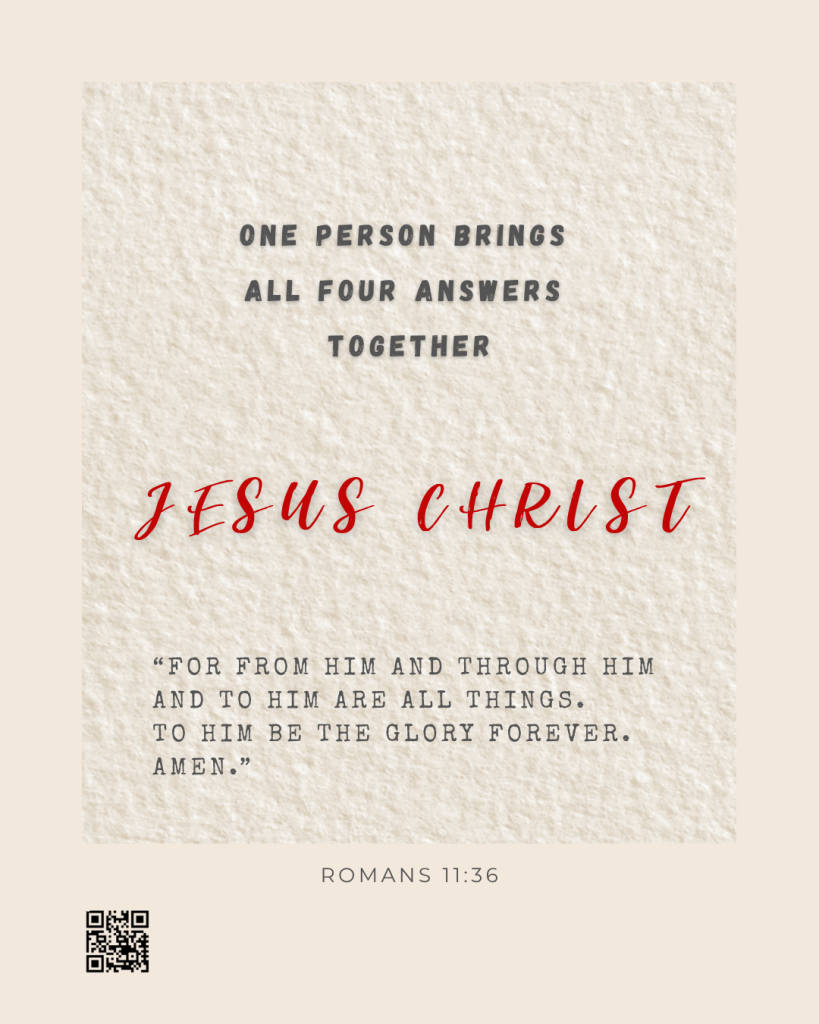
Every worldview must address these four questions. The challenge is whether its answers are true, and whether they belong together.

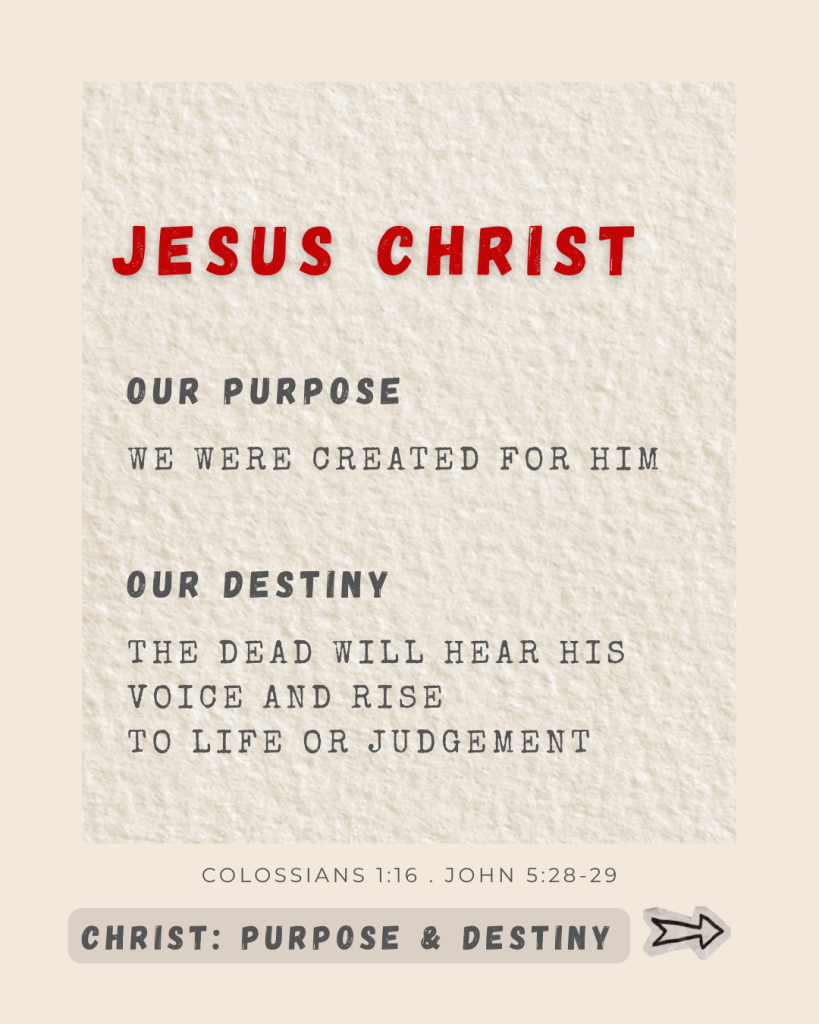
Christianity connects our origin, identity, purpose, and destiny: we are created by God, made in His image, made for Him, and accountable to Him beyond death.

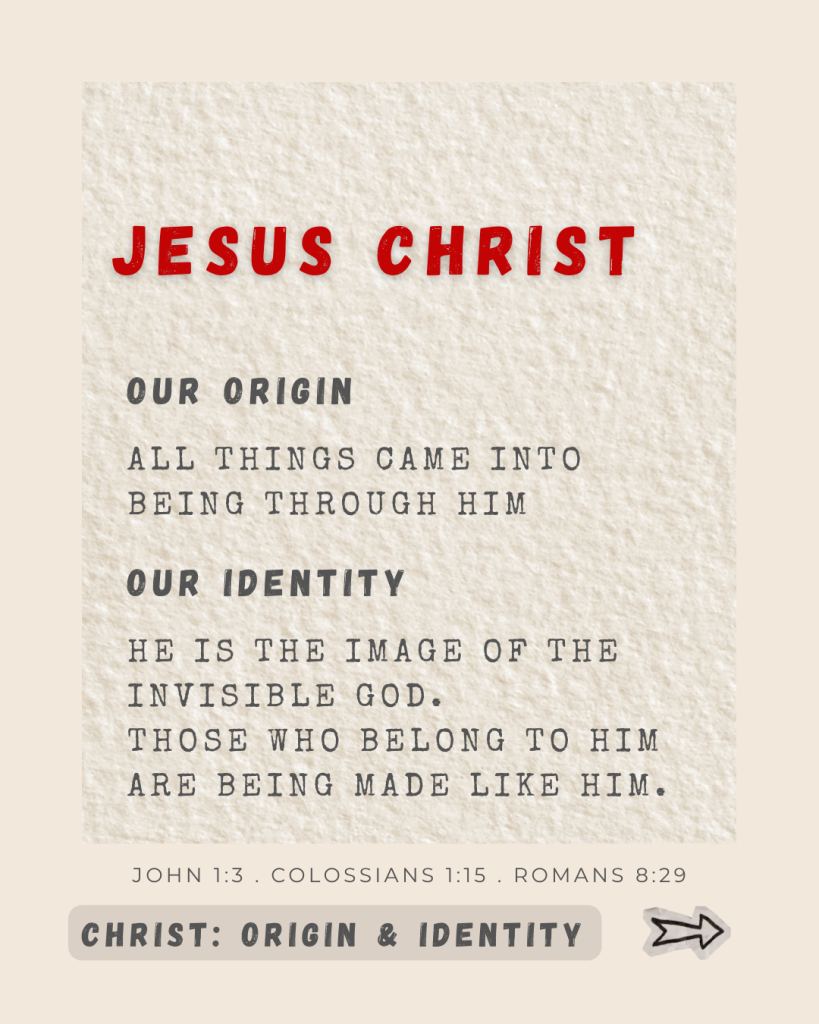
These answers come together in Jesus Christ.

All things came into being through Him. He is the image of the invisible God, and those who belong to Him are being made like Him. We were created for Him. And the dead will hear His voice and rise.

The One who made us also came to save us. Jesus died for our sins and rose again, so that through repentance and faith in Him we may receive forgiveness and eternal life.

These four questions lead us to a personal response: Will you trust the One who made you, died for you, and calls you to Himself?

Cancelled?

Proverbs 1:7 (NASB 2020)
The fear of the LORD is the beginning of knowledge;
Fools despise wisdom and instruction.

That second half of Proverbs 1:7 seems to have helped me see a painful situation more clearly: wisdom and instruction will not always be welcomed, even by someone close to us. When they are resisted, we do not have to receive that response as a verdict on our worth. We often do, at least I do. This morning the Lord helped me see deeper.

Disappointment and hurt are understandable. The invitation is not necessarily “I must not feel these things,” but “I do not have to let these things govern my response.”

I often focus on the fear of the Lord as the beginning of knowledge, but today its second half spoke into a difficult situation: fools despise wisdom and instruction.

I should not be surprised when wisdom is resisted but am I responding in the fear of the Lord, or out of wounded pride?

I can acknowledge the hurt without allowing it to harden into bitterness. I do not need to force a response, win an argument, or treat another person’s resistance as a measure of my value. I can be patient, entrust them to the Lord, and seek His wisdom about when to speak, when to remain quiet, and what boundaries are needed.

Yet this verse also calls me to examine my own heart. Am I willing to receive correction? The verse is not simply a statement about their response. It is a summons for mine too : fear the Lord, remain teachable, and trust Him with what I cannot change.

Lord, help me recognise folly without becoming contemptuous, receive correction without becoming defensive, and respond to hurt with the patience and wisdom of Christ. Amen.

When wisdom is rejected, let the fear of the Lord shape your response.

Walking in the Light

A devotional on 1 John 1:5–10

The foundation

“God is light, and in Him is no darkness at all.” — 1 John 1:5

John begins with who God is. God does not merely possess light; God is light. He is completely holy, true, and good. There is no deceit, moral darkness, or hidden evil in him.

Because God is light, fellowship with him must affect how we live. John therefore gives us five “if” statements. Each one invites us to examine whether our words and our way of life agree.

The five “ifs”

IFRealityConsequence
If we claim to have fellowship with God while walking in darkness (v.6)Our conduct contradicts our claim.We lie and do not practice the truth.
If we walk in the light, as God is in the light (v.7)We live openly before God and allow His truth to shape us.We enjoy fellowship, and Jesus’ blood cleanses us from all sin.
If we claim to have no sin (v.8)We deny our present sinful condition.We deceive ourselves, and the truth is not in us.
If we confess our sins (v.9)We agree with God about our sin instead of hiding or excusing it.God faithfully and justly forgives and cleanses us.
If we claim that we have not sinned (v.10)We reject God’s testimony about our guilt and need.We make God out to be a liar, and his word is not in us.

Walking in the light does not mean being perfect

It would be easy to read this passage and conclude that walking in the light means never stumbling or sinning. But John immediately warns us against claiming to be without sin.

A person walking in darkness hides, excuses, or denies sin. A person walking in the light brings sin before God, calls it what God calls it, and trusts Christ for cleansing. The difference is not that one person needs grace while the other does not. The difference is that one hides from grace while the other steps into it.

Light exposes what is wrong, but its purpose is not merely to shame us. God’s light leads us to the cleansing that is found in Jesus.

Two responses to sin

False response to sinTrue response to sin
Claiming fellowship while continuing comfortably in darknessWalking openly before God
Hiding or excusing sinAllowing God’s light to expose it
Claiming to have no sinful natureAcknowledging our continuing need for grace
Claiming never to have sinnedConfessing our particular sins
Depending on appearancesDepending on Christ’s cleansing
Results in deception and broken fellowshipResults in forgiveness, cleansing, and restored fellowship

The danger of spiritual claims

Three times John speaks about what “we say.” We may say that we know God, that we have no sin, or that we have not sinned. But our words do not determine spiritual reality.

John asks us to look beyond our claims:

  • Does my conduct agree with my confession?
  • Am I willing to let God’s truth examine me?
  • Do I admit my sin, or do I instinctively defend myself?
  • Am I living openly before God and other believers?

Christian faith is more than saying the right things. It is living truthfully in the presence of God.

The promise of confession

“If we confess our sins, he is faithful and just to forgive us our sins and to cleanse us from all unrighteousness.” — 1 John 1:9

God’s response rests on his character:

  • He is faithful: He keeps His promise to forgive.
  • He is just: Christ has dealt with the guilt of our sin.
  • He forgives: our guilt is removed.
  • He cleanses: He works against sin’s pollution and power in us.

We do not confess to persuade a reluctant God to be merciful. We confess because God has already provided cleansing through Jesus Christ.

Fellowship in the light

Walking in the light also produces “fellowship with one another.” When we hide from God, we often hide from people as well. We protect an image, fear being known, and keep others at a distance.

Grace gives us the freedom to be honest. We no longer need to pretend that we have no struggles. Christian fellowship grows when believers can say, “I need Christ’s mercy too.”

This does not mean sharing everything with everyone. It means abandoning hypocrisy and developing relationships marked by truth, humility, forgiveness, and grace.

Questions for reflection

  1. Is there an area of my life that I am trying to keep out of God’s light?
  2. Am I excusing, minimizing, or blaming someone else for a particular sin?
  3. Do my daily choices support my claim to have fellowship with God?
  4. When God exposes sin, do I hide in shame or come to Christ for cleansing?
  5. Is pride preventing me from being honest with another trustworthy believer?
  6. What would one practical step of “walking in the light” look like today?

A practice for today

Take a few quiet moments with God.

  1. Ask the Holy Spirit to search your heart.
  2. Name specifically whatever He brings to your attention.
  3. Accept responsibility without defending or excusing yourself.
  4. Thank God that forgiveness rests on Christ’s work, not your worthiness.
  5. Ask for strength to make any necessary change, apology, or restitution.
  6. Walk forward in the freedom of being fully known and deeply loved.

Father, you are light, and there is no darkness in you. Shine your light into every part of my heart. Show me where my actions do not agree with my words and where I have hidden, excused, or denied my sin.

Give me the humility to confess honestly and the faith to receive the forgiveness you have provided through Jesus. Thank you that you are faithful and just to forgive me and to cleanse me from all unrighteousness.

Help me to walk openly before you today. May my life be shaped by your truth, my relationships be marked by genuine fellowship, and my confidence rest in the cleansing blood of Jesus. Amen.

To see Jesus – 2 [Keep seeing Jesus]

Everything else is consequence.

Reflection 1 begins with the prayer: “Sir, we wish to see Jesus.”

Reflection 2 is the Lord’s gracious answer: “Keep seeing Jesus.”

The first is the cry of the disciple. The second is the pathway of the disciple.

And I have a feeling that every reflection that follows can simply be another facet of that one lifelong invitation.

Keep Seeing Jesus.

Until ‘that Day.’

“…so that He Himself will come to have first place in everything.”
Colossians 1:18 (NASB2020)

As I have lingered over Christ in the Scriptures, I have come to realise something very simple.

The Christian life is not first about trying to change myself.

It is about keeping my eyes on Jesus.

The more clearly I see Him,

the more clearly I see everything else.

When Christ is seen in His true glory,

He naturally has first place.

Then everything else begins to find its rightful place.

My perception changes.

His rightful position is established in my heart.

My posture becomes one of worship, humility, trust, and obedience.

My priorities are quietly reordered.

Not because I forced them into place,

but because Christ has taken His rightful place.

He simplifies without diminishing | He distils without reducing | Until what remains is the Person Himself.

Then I realised something that brought great peace to my heart:

Keep seeing Jesus. Everything else is consequence.

Lord Jesus, Keep my eyes upon You.

Guard me from becoming occupied with everything except You.

May I continue to see You more clearly through Your Word.

As I behold You, continue to transform me.

May You have first place in everything.

May all else find its rightful place beneath Your lordship.

May I see You more clearly, love You more dearly, and walk with You more closely, until that Day

when faith becomes sight, and I see You face to face.

Amen.

To See Jesus – 1

"Sir, we wish to see Jesus."
(John 12:21, NASB2020)

Notice how Jesus answers their request.

The Greeks ask to see Him, and Jesus immediately speaks of His hour:

“The hour has come for the Son of Man to be glorified.” (John 12:23)

Then He says:

“Truly, truly I say to you, unless a grain of wheat falls into the earth and dies, it remains alone; but if it dies, it bears much fruit.” (John 12:24)

John is showing us that to truly see Jesus is to behold Him in the glory of His cross.

This is where we see the fullness of who He is.

Here we behold the weight of His holiness, His justice, His mercy, His love, His humility, His obedience, His grace, and His worth(glory, weight).

These simple words have become the cry of my own heart.

Then Paul’s words in Colossians came alive to me:

“…so that He Himself will come to have first place in everything.”
(Colossians 1:18, NASB2020)

Older translations say,

“…that in all things He might have the pre-eminence.”

As I have reflected on these Scriptures, I have realized that when I truly see Jesus, everything else begins to find its rightful place.

Seeing Jesus clears my perception.

His rightful position is established in my heart.

My posture becomes one of worship, humility, trust, surrender, and obedience.

He Himself reorders my priorities until everything finds its rightful place beneath His lordship.

Christ does not become pre-eminent because I see Him.

He is pre-eminent.

But when I behold Him more clearly, my life begins to reflect that reality.

So may this become the daily prayer of each one of us.

perception, position, posture and priorities 

Lord Jesus, We wish to see You.

Help us to see You more clearly.

Help us to see Your Word more clearly.

May seeing You transform our perception.

Establish Your rightful position within our hearts.

Shape our posture in worship, humility, trust, surrender, and obedience.

Reorder our priorities until everything finds their rightful place beneath Your lordship.

May they see You more clearly, love You more dearly, and walk with You more closely. May You have first place in everything.

For You alone are worthy.

Amen. 

Keep seeing Jesus is the next blog – go here.

What is God really like?

This is one of life’s greatest questions.

Every religion, philosophy and worldview offers an answer.

The Bible also answers this question, but not by asking us to imagine what God might be like. Instead, it tells us that God has revealed Himself.

One of the beautiful truths Christians have recognised throughout history is called “divine simplicity”. Despite its name, it is a wonderfully practical truth because it helps us understand the God revealed in Scripture.

What Is Divine Simplicity?

Divine simplicity teaches that God is one, undivided, and not made up of separate or competing qualities. When the Bible tells us that God is love, holy, just, merciful, wise, faithful and true, it is not describing different parts of God. Rather, these are different ways God has revealed His one perfect and undivided being.

Therefore,

God’s attributes are not ranked in importance because they are not separate qualities competing for prominence. They are the one, undivided perfection of God’s being.

God’s love is always holy love.

His holiness is always loving holiness.

His justice is always righteous justice.

His mercy is always holy mercy.

Everything God does expresses everything God is.

God never acts from only one attribute.

He always acts according to His whole being. 

A Wrong Question

People sometimes ask,

“Which attribute of God is His most important one?”

It sounds like a reasonable question. But it assumes God’s attributes are separate and can be ranked. The Bible never presents God this way.

Common Misconceptions

Once we ask the wrong question, misunderstandings naturally follow.

For example:

  • “God is love, so He won’t judge.”
  • “God is holy, so He couldn’t forgive.”
  • “God is just, so mercy is impossible.”

Each conclusion separates what God has perfectly united.

The Truth

The God of the Bible never acts from one attribute alone. He always acts according to His whole being.

His love never compromises His holiness.

His holiness never diminishes His mercy.

His justice never opposes His grace.

Everything God does perfectly reflects everything God is.

Where Do We See This Most Clearly?

The answer is Jesus Christ. Jesus did not simply come to teach us about God.

He came to reveal God.

Jesus said,

“The one who has seen Me has seen the Father.” (John 14:9)

The writer of Hebrews declares,

“He is the radiance of His glory and the exact representation of His nature.” (Hebrews 1:3)

Paul writes,

“For in Him all the fullness of Deity dwells in bodily form.” (Colossians 2:9)

When we look at Jesus, we are not seeing one aspect of God. We are seeing God perfectly revealed.

The Cross

The cross is where the beauty of God’s character shines most clearly.

At Calvary, God’s holiness, justice, love, mercy, wisdom and faithfulness are not competing with one another. They shine together in perfect harmony.

The cross is not where one attribute triumphs over another.

It is where the one, undivided God reveals the perfection of His character.

Why This Matters

Divine simplicity is not merely a theological idea.

It answers the question,

“What is God really like?”

And it leads us to an even greater answer: Look to Jesus.

Because Jesus perfectly reveals the Father.

As Jesus Himself said,

“The one who has seen Me has seen the Father.” (John 14:9)

[ The written Word faithfully leads us to the living Word. ]

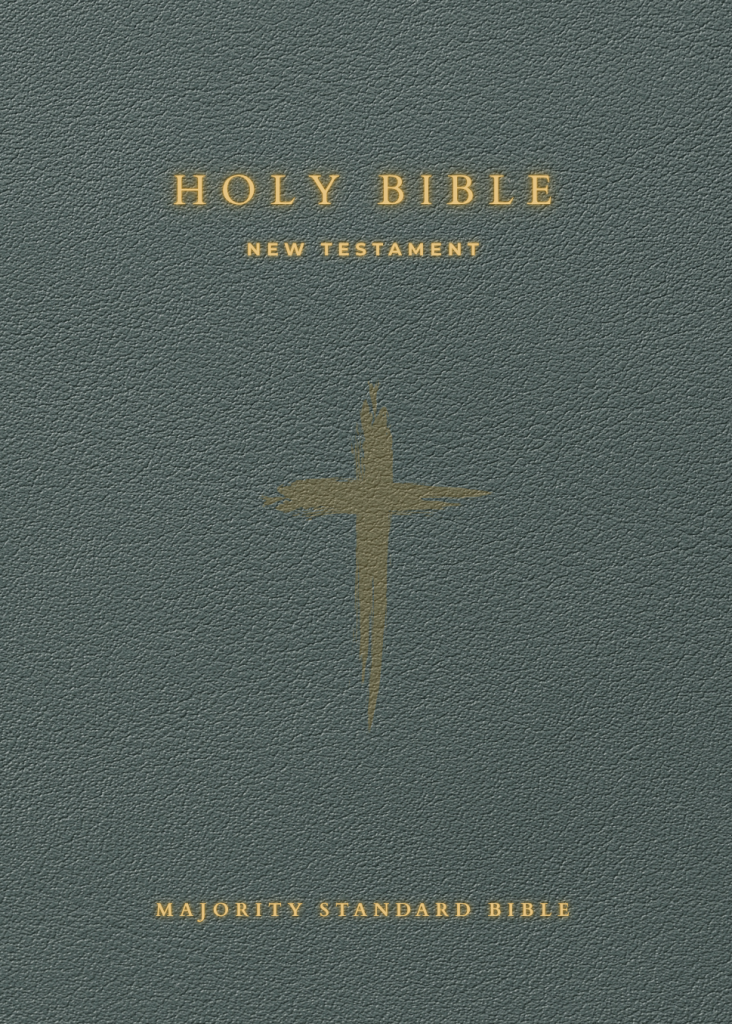
The Majority Standard Bible (New Testament) – in print!

Great news here! For those of you who are unfamiliar with the majority text, here is a summary. Available to purchase from our bookshop here or Bookvault Shop.

The Majority Standard Bible (MSB) is a modern English translation combining the Berean Standard Bible (BSB) Old Testament with a New Testament translated from the Byzantine Majority Text (specifically the Robinson-Pierpont edition)

Key Features

  • Textual Base: Unlike most modern translations (such as the ESV or NIV) which rely on the “Critical Text” or the KJV which relies on the “Textus Receptus,” the MSB follows the majority of surviving Greek manuscripts
  • Translation Style: “The Majority Standard Bible (MSB) is considered to be very similar in translation style to the New International Version (NIV),” according to The Puritan Board, offering a transparent connection between English words and original root meanings.
  • Footnotes & Variants: The MSB provides footnotes highlighting translatable variants from modern critical texts, as well as major differences between the Majority Text and the Textus Receptus.
  • Accessibility: Because it is entirely free of copyright restrictions, it can be freely downloaded, licensed, and used for printed works, public reading, and study.

We have produced a printed copy of the New Testament Majority Text and is being sold at cost price for access and affordability. It is available for purchase from both the Bookvault Shop and the Great British Bookshop at £6.00. Postage is extra. Please note this only the New Testament in Perfect bound form (Paperback).

The primary difference between the Majority Text and the Critical Text lies in how scholars choose which ancient Greek manuscripts to trust when translating the New Testament.

Here is a direct breakdown of how these two textual traditions compare.

Core Differences

  • Majority Text (Byzantine Text-Type): Base choices on the sheer quantity of surviving manuscripts. It prioritizes the readings found in the vast majority (around 80–90%) of Greek manuscripts, most of which date from the 9th to the 16th centuries.
  • Critical Text (Alexandrian Text-Type): Base choices on the age and diversity of manuscripts. It prioritizes the oldest available fragments and codices (mostly from the 2nd to 4th centuries), even if they are fewer in number.

Contrast Chart

FeatureMajority TextCritical Text
Manuscript CountThousands of copiesRelatively few copies
Historical AgeMostly medieval (later)Antiquity (earlier)
Primary RegionByzantine Empire (East)Alexandria, Egypt (South)
PhilosophyGod preserved the text through constant copying and widespread church use.Older manuscripts are closer to the originals and have fewer copying errors.
Key BiblesMajority Standard Bible (MSB), World English Bible (WEB)ESV, NIV, NASB, NLT, CSB

Key Examples of Differences

The Critical Text often lacks certain words, verses, or phrases found in the Majority Text, viewing them as later scribal additions.

  • The Ending of Mark (Mark 16:9-20): Fully included in the Majority Text. The Critical Text includes it but notes that the oldest manuscripts omit it.
  • The Woman Caught in Adultery (John 7:53–8:11): Fully included in the Majority Text. The Critical Text brackets this story, noting it is absent from early manuscripts. 
  • The Doxology of the Lord’s Prayer (Matthew 6:13): The Majority Text includes “For Yours is the kingdom and the power and the glory forever. Amen.” The Critical Text omits this phrase.

Beatitudes – Those who mourn.E2

For the podcast please go to the Spotify channel.

Welcome to the second episode in our series on the Beatitudes. If you haven’t listened to Episode 1 yet, I strongly encourage you to go back and start there.
As a quick reminder: Episode 1 was about the condition, being “poor in spirit”. Today, Episode 2 is about the contrition -mourning. And just to spark your interest, Episode 3 will be about control. There’s a beautiful, natural progression: from condition, to contrition, to control. The Beatitudes are widely regarded as the most profound discourse ever delivered — spoken by Jesus of Nazareth Himself.

Matthew 5:4 tells us:
“Blessed are those who mourn, for they will be comforted.”

Mourning is a state of deep grief. It’s the pain we feel when something valuable has been taken from us.
Being blessed is far deeper than simply being happy. The different states Jesus describes in the Beatitudes are all designed to lead us into true, lasting happiness in God’s kingdom. At first glance, mourning and blessing seem completely at odds — a clear dissonance. But remember what we learned in the last episode: the Kingdom of God is an upside-down kingdom. Its values are radically different from the ways of this world.
This second blessing flows naturally from the first — the poor in spirit. In this episode, we’ll examine mourning in light of the whole counsel of God.
It’s important to understand that not everyone who mourns will be comforted. The promise belongs to the saved — the citizens of God’s kingdom. Those are the ones who will ultimately have the last laugh.
Listen closely: the mourning and weeping we experience now is time-limited. It is not forever. Jesus makes this clear. Let me paint a helpful picture.
Imagine your entire life — whether 70, 80, or even 90 years — placed against the backdrop of eternity.
That lifetime becomes an almost invisible dot on the timeline. Our season of mourning is confined to this short life.
But for those who trust in Jesus, it is exchanged for an eternity with Him. There will be no more weeping with Him!
Luke 6:21 echoes this theme: “Blessed are you who weep now, for you will laugh.”
The Greek word for “mourn” is pentheo. It means to lament, to mourn, to weep, to feel guilt, or to be deeply sad. Mourning doesn’t always require tears. It can be an inward state of the heart, even completely oblivious to people around.
Now, let’s look at five important contexts where the Bible talks about mourning:

First, mourning over our own sin — displeasing God through our wrongdoing. Genuine spiritual mourning is the work of the Holy Spirit. It’s pure grace and not of anything from us, for we do not have the capacity to turn of our own, to God. True mourning however produces repentance — a change of mind and heart, a hatred for sin, and a turning away from it. As 1 John 3, 9 says, no one born of God makes a practice of sin. Godly sorrow leads to repentance, and believers continue in the posture of repentance daily. Do not, mistake this, the practice of sin is a lifestyle, in sin and calls to question, if we were ever saved in the first place. Repentance is a turning away from sin. The understanding here is of vital importance.

Second, mourning on behalf of others — their sin, rebellion, or folly. Jesus Himself wept over Jerusalem:
“Jerusalem, Jerusalem… how often I have longed, to gather your children together… but you were not willing.”
We also see this in Ezra 10 where he mourns for the unfaithfulness of the people. Another example is Paul’s deep anguish for his countrymen. In Romans 9,2 and 3, Paul goes to the extent of wishing, that they would be saved even if it meant a risk to his own position in Christ. Proverbs 24, 11 and 12 challenges us powerfully to rescue those heading toward death. This passage left a lasting mark on me, and changed my heart and thinking.

Third, mourning the loss of loved ones, belongings, or what once stood strong. The Bible records set times of mourning for figures like Jacob, Samuel, and Moses. Yet for believers, we do not grieve like the world. We have eternal hope. As 1 Thessalonians 4, 13 to 18 reminds us, death is not the end for those in Christ. However the greatest joy will be beholding our Saviour face to face.
Fourth, and this is especially moving — our Lord Himself wept at the tomb of Lazarus, in John 11:35. The Greek word used in verse 33 and 38 shows He was deeply moved and agitated. Death is His enemy and this stirred emotions of grief and anger. Death was never God’s design for His beloved creation.
Fifthly, we mourn and even fast for the ones dear to us but spiritually lost. Many mourn for their children. Jesus points this out in Luke 23, 28. Friend, God sees our mourning and He graciously answers in His time.

Why does mourning hold such great value in God’s kingdom? Well, these are kingdom values.
For a start, a contrite, mourning heart is an acceptable, sacrifice, to God seen in Psalm 51, 17.
Secondly, mourning sets the stage for restoration of fellowship. Mourning leads to confession and repentance. God then forgives, restores joy, and fellowship. He longs for this. James 4,8 and 9 along with John 16,20 confirm this understanding.
Thirdly, our relationship with God, cannot grow, without it. James 4, 8 and 9 urges us: “Draw near to God… Be wretched and mourn and weep. Let your laughter turn to mourning and your joy to gloom.”
Intimacy exposes more of our fallen nature. Closer to Him, brighter the light and more of our dark corners illuminated, that need cleansing. Holiness is being worked out, conforming to the image of Jesus and not to the world. This is how we get set apart, exclusively, for Him.
Fourthly, when we mourn, in loss and suffering, the God of all comfort Himself, brings peace, assurance and hope shown in 2 Corinthians 1, 3 to 5. We can now pass this on! With this comfort we have received, we are blessed. But don’t miss this, we become a blessing, for others, because we can now comfort others with the same comfort we have received from the Lord. Remember we can give because we have received. This is how God’s kingdom operates for now, until every tear is wiped away eventually.

And now, the beautiful promise: Our mourning is temporary. It gives way to joy, comfort, and laughter.
Jeremiah 31,13 declares:
“I will turn their mourning into joy; I will comfort them, and give them gladness for sorrow.”
Revelation 21,4 promises:
“He will wipe every tear from their eyes. There will be no more death or mourning or crying or pain, for the old order of things has passed away.”

Friend, don’t lose the scriptural perspective, your position or His power. So, let me leave you with this word of encouragement from 2 Corinthians 4, 17, and this is the NET translation which reads, “For our present troubles are small and won’t last very long. Yet they produce for us a glory that vastly outweighs them and will last forever!
Did you see that? All this, far outweighs, the glory awaiting us.

Heavenly Father, thank You that in Your upside-down kingdom, mourning leads to comfort. Give us tender hearts that mourn over sin — our own and the world’s. Turn our sorrow into joy and use our tears to draw us closer to You and to comfort others. We trust in the hope of eternity with You. In Jesus’ name, Amen.

“Those who sow in tears will reap with songs of joy.” — Psalm 126:5