New Wine in New Wineskins

Receiving the fulfilment God has brought in Jesus

Read: Mark 2:13-28; Luke 5:33-39; Matthew 5:17; Colossians 2:16-17.

Key verse

“I did not come to abolish, but to fulfill.” Matthew 5:17.

Focus: Receiving Jesus as the fulfilment of God’s purpose and allowing all we know and practise to lead us to Him.

Jesus does not change the story God has been telling. He fulfils it. God’s earlier revelation prepared His people to receive the One in whom His promises would find fulfilment.

The old was meant to reach its rightful destination. That destination is Jesus. We honour what God gave by receiving the One to whom it pointed.

In Mark 2, questions about eating with sinners, fasting, and the Sabbath gather around Jesus. The physician has come. The bridegroom’s presence calls for joy. He is Lord even of the Sabbath.

New wine bursts old wineskins: both wine and skins are lost. What Jesus brings cannot simply be contained within established expectations. His arrival calls for a response shaped by who He is.

Is what we know of God leading us to His Son?

Recognising the fulfilment

Colossians 2:16-17 describes food regulations and sacred days as a shadow, with the substance belonging to Christ. The shadow serves its purpose by pointing us to Him.

Luke does not explicitly call the old wine a shadow. Yet this wider biblical movement from preparation to fulfilment helps us understand why Jesus’ coming requires a fresh response.

Do I read Scripture seeking to know Christ more fully? Will I let Him deepen my understanding?

When the familiar feels sufficient

The person accustomed to old wine says, “The old is fine” (Luke 5:39). In this setting, those words can describe reluctance to receive what Jesus brings because the familiar seems sufficient.

We too can become settled in a familiar understanding or pattern of worship, resisting Scripture’s call into a fuller knowledge of Christ.

Newness alone proves nothing. What matters is recognising Jesus and receiving the fulfilment He brings.

Where do I say, “What I already know is enough”? What am I afraid of losing if Christ reshapes my expectations?

We can bring that fear honestly to Him.

Lord, make my heart willing to receive what You reveal.

Receiving His authority

God gave the Sabbath for human good. Jesus declares Himself Lord even of it. The gift must be understood in relation to the Lord who reveals its purpose.

Our practices also need examination. Bible reading, prayer, fasting, and worship should nurture trust in Christ, obedience to His word, and love for people.

Am I satisfied with completing a practice while avoiding the obedience it calls for? Does my understanding of holiness make room for Jesus’ mercy towards sinners?

Receiving Him as fulfilment includes yielding our dearest habits and convictions to Him as Lord.

With the Bridegroom again

Jesus said His disciples would fast when the bridegroom was taken away. Yet our present longing is moving towards joyful reunion.

He looked ahead to drinking with His disciples in His Father’s kingdom (Matthew 26:29). Revelation 19:7-9 pictures the marriage supper of the Lamb. His people will be gathered to Him.

The fasting that expresses our longing for the Bridegroom will have reached its purpose. Longing will give way to the joy of His presence.

This hope sustains us as we follow Him today. The One who fulfils God’s promises will bring us into that joy.

Feasting, not fasting, because the Bridegroom is with us.

A practical response

Choose one familiar belief or spiritual practice. Ask how it helps you know and follow Jesus. Name one response His words call for: showing mercy, surrendering a fixed expectation, or obeying a command you have delayed. Take that step in dependence upon Him.

Father, thank You that Jesus fulfils what You promised. By Your Spirit, open my understanding and make my heart willing. Where familiarity has made me resistant, teach me to trust Your Son. Let my reading, prayer, and worship deepen my fellowship with Him. Help me receive His mercy, yield to His authority, and obey His word. Sustain me with the hope of the coming feast, when longing gives way to the joy of being with Him. Amen.

“The old was meant to reach its rightful destination. The destination is Jesus.”

  • Is what God has already taught me leading me to a fuller knowledge of Jesus?
  • How might the hope of being with the Bridegroom shape my obedience today?

Onam: more than a harvest festival.

I recently received several Onam wishes and wondered how I should respond. Being a Christian and also someone from the state of Kerala I did some research into this festival and share with you my thoughts.

Onam is widely celebrated as Kerala’s harvest and cultural festival, but its traditional meaning goes deeper. Its origins are rooted in the Hindu account of King Mahabali and Vishnu’s Vamana avatar, recorded principally in the Bhagavata Purana and other Puranas. Traditionally, Onam commemorates and symbolically welcomes Mahabali’s annual return to visit his people.

Many Christians may participate without believing this story, viewing Onam simply as a cultural celebration. Yet its religious origin and inherited symbolism should not be overlooked. The biblical concern is not social isolation or rejection of Kerala’s people and culture, but informed discernment about practices connected to other religious beliefs.

Christians should therefore examine each Onam practice honestly and prayerfully, distinguishing neighbourly friendship and cultural hospitality from acts that might communicate identification with a religious narrative they do not believe. The central question is not merely, “Do I believe the story?” but, “What does my participation signify, and does it honour Christ?”

Expressive dissonance

When Our Actions Contradict Our Worship

I recently overheard a Christian who was encouraged by a boxer publicly praising and worshipping Jesus while entering the arena. What troubled me was the dissonance between the worship and the action that followed. In competitive boxing, striking another person is central to the contest, and incapacitating an opponent is an accepted route to victory. This raises a serious moral question about deliberately causing bodily harm, including the possibility of lasting injury.

My point is that public declarations of faith cannot be treated as an endorsement of the activity itself. Praising Jesus does not establish that an action is consistent with His teaching. Hard work, skill and discipline do not settle its morality either. These qualities must serve a worthy purpose. A person’s faith may be sincere, but people can be sincerely wrong. We however need not judge their motives to examine their actions.

Paul’s reference to boxing and running in 1 Corinthians 9:24–27 might appear to provide biblical validation for these sports. Before reaching that conclusion, however, we need to distinguish description from prescription and, more precisely here, illustration from endorsement. What is Paul using the sporting imagery to teach?

The passage emphasises purposeful effort, self-control and discipline. The runner runs towards a goal; the boxer directs his blows rather than striking the air. Paul draws on these images to explain the seriousness with which he pursues his calling. His concern is faithful participation in the gospel and the exercise of self-discipline, lest he himself be disqualified after preaching to others.

The analogy does not require every feature of the sport to receive moral approval. We should carry across the lesson Paul identifies, rather than assume that the illustration endorses the whole activity. His reference to boxing therefore does not settle the ethical question of deliberately injuring an opponent. That question still needs to be examined through the wider teaching of Scripture.

Moving from boxing to a broader principle: our speech cannot justify our actions. Our declarations of faith and our conduct should be congruent, both accountable to the Lord we worship.

Romans 12:1–2 thus becomes the central passage. Offering our bodies as living sacrifices means that worship includes what we physically do. The renewal of our minds calls us to examine even activities that are familiar, admired or rewarded. Romans 6:13 reinforces this by calling us to offer our bodily members to God as instruments of righteousness. James 3:9–10 exposes the inconsistency of blessing God while cursing people made in His likeness.

Our actions should be examined carefully through the two greatest commandments:

  • Love God wholeheartedly: Does this action honour His character and obey His teaching? Am I willing to let His Word correct what I enjoy or defend?
  • Love our neighbour as ourselves: What does this action actually do to another person? Does it respect their dignity and seek their good?

These passages do not explicitly address modern boxing, but they establish the ethical questions that examine our understanding. The thought for the day, applies that examination to ourselves, inviting repentance and renewed obedience in response to God’s mercy.

If we removed the religious words surrounding an action, would the action itself express love for God and our neighbour?

Expressive dissonance is the disharmony between the faith we express and the actions we practise: our conduct contradicts the worship we offer.

In Such a Way

Guarding our hearts from self exaltation

Read: 2 Corinthians 12:7-10; Matthew 5:16; Matthew 6:1-6; Hebrews 12:1-2.

Key verse 2 Corinthians 12:7.

“to keep me from exalting myself”

Focus: Eyes fixed on Jesus; glory resting with the Father.

Self can occupy the centre even in spiritual things. Paul’s revelations came from God, yet could feed self-exaltation. His thorn tormented him but also protected him. Gifts, service, knowledge, and apparent humility can become reasons to seek admiration.

Christ’s sufficient grace sustained Paul. He delighted in weaknesses, insults, distresses, persecutions, and difficulties for Christ because Christ’s power rested upon him. God’s power finds its full expression in our weakness.

Everything has been received

God is the source; praise tests whether we believe it. Everything is received (1 Corinthians 4:7); praise tests the heart (Proverbs 27:21). Appreciation may be received thankfully. Self-exaltation keeps the credit and feeds upon it.

Herod withheld God’s glory (Acts 12:21-23). God opposes the proud and gives grace to the humble (James 4:6). His holiness calls for reverence (Hebrews 12:29).

The desires beneath our service

Entitlement expects special treatment; the hunger for validation demands approval; the desire for visibility asks whether anyone noticed. Being overlooked also searches our hearts. Hurt is not always pride, but resentment may reveal a demand for recognition.

The desires of flesh and eyes, and the pride of life, draw us towards ourselves (1 John 2:16-17). We neglect others or struggle when they are honoured. Who occupies the centre?

In such a way

Jesus calls us to shine in such a way that others glorify our Father (Matthew 5:16). Matthew 6:1-6 searches our desire to be noticed and reminds us that the Father sees in secret.

Visibility can serve the Father’s glory, or it can serve our appetite for recognition. Can someone encounter His goodness through my service without needing to remember my name?

Our eyes fixed on Jesus

Christ’s humility shapes our concern for others (Philippians 2:3-11). We entrust our lifting up to God (1 Peter 5:6). Love and unity complete Paul’s joy; trials can produce maturity (Philippians 2:2; James 1:2-4).

John’s joy is fulfilled as Christ increases and he decreases (John 3:27-30). Hebrews 12:1-2 fixes our gaze on Jesus. Our eyes fixed on Jesus. Our lives pointing to Him. The glory belonging to the Father.

A practical response

Bring a moment of praise or being overlooked before the Father. Receive His correction and comfort. Serve someone with their good in view, thanking Him for His grace.

Father, thank You for Your Word. Forgive my hunger for recognition and resentment when it is absent. Show me where I need comfort and where I need repentance. Everything comes from You. Sustain me in weakness. Keep my eyes fixed on Jesus. Let my light shine in such a way that others glorify You. Amen.

Visibility can serve the Father’s glory, or it can serve our appetite for recognition.

Food for thought

  • Am I making Christ known, or using His gifts to make myself important?
  • Whose approval am I seeking? Where do I want the glory to rest?

Desert places

Affections, Appetites & Attention

Read: Deuteronomy 8:2-3; Matthew 4:1-11; Philippians 2:12-13; Hebrews 12:1-2.

Key verse

“for it is God who is at work in you, both to desire and to work for His good pleasure.” Philippians 2:13.

Focus: God exposing and refining our affections, appetites, and attention, deepening our desire for Him and keeping our eyes fixed on Jesus.

God created us for Himself. Only He can truly satisfy the deepest hunger of our hearts. We thankfully recognise, receive, and enjoy His gifts, while our love and our gaze remain centred on the Giver.

Yet other loves and desires compete for our hearts. They occupy our thoughts, claim our time, engage our will, and attract our investments. The desert places can bring these hidden loyalties into view.

The wilderness is an uncomfortable place. It can be lonely and fearful, dry, hot, and exhausting. The ground is hard to travel. Food and water become pressing concerns, and we long for shelter, sustenance, and assurance that we will make it through. There are seasons in our lives that feel like this. Familiar comforts seem far away, and the way ahead is uncertain.

Israel knew the wilderness. In Deuteronomy 8:2-3, Moses reminds the people that God led them there to humble and test them, revealing what was in their hearts. He allowed them to hunger, and He fed them with manna. They were learning that their lives depended upon Him and His word.

The wilderness has a place in God’s work of shaping His people. Here our affections, appetites, and attention can be tested, refined, and transformed as He works within us.

Affections: What am I treasuring?

Our affections concern what we hold dear. Jesus connects our treasure with our heart (Matthew 6:19-21). The desert can expose what we have come to depend upon for security, worth, or peace.

What happens within me when approval is absent, plans are interrupted, or a familiar comfort is unavailable? What am I holding so tightly that I struggle to entrust it to God?

We bring these discoveries before our Father. We receive His gifts with thanksgiving, keeping our hearts centred on Him. Even in their absence, He remains worthy of our love.

Appetites: Lord, give me a desire for You.

The desires of the world compete with our desire for Him. There is a tussle within us. We can recognise Christ’s goodness and still feel the pull of what promises immediate satisfaction or relief.

The desert exposes those appetites. What do I reach for when I am unsettled? What do I crave when I am weary or afraid?

Even our desire for God depends upon His gracious work. Philippians 2:13 places both the desire and the work in His hands.

He works at the root of our wanting and enables the obedience that follows. We respond to Him, depending upon His work within us.

Our prayer begins here: Lord, give me a desire for You.

That inward work bears fruit in the choices we make and the actions we take. Both the desire and the work depend upon Him.

Attention: What does my life reveal?

Our affections and appetites become visible in what occupies our attention. What we love and desire draws our passion, engages our will, and receives our time and resources.

My timesheet and my bank statement can become searching witnesses. Where am I investing my time? What receives my money, energy, and planning? Where do my thoughts continually return? These patterns offer evidence of what I treasure and what I crave.

We bring that evidence into prayer. Work, family responsibilities, and service can themselves express love for Christ. The question reaches into the heart of these activities: Who am I seeking to please? What am I pursuing in the way I spend myself?

Fixing my eyes on Jesus reaches into these ordinary decisions. Love for Him finds practical expression in how I live.

Our eyes upon Jesus

Jesus Himself entered the wilderness before His public ministry. Led by the Spirit, He fasted and faced temptation (Matthew 4:1-11). He had no disordered affections to purify. In hunger and testing, He remained faithful to His Father.

Hebrews 12:1-2 calls us to run with endurance, fixing our eyes on Jesus, who endured the cross and is seated at God’s right hand. He is the One upon whom our faith depends.

The desert may still be hard. We may not understand the purpose of a particular season. Yet we can ask our Father to sustain us and use even this place to make us more like His Son. The hardship itself has no power to transform us; God works through His Word and Spirit as we respond in dependence and obedience.

Here our prayer finds its resting place: Lord, draw my affections towards You, give me a desire for You, and keep my attention upon Jesus.

Our eyes upon Him. Fixed, not wandering.

A practical response

Prayerfully review how you have spent your time, attention, and resources this week. Name one desire or attachment that this reveals. Bring it to the Father, asking Him to give you a desire for Him and to enable one practical step of obedience today.

Thank You, Lord, for the wisdom in Your Word. Thank You, Holy Spirit, for opening my understanding and helping me to fix my eyes on Jesus. You know the loneliness, the struggle, and the weariness of this place. Sustain me here. Reorder my affections, give me a desire for You, and work within me both to desire and to do what pleases You. Make me more like Jesus. Keep my eyes upon Jesus, fixed, not wandering. Amen.

Our eyes upon Jesus. Fixed, not wandering.

Food for thought

  • What is this season revealing about what I love, what I desire, and where I invest myself?
  • Where do I need God to work within me, both to desire and to do what pleases Him?

Who is the one true God?

Creation had a beginning. God did not. Before the created order came into being, God already was (Genesis 1:1; Psalm 90:2).

God did not create from need. He is complete, gives life to everything and never changes. He has never lacked anything (Acts 17:24–25; Malachi 3:6; James 1:17).

Scripture also declares:

God is love.

If God is complete and unchanging, He did not become loving when He created us. God has always loved.

So whom did He love before creation?

Jesus answers:

“You loved Me before the foundation of the world.”
—John 17:24

The Father eternally loved the Son. The Son did not begin with creation: the Word was with God, was God, and everything created came into being through Him (John 1:1–3).

The Holy Spirit was not a later addition. He was present at creation, is called the eternal Spirit, and knows the depths of God. Created beings know God only through what He reveals; the Spirit knows those depths and reveals them to us (Genesis 1:2; Hebrews 9:14; 1 Corinthians 2:10–12).

The logic leads us to ask, but Scripture supplies the revelation:

Father, Son and Holy Spirit.
Three Persons. One divine Being. One God.

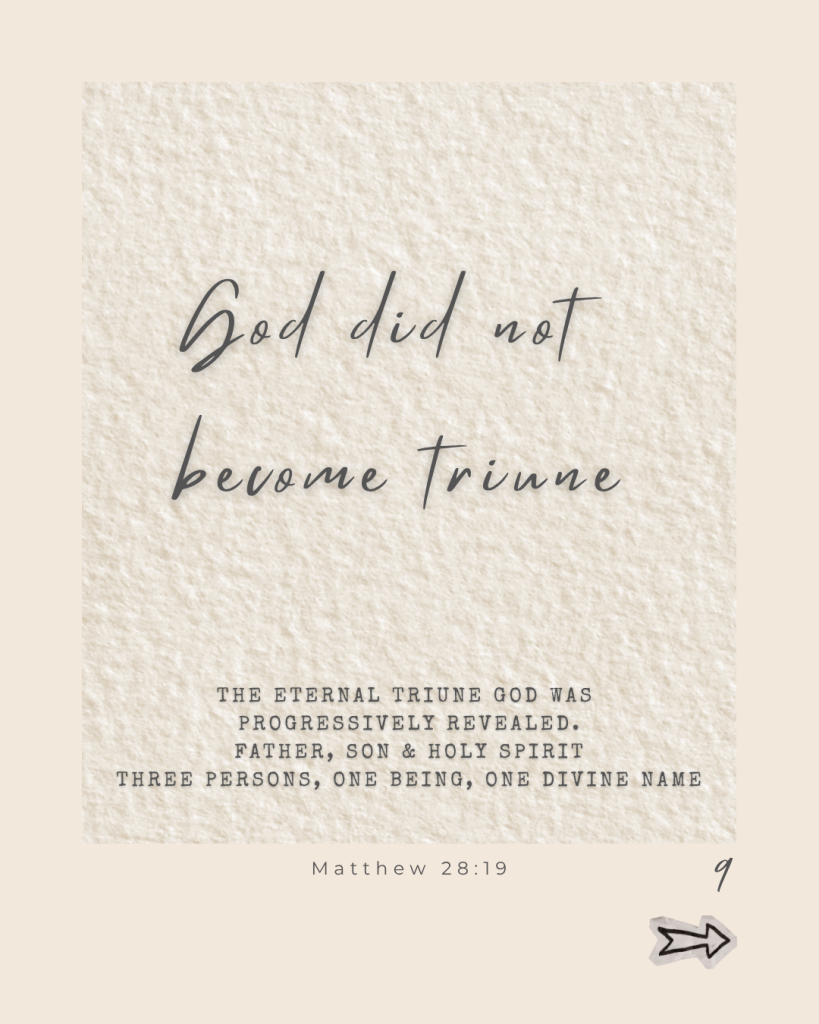
Jesus names all three under one divine name in Matthew 28:19.

God did not become triune. The eternally triune God progressively revealed who He has always been.

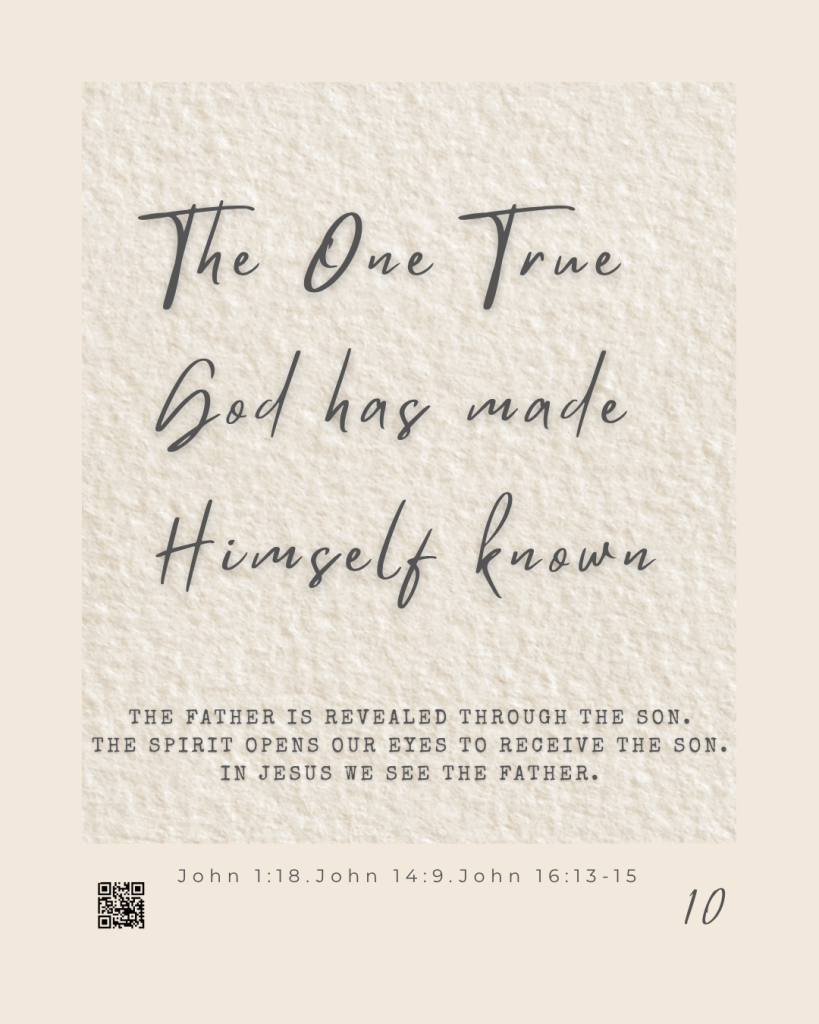
The Father is revealed through the Son. The Spirit opens our eyes to receive the Son. In Jesus, we see the Father.

The logic leads us to ask.
Scripture supplies the revelation.
The Spirit opens our eyes.
The Son makes the Father known.

Amen

Another Jesus?

An Undivided Heart for Christ

Read: 2 Corinthians 11:1–4; Genesis 3:1–6; 2 Corinthians 10:3–5

Key verse

“I am afraid, however, that just as Eve was deceived by the serpent’s cunning, your minds may be led astray from the simplicity that is in Christ.”
2 Corinthians 11:3, MSB

Pruning focus: Surrendering ideas and desires that distort our understanding of Christ and divide our devotion to Him.

God has graciously made Himself known. Through His Word, He reveals His character, His purposes, and His Son. What a precious gift: we may know the One who made us and loves us.

Yet from the garden onward, another voice has challenged what God has revealed.

God had given Adam a clear command. The serpent questioned it, denied its consequence, and suggested that God was withholding something desirable. Eve saw that the tree was desirable for gaining wisdom. A competing word became credible, and disobedience became attractive.

The temptation offered wisdom while leading away from the God who gives it.

Paul draws directly on this account when he expresses his fear for the Corinthians. He has promised them to one husband and longs to present them as a pure virgin to Christ. His concern is deeply personal. They belong to Christ, and their devotion to Him is endangered.

Here, simplicity carries the sense of sincerity and singleness of heart. The marriage picture brings purity into view: love that is faithful, undivided, and free from rival allegiance.

Then Paul names the danger. Someone comes preaching another Jesus. The church receives a different spirit or accepts a different gospel. They accommodate it readily.

The name of Jesus is still being spoken, but the message no longer faithfully represents the One whom the apostles proclaimed.

This is what makes deception so searching. It can sound familiar. It can retain Christian vocabulary while changing what those words mean. It may appeal to desires we have never brought honestly before God.

We may welcome a message because it promises the success we crave, excuses a sin we cherish, or leaves our pride undisturbed. Gradually, our preferences begin to shape the Jesus we are willing to receive.

Paul’s warning invites us to examine what we are accommodating.

What captures our attention? What feeds our appetites? What directs our affections? As an influence is welcomed, it can shape our thinking, speech, and conduct. We need the Holy Spirit’s discernment to test what we hear against the Christ revealed in Scripture.

This calls for humble examination. Paul’s concern reaches beyond identifying error elsewhere. It asks whether our own minds are being drawn away from faithful devotion.

In the preceding chapter, he speaks of demolishing arguments and every lofty claim raised against the knowledge of God, taking every thought captive to obey Christ. Our ideas, however persuasive or comforting, must submit to what God has made known.

The Father’s pruning may reach here. He may expose an understanding we have defended because it serves our desires. He may uncover an affection that has become a rival, or a teaching we have accepted without examining it.

We can yield to His searching work because He loves us. His correction calls us back to truth, communion, and fruitful obedience.

The Christ revealed in Scripture is glorious: the eternal Son who became flesh, gave Himself for our sins, rose from the dead, and reigns as Lord. We receive salvation by His grace. We can trust Him when His words challenge us, and depend on His Spirit as we learn to obey.

As we abide in Him and His words abide in us, our understanding and affections are renewed.

God has revealed Himself so that we may know Him. Let that gracious gift lead us into gratitude, faithful devotion, and worship.

Read 2 Corinthians 11:1–4 slowly. Ask the Lord to show you one idea, teaching, or desire you have welcomed that needs examination in the light of Scripture.

Bring it honestly before Him. Receive His correction, and take one concrete step of obedience to the truth He has made known.

Father, thank You for graciously revealing Yourself through Your Word and Your Son. Forgive me for welcoming ideas that serve my desires while drawing me away from Your truth. By Your Spirit, expose what distorts my understanding of Jesus. Prune away rival affections and renew my mind. Keep my devotion sincere and undivided. Let knowing You deepen my trust, obedience, and worship. You are glorious, and I thank You for making Yourself known. In Jesus’ name, amen.

A heart devoted to Christ allows His Word to correct even its cherished ideas.

  • Am I allowing Scripture to shape my understanding of Jesus, or allowing my desires to reshape Him?
  • What have I become willing to accommodate that competes with wholehearted devotion to Christ?

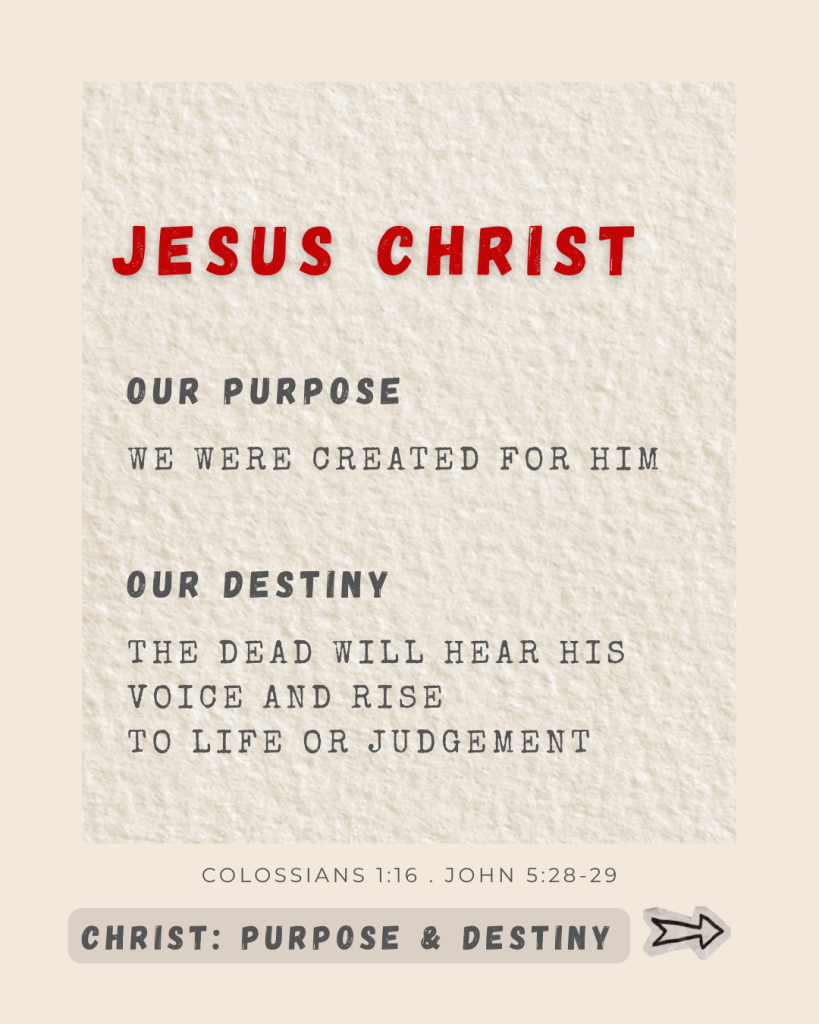
the Big 4

Every worldview must address these four questions. The challenge is whether its answers are true, and whether they belong together.

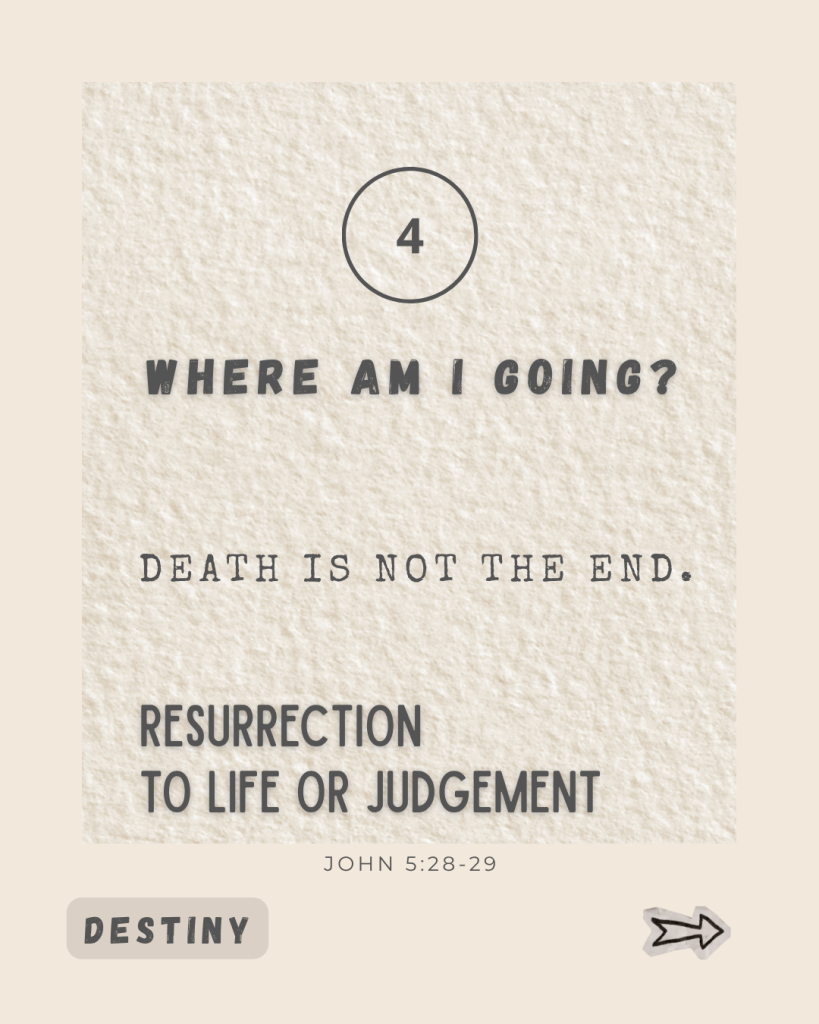
Christianity connects our origin, identity, purpose, and destiny: we are created by God, made in His image, made for Him, and accountable to Him beyond death.

These answers come together in Jesus Christ.

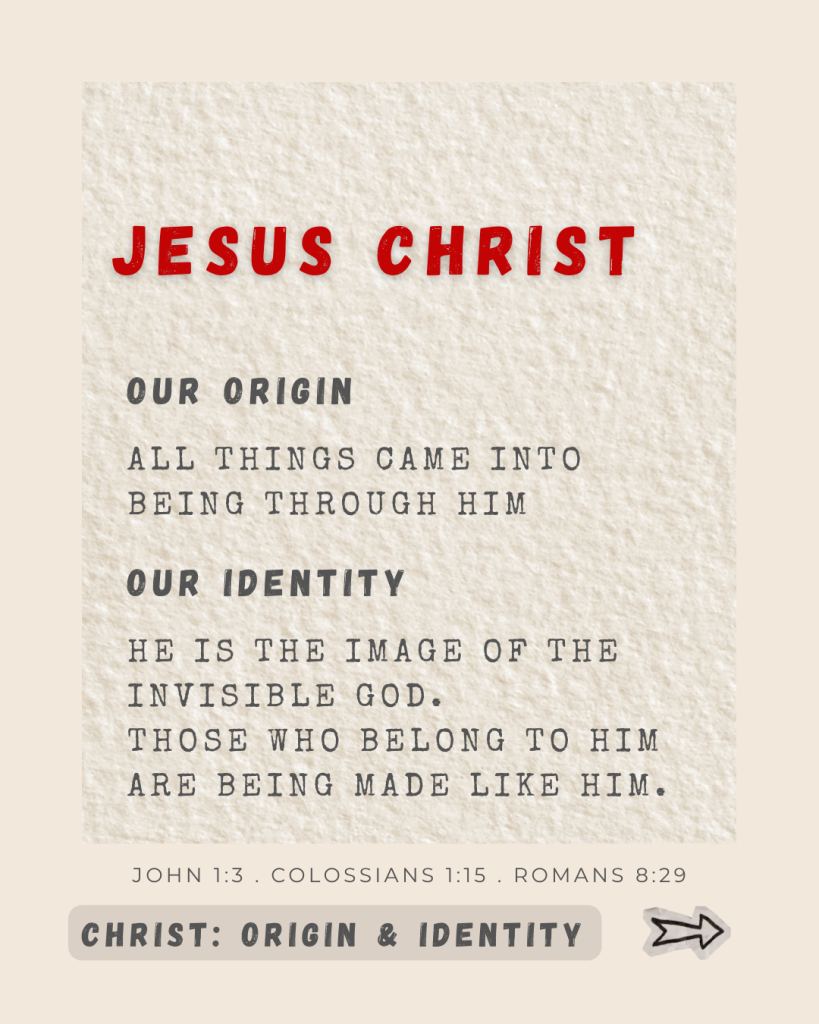
All things came into being through Him. He is the image of the invisible God, and those who belong to Him are being made like Him. We were created for Him. And the dead will hear His voice and rise.

The One who made us also came to save us. Jesus died for our sins and rose again, so that through repentance and faith in Him we may receive forgiveness and eternal life.

These four questions lead us to a personal response: Will you trust the One who made you, died for you, and calls you to Himself?

Cancelled?

Proverbs 1:7 (NASB 2020)
The fear of the LORD is the beginning of knowledge;
Fools despise wisdom and instruction.

That second half of Proverbs 1:7 seems to have helped me see a painful situation more clearly: wisdom and instruction will not always be welcomed, even by someone close to us. When they are resisted, we do not have to receive that response as a verdict on our worth. We often do, at least I do. This morning the Lord helped me see deeper.

Disappointment and hurt are understandable. The invitation is not necessarily “I must not feel these things,” but “I do not have to let these things govern my response.”

I often focus on the fear of the Lord as the beginning of knowledge, but today its second half spoke into a difficult situation: fools despise wisdom and instruction.

I should not be surprised when wisdom is resisted but am I responding in the fear of the Lord, or out of wounded pride?

I can acknowledge the hurt without allowing it to harden into bitterness. I do not need to force a response, win an argument, or treat another person’s resistance as a measure of my value. I can be patient, entrust them to the Lord, and seek His wisdom about when to speak, when to remain quiet, and what boundaries are needed.

Yet this verse also calls me to examine my own heart. Am I willing to receive correction? The verse is not simply a statement about their response. It is a summons for mine too : fear the Lord, remain teachable, and trust Him with what I cannot change.

Lord, help me recognise folly without becoming contemptuous, receive correction without becoming defensive, and respond to hurt with the patience and wisdom of Christ. Amen.

When wisdom is rejected, let the fear of the Lord shape your response.

Walking in the Light

A devotional on 1 John 1:5–10

The foundation

“God is light, and in Him is no darkness at all.” — 1 John 1:5

John begins with who God is. God does not merely possess light; God is light. He is completely holy, true, and good. There is no deceit, moral darkness, or hidden evil in him.

Because God is light, fellowship with him must affect how we live. John therefore gives us five “if” statements. Each one invites us to examine whether our words and our way of life agree.

The five “ifs”

IFRealityConsequence
If we claim to have fellowship with God while walking in darkness (v.6)Our conduct contradicts our claim.We lie and do not practice the truth.
If we walk in the light, as God is in the light (v.7)We live openly before God and allow His truth to shape us.We enjoy fellowship, and Jesus’ blood cleanses us from all sin.
If we claim to have no sin (v.8)We deny our present sinful condition.We deceive ourselves, and the truth is not in us.
If we confess our sins (v.9)We agree with God about our sin instead of hiding or excusing it.God faithfully and justly forgives and cleanses us.
If we claim that we have not sinned (v.10)We reject God’s testimony about our guilt and need.We make God out to be a liar, and his word is not in us.

Walking in the light does not mean being perfect

It would be easy to read this passage and conclude that walking in the light means never stumbling or sinning. But John immediately warns us against claiming to be without sin.

A person walking in darkness hides, excuses, or denies sin. A person walking in the light brings sin before God, calls it what God calls it, and trusts Christ for cleansing. The difference is not that one person needs grace while the other does not. The difference is that one hides from grace while the other steps into it.

Light exposes what is wrong, but its purpose is not merely to shame us. God’s light leads us to the cleansing that is found in Jesus.

Two responses to sin

False response to sinTrue response to sin
Claiming fellowship while continuing comfortably in darknessWalking openly before God
Hiding or excusing sinAllowing God’s light to expose it
Claiming to have no sinful natureAcknowledging our continuing need for grace
Claiming never to have sinnedConfessing our particular sins
Depending on appearancesDepending on Christ’s cleansing
Results in deception and broken fellowshipResults in forgiveness, cleansing, and restored fellowship

The danger of spiritual claims

Three times John speaks about what “we say.” We may say that we know God, that we have no sin, or that we have not sinned. But our words do not determine spiritual reality.

John asks us to look beyond our claims:

  • Does my conduct agree with my confession?
  • Am I willing to let God’s truth examine me?
  • Do I admit my sin, or do I instinctively defend myself?
  • Am I living openly before God and other believers?

Christian faith is more than saying the right things. It is living truthfully in the presence of God.

The promise of confession

“If we confess our sins, he is faithful and just to forgive us our sins and to cleanse us from all unrighteousness.” — 1 John 1:9

God’s response rests on his character:

  • He is faithful: He keeps His promise to forgive.
  • He is just: Christ has dealt with the guilt of our sin.
  • He forgives: our guilt is removed.
  • He cleanses: He works against sin’s pollution and power in us.

We do not confess to persuade a reluctant God to be merciful. We confess because God has already provided cleansing through Jesus Christ.

Fellowship in the light

Walking in the light also produces “fellowship with one another.” When we hide from God, we often hide from people as well. We protect an image, fear being known, and keep others at a distance.

Grace gives us the freedom to be honest. We no longer need to pretend that we have no struggles. Christian fellowship grows when believers can say, “I need Christ’s mercy too.”

This does not mean sharing everything with everyone. It means abandoning hypocrisy and developing relationships marked by truth, humility, forgiveness, and grace.

Questions for reflection

  1. Is there an area of my life that I am trying to keep out of God’s light?
  2. Am I excusing, minimizing, or blaming someone else for a particular sin?
  3. Do my daily choices support my claim to have fellowship with God?
  4. When God exposes sin, do I hide in shame or come to Christ for cleansing?
  5. Is pride preventing me from being honest with another trustworthy believer?
  6. What would one practical step of “walking in the light” look like today?

A practice for today

Take a few quiet moments with God.

  1. Ask the Holy Spirit to search your heart.
  2. Name specifically whatever He brings to your attention.
  3. Accept responsibility without defending or excusing yourself.
  4. Thank God that forgiveness rests on Christ’s work, not your worthiness.
  5. Ask for strength to make any necessary change, apology, or restitution.
  6. Walk forward in the freedom of being fully known and deeply loved.

Father, you are light, and there is no darkness in you. Shine your light into every part of my heart. Show me where my actions do not agree with my words and where I have hidden, excused, or denied my sin.

Give me the humility to confess honestly and the faith to receive the forgiveness you have provided through Jesus. Thank you that you are faithful and just to forgive me and to cleanse me from all unrighteousness.

Help me to walk openly before you today. May my life be shaped by your truth, my relationships be marked by genuine fellowship, and my confidence rest in the cleansing blood of Jesus. Amen.